When To Book A Straddie Day Tour: Weather, Whales And Water By Month
Timing decides which tours run and what they can show: whales only pass Straddie from June to November, beach patrols run September to early May, and the driest months are September and August. Here is how the year actually breaks down.
Short answer
Point Lookout averages a 29.6 °C maximum in January and 21.2 °C in July, with 1,517.7 mm of rain a year. Whales pass the coast June to November, beach patrols run weekends and public holidays September to early May, and September, at 53.7 mm, is the driest month. Which of those matters most decides when you should go.
North Stradbroke Island (Minjerribah) sits about 40 km south-east of Brisbane on the eastern side of Moreton Bay, and its weather is milder than the mainland's summer extremes thanks to the ocean on three sides. The Bureau of Meteorology's Point Lookout station, recording since 1997, gives the island an annual mean maximum of 25.6 °C and an annual mean minimum of 18.6 °C. Those are comfortable numbers, but the averages hide the two things that actually shape a visit: when the whales pass, and when the flags are up on the beaches.
The year here rests on stated facts only: the climate averages, the June to November whale window, the September to early May patrol season, and the driest and wettest months. No best month is named, because there isn't one. The decision logic is which condition matters to you, and by the end you should know your own answer. For the broader picture of crossing to the island, the ferry and vehicle barge guide covers the sea crossing itself.
What Is The Weather Like On North Stradbroke Island Through The Year?
Point Lookout averages a mean maximum of 29.6 °C in January falling to 21.2 °C in July, with mean minimums of 22.6 °C and 13.8 °C, and about 1,517.7 mm of rain each year. September is the driest month at 53.7 mm, August is close behind at 68.9 mm, and March is the wettest at 179.6 mm. The spread is real but never extreme.
Those figures come from the Bureau of Meteorology's Point Lookout station (station 040209), which has been recording since 1997. The pattern is a classic subtropical one: warm, humid summers, mild and dry winters, and a wet season that peaks in late summer and early autumn. March's 179.6 mm mean is more than three times September's 53.7 mm, which is the single largest planning gap in the whole climate record for this island.
What the averages mean in practice is that no month is ruled out by temperature alone. Even the July mean maximum of 21.2 °C is a pleasant day for walking a headland, and the January mean maximum of 29.6 °C is a beach day, not a hardship. The mean minimum of 13.8 °C in July tells you a winter morning on the ferry can feel brisk, so a layer is worth packing, a point the what to pack for a Straddie day tour guide covers in detail.
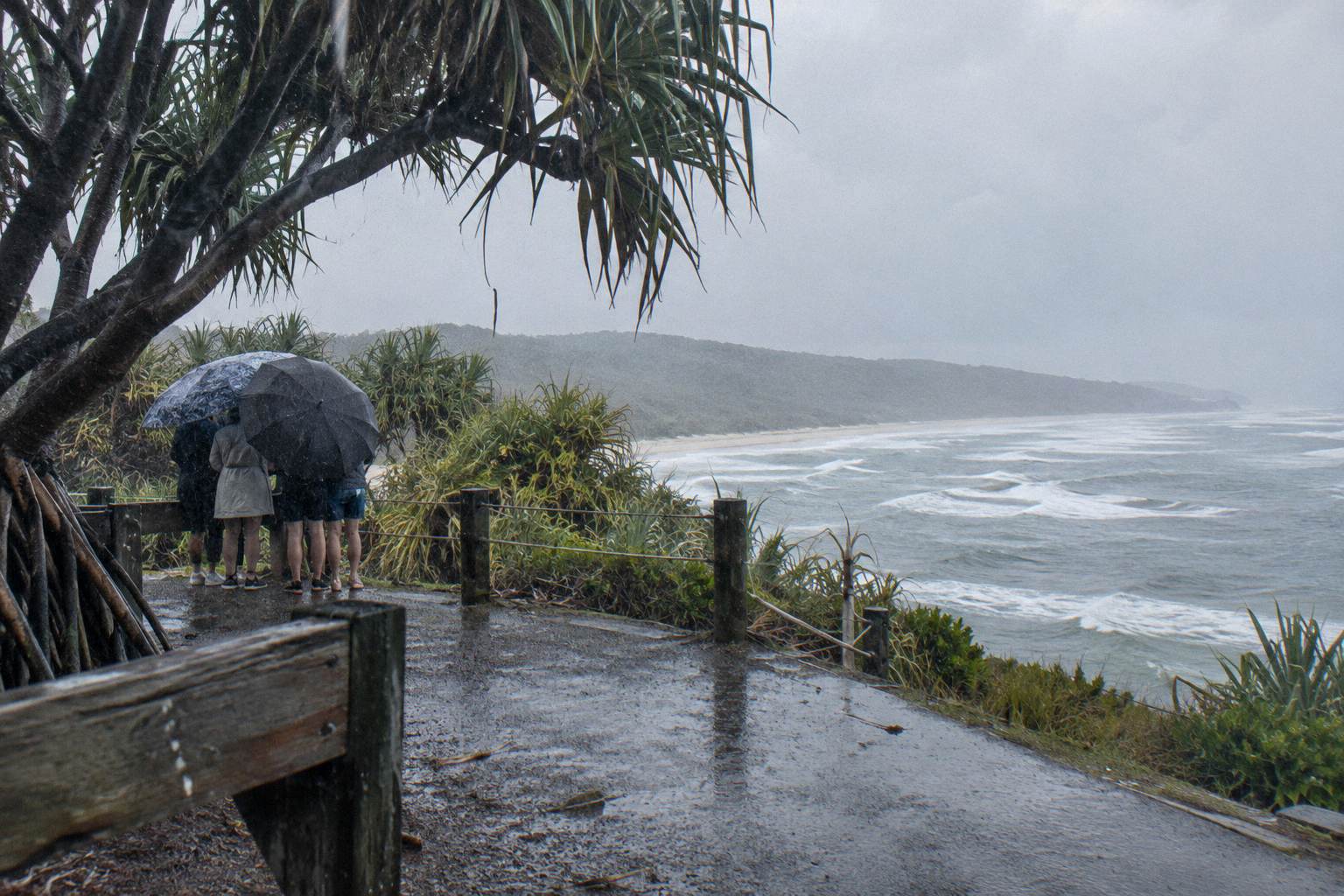
Rainfall is the number that should nudge your planning more than temperature. A 179.6 mm March mean is a monthly average, not a forecast, but it reflects a season where showers are more frequent and heavier. September and August, the two driest months, sit at the end of the dry winter stretch, when the walking tracks are firm and the ocean visibility from the headlands is often at its best. The Bureau's averages table for Point Lookout is the primary record behind these figures.
| Measure | January | July | Annual |
|---|---|---|---|
| Mean maximum | 29.6 °C | 21.2 °C | 25.6 °C |
| Mean minimum | 22.6 °C | 13.8 °C | 18.6 °C |
| Mean rainfall | wet season peak | dry season | 1,517.7 mm |
When Can You See Whales From North Stradbroke Island?
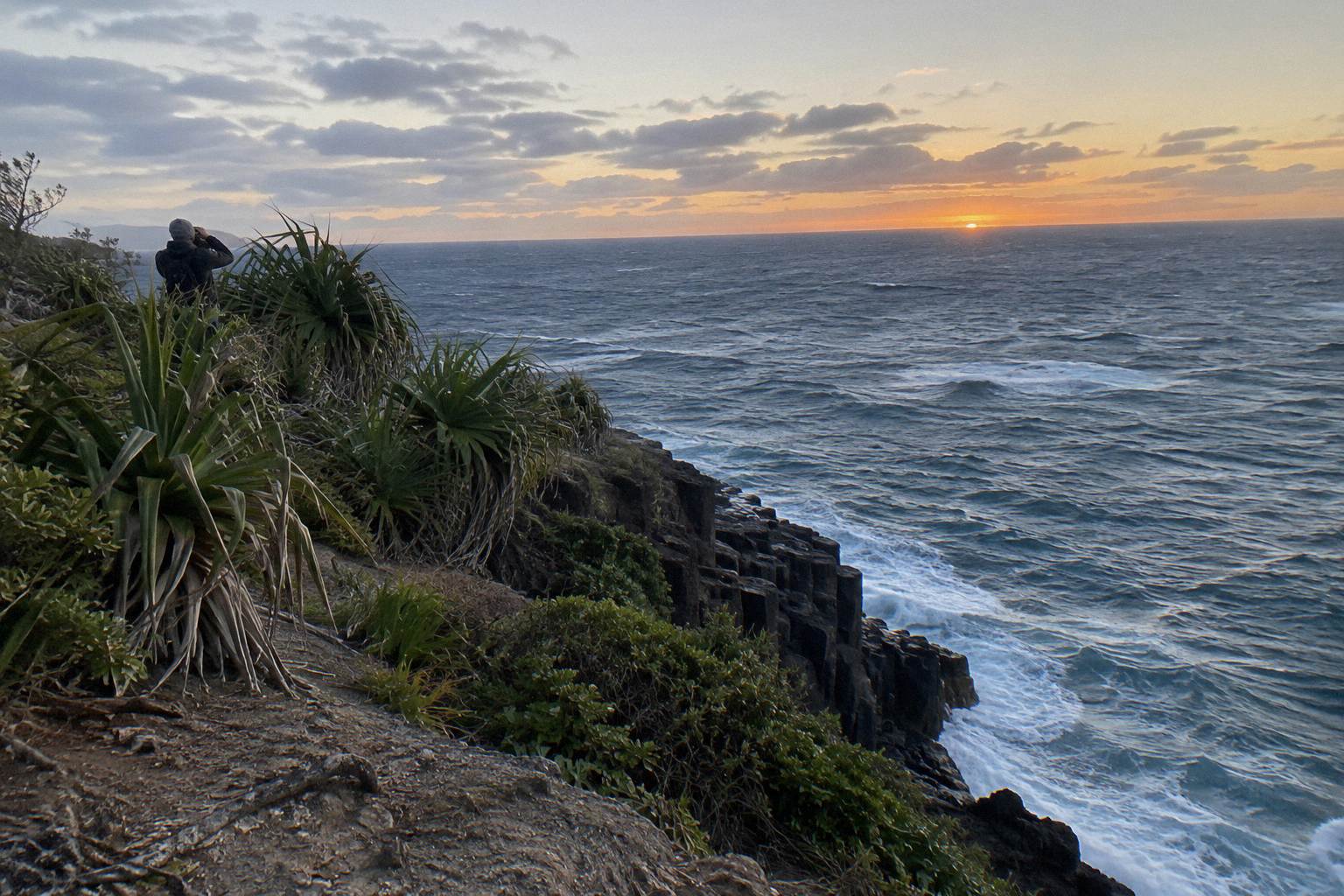
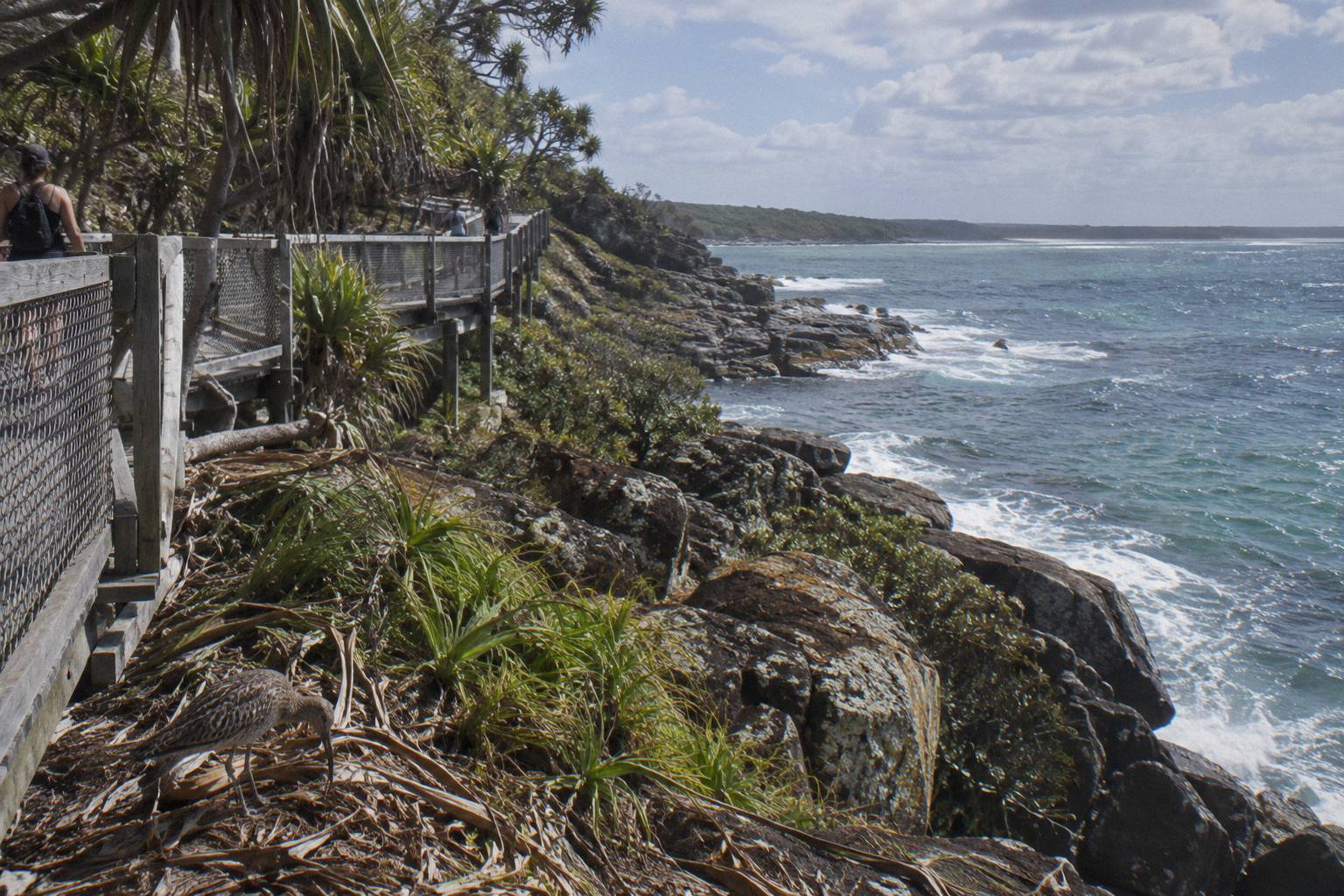
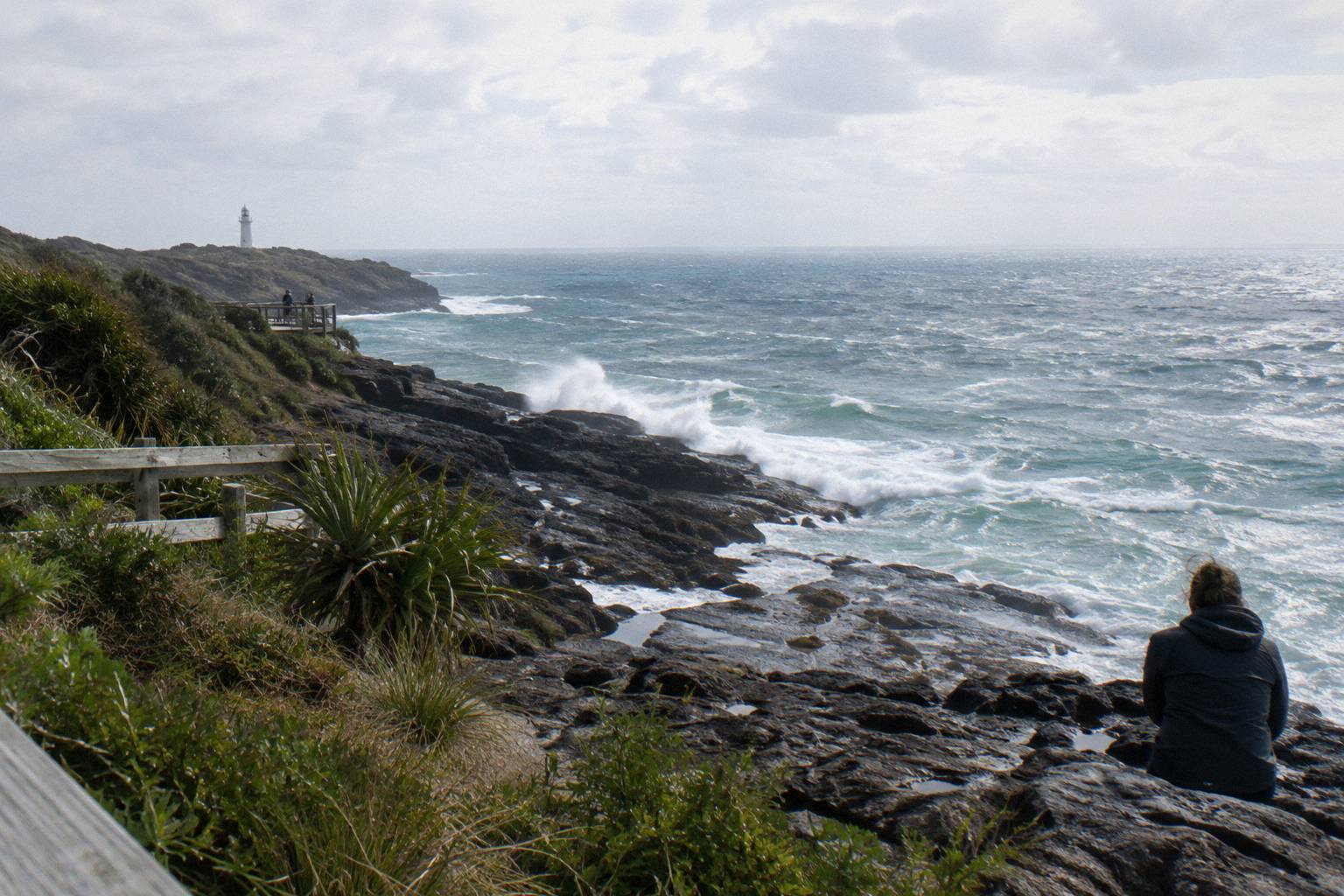
Humpback whales pass close to the island's coastline from June to November on their annual migration, and Queensland Parks names the headlands at Point Lookout, including the North Gorge Walk, as the land vantage points. No whale-watching cruise, boat or kayak trip exists among the tours covered here. Whale watching on Straddie means watching from land, on a day tour whose booking page mentions them. Read whether wildlife is guaranteed before you set expectations.
That June to November window comes from Queensland Parks, and it is the only whale window to trust: not May, not a shorter mid-season range. The same park guidance says humpbacks, manta rays and turtles are regularly seen from headlands, and that sightings, while likely in season, are never guaranteed. Anyone promising a whale on a Tuesday is selling something the ocean has not agreed to.
Three day tours here mention whales on their booking pages. The 4WD Beach Day, BBQ Included lists whales June to November. The Small Group Eco Tour, All Inclusive lists whales among the marine animals to look for from the headlands on its guided gorge walk. And the Indigenous Culture Day Tour lists seasonal whales among its stops. None of these is a whale cruise, and none should be booked purely on the expectation of a sighting; the wildlife, the koalas and the beaches are the certain parts of those days.
If timing your whole trip around the whale window appeals, the North Stradbroke Island whale watching season guide goes deeper on where to stand and what else the headlands deliver, and the question of whether you can see whales from the North Gorge Walk is answered in its own post. The Gorge Walk itself is 1.2 km and currently partly closed, so check the park page before you count on it.
When Is It Safe To Swim On Straddie Beaches?
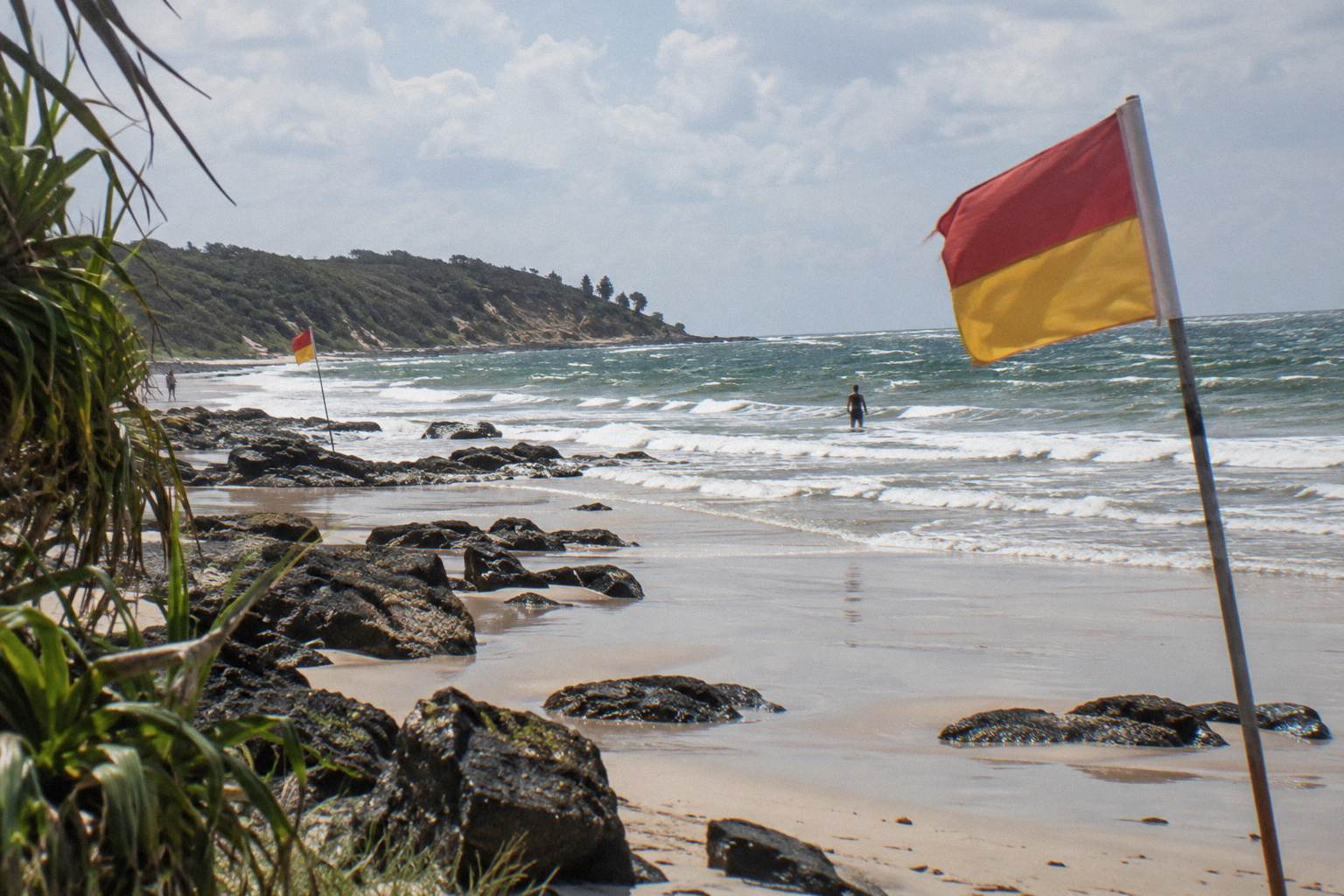
Cylinder Beach and Main Beach are regularly patrolled, and patrols run weekends and public holidays from September to early May, with school-holiday lifeguards at some beaches including Adder Rock. Outside that window and those days there are no flags. Rips and side currents are possible, bluebottles and fire jellies occur in Moreton Bay waters, and swimmers should stay between the flags and follow lifeguard advice.
The patrol season is the most commonly missed timing fact on the island. A warm autumn Saturday in late April still has flags on the weekend; a 26 °C winter weekday in July, and there is a very real chance the beach is unpatrolled. Queensland Parks names the patrolled area at Point Lookout as the most popular swimming beach on the island, and Dunwich and Amity Point have enclosed swimming areas as calmer alternatives. The deep channel off Amity Point is a firm no: strong currents and possible sharks.
Stingers deserve a plain sentence rather than panic. Bluebottles and fire jellies (Morbakka) occur in Moreton Bay waters. Swim between the flags and ask a lifeguard if stingers have been seen; never assume they are absent, and never repeat a claim that Moreton Bay has no stingers, because that is false. The dangerous tropical box jellyfish species are not a Moreton Bay feature, but the local species still sting.
Which tour you pick shapes how much swimming your day actually holds. The Wildlife And Beaches, 11 Hours day trip has explicit beach time and swimming stops plus beach games in its inclusions. The Small Group Eco Tour names Cylinder Beach and Frenchmans Beach as stops, with free time in the afternoon. The 4WD Beach Day names Cylinder Beach. If your dates fall inside the patrol season and swimming is the point, the beach-and-swimming format is the one that matches; if they fall in winter, the walking and wildlife formats give the day more to do than stand on an empty beach. The question of whether you can swim on a Straddie day tour gets its own fuller answer elsewhere.
Which Months Are Driest, And Which Are Wettest?
September is the driest month on the Point Lookout record at 53.7 mm mean rainfall, with August second at 68.9 mm, and March is the wettest at 179.6 mm. The annual mean is 1,517.7 mm. Those are long-run averages, not forecasts for your week, but they mark late winter and early spring as the statistically driest window and late summer and early autumn as the wettest.
The planning value of this split is straightforward. A day built around a guided headland walk, a lake stop or a gorge lookout is best served by the dry months, when tracks are firm and views run long. A day built around swimming and beach games is naturally a summer day, which is also the season closer to the rainfall peak. You are choosing between conditions, not between good and bad months.
Two trips here already carry the weather logic in their design. The oyster farm tasting runs in most weather but its start times follow the low tide and are confirmed before travel, because a low-tide mudflat walk cannot be scheduled against a clock. The Yura Tours driving tour has a stated weather policy and adapts to accessibility needs. For the other trips, ask the operator about weather cancellation when you book, and remember that free cancellation up to 24 hours before start applies to every trip. That 24-hour line is the practical bridge between a long-range climate average and a short-range forecast: book the date, then watch the forecast inside the free window.
Does Summer Heat Change Which Tour Suits You?
A January mean maximum of 29.6 °C, with nights holding at a 22.6 °C mean minimum, makes summer the beach season, and the tour formats split accordingly: beach-and-swimming days and 4WD days with included lunch suit the heat, while long walking-heavy itineraries are better saved for the cooler half of the year when the July mean maximum is 21.2 °C. Water, shade and timing matter from December to February. Families can read about bringing kids in each season.
The Hit The Road Wildlife Day Trip is the trip with the most reviews on the booking pages, rated 4.9 from 547 reviews, from A$149 per person for a 9 hours 30 minutes small-group day from Brisbane with the return ferry included and bottled water on board. Lunch is not included; the guide recommends takeaway options for a beachfront picnic, or you bring your own. On a 29.6 C-mean-maximum summer day, that water and a picnic under shade is the design working as intended. It meets outside the Adina Apartment Hotel Anzac Square at 7:45 AM, and the booking page warns there are two Adina hotels in Brisbane, so check which one. You can read the wildlife day trip's own page for the full details.
Long days deserve plain arithmetic in summer. The Wildlife And Beaches day trip runs 11 hours and the Small Group Eco Tour runs 10 hours, both from A$199 per person, and both include the return ferry. Eleven hours in January heat is a commitment; eleven hours in July, at a 21.2 °C mean maximum, is a different and easier day. Neither is the wrong choice, but matching the day length to the season is the difference between finishing tired and finishing wrecked. For the full how-long-is-this-day picture, what time a Straddie day tour returns to Brisbane is the dedicated answer.
What Does Each Season Deliver On Straddie?
Spring combines the two driest months, September and August at the shoulder, the start of beach patrols in September and the tail of the whale window; summer delivers the warmest water and the wettest months; autumn keeps swim-season warmth with patrol ending by early May; winter is the coolest, driest and clearest stretch with whales passing from June. Every season holds something, and no month is empty.
The table below is the year compressed into facts: climate averages, the whale window and the patrol season, all from the sources named above. Read it as a menu, not a ranking.
| Season | Climate (Point Lookout means) | Whales | Beach patrols | Best-matched tour formats |
|---|---|---|---|---|
| Spring | driest months: September 53.7 mm, August 68.9 mm; warming through | June to November window open | resume weekends and public holidays from September | walking and wildlife days, gorge lookouts, ferry-inclusive full days |
| Summer | January mean maximum 29.6 °C, mean minimum 22.6 °C; wettest months around March | window open to November | weekends and public holidays | beach and swimming days, 4WD day with included lunch |
| Autumn | cooling from summer peaks; March mean rainfall 179.6 mm | window closes in November | run to early May | beach days early in the season, walking days later |
| Winter | July mean maximum 21.2 °C, mean minimum 13.8 °C; dry | whales pass close from June | not patrolled; enclosed areas at Dunwich and Amity | wildlife, culture and driving tours, headland walking with a layer |
One fact worth having that a first search rarely surfaces: about 50 per cent of the island is Naree Budjong Djara National Park, jointly managed by the Quandamooka people and the Queensland Parks and Wildlife Service since 2011, and its tracks close temporarily at times, so the park's alerts page matters as much as the weather forecast when your day includes a lake or a gorge walk. The park also asks visitors not to swim in Kaboora (Blue Lake) and notes that swimming and sunscreen pollute lakes and lagoons, which is why none of the tour days is sold as a lake swimming day.
What Can Change Or Cancel On The Day?
Tides, not just weather, move some departures: the oyster farm tasting's start times follow the low tide and are confirmed before travel, while its mudflat crossing needs about 20 minutes each way. The Yura driving tour has a stated weather policy. For most other trips, check the weather-cancellation rule on the booking page before you go or ask the operator, and use the free cancellation up to 24 hours before start that every trip carries.
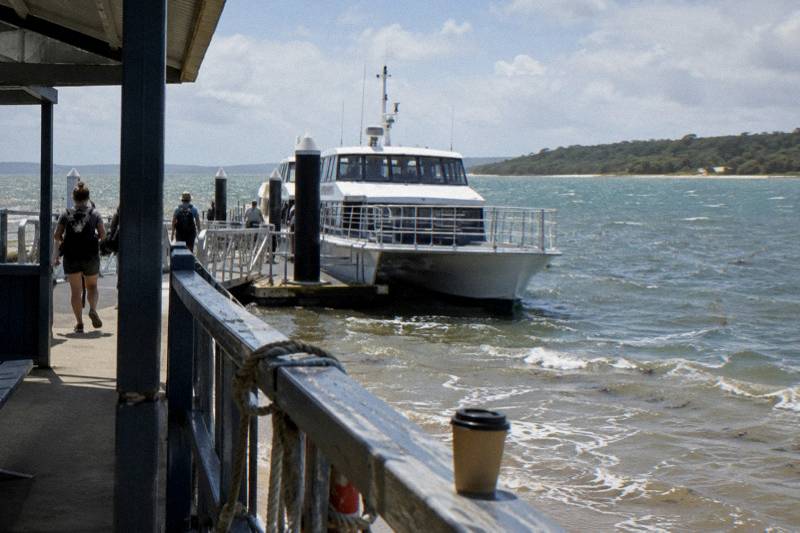
Checking the day has a short, reliable routine. Look at the Bureau of Meteorology's Point Lookout forecast, check the SeaLink and Flyer pages if your travel relies on a specific ferry or water taxi, open the Queensland Parks alerts for Naree Budjong Djara before any lake or gorge stop, and confirm the meeting point and start time against the operator's own confirmation. That last one matters more than people expect: the wildlife day trip's 7:45 AM meet is outside a hotel that has a namesake across town, and a wrong Adina is a missed ferry.
Start times also cluster early, which is a summer advantage. The 4WD Beach Day begins with hotel pickup at about 7:30 AM or a meet at the Cleveland water taxi terminal, rated 4.9 from 33 reviews over 7 hours 30 minutes, with lunch, national park fees and coffee or tea included; the price for your date shows on the booking page. An early start puts the hottest part of the day at a beach with the work already done, and its koala spotting and Cylinder Beach stops sit in the part of the day when animals are still active.
The question of whether weather cancels a Straddie day tour is answered at length elsewhere, but the short version belongs here: rain is usually a redirection, not a cancellation, and the 24-hour free cancellation window on every trip covered means you are never locked into a forecast you do not like. This is the whole timing strategy of North Stradbroke Island Tours in one sentence: pick the season for what you want to see, book the format that suits the weather, and let the free cancellation absorb the forecast risk.
Which Tour Fits Which Time Of Year?
The wildlife and walking formats suit the dry, cooler months, the beach and swimming formats suit the patrol season, the whale window June to November favours headland itineraries, and the tide-driven oyster experience fits whatever low tide your date allows. Every full-day trip here includes the return ferry except where noted, and all carry free cancellation up to 24 hours before start. For sand driving, see 4WD beach tours.
The Hit The Road Wildlife Day Trip, from A$149 per person and rated 4.9 from 547 reviews, is the wildlife-first day. The Wildlife And Beaches day trip, from A$199 per person and rated 4.9 from 119 reviews, is the swim-and-games day that belongs inside the patrol season. The Small Group Eco Tour, from A$199 per person and rated 4.7 from 294 reviews, is the longest walk with the most named stops, a lake stop with free time on the shore, Myora Springs, a guided gorge walk to Point Lookout, Amity, Cylinder Beach and Frenchmans Beach, with national park fees included. All prices are per person in Australian dollars, and all three include the return ferry.
| Trip | From price | Rating | Duration | Ferry | Timing fit |
|---|---|---|---|---|---|
| Hit The Road Wildlife Day Trip | from A$149 per person | 4.9 from 547 reviews | 9 hours 30 minutes | included | any month; wildlife is year round |
| Wildlife And Beaches, 11 Hours | from A$199 per person | 4.9 from 119 reviews | 11 hours | included | patrol season, September to early May |
| Small Group Eco Tour, All Inclusive | from A$199 per person | 4.7 from 294 reviews | 10 hours | included | dry months; most walking of the three |
| 4WD Beach Day, BBQ Included | price on the booking page | 4.9 from 33 reviews | 7 hours 30 minutes | listed at the water taxi terminal | summer heat; lunch included; whales June to November on the listing |
If none of those is the answer, the other day trips split by purpose rather than by season: cultural days, private tours and the on-island oyster and driving experiences, all set out in the guide to things to do on the island by tour. The seasonal question for those is mostly tide and transport, not weather.
The beach format earns that slot inside the patrol season and only there. Book it for a July weekday and you get a beautiful coast with no flags and no swimming, which is a different product from the one its inclusions describe. Book it for a Sunday in October, with flags up, whales still passing and the September dry barely behind you, and the inclusions all fire at once.
The eco format is the reverse: it loses the least in the cooler months, because its day is walking, lookouts, a lake shore and a fishing village rather than swimming, and its whale-watching vantage on the guided gorge walk lands squarely inside the June to November window. Its booking page notes it is not suitable for people with mobility impairments, which is a fit question, not a season question.
Common Questions About Timing A Straddie Visit
What Is The Weather Like On North Stradbroke Island Through The Year?
Point Lookout averages a 29.6 °C mean maximum in January and 21.2 °C in July, with mean minimums of 22.6 °C and 13.8 °C, and about 1,517.7 mm of rain a year. No month is ruled out by temperature; rainfall is the number that should shape your planning.
When Can You See Whales From North Stradbroke Island?
Humpback whales pass close to the coastline from June to November, and the headlands at Point Lookout, including the North Gorge Walk, are the land vantage points. There is no whale-watching cruise among the trips covered here, and sightings are never guaranteed.
When Is It Safe To Swim On Straddie Beaches?
Patrols run weekends and public holidays from September to early May, with school-holiday lifeguards at some beaches. Swim between the flags, follow lifeguard advice, and note that bluebottles and fire jellies occur in Moreton Bay waters.
Which Months Are Driest, And Which Are Wettest?
September is the driest month at a 53.7 mm mean and August is second at 68.9 mm, while March is the wettest at 179.6 mm. These are long-run averages from the Bureau of Meteorology's Point Lookout station, not forecasts.
Does Summer Heat Change Which Tour Suits You?
Yes, by format. Beach and swimming days and the 4WD day with included lunch suit the January heat, while the longest walking itineraries sit better in the cooler half of the year when the July mean maximum is 21.2 °C.
What Can Change Or Cancel On The Day?
Tides move some departures, tracks close temporarily, and for most trips the weather-cancellation rule is unknown, so check it on the booking page before you go or ask the operator. Every trip carries free cancellation up to 24 hours before start.