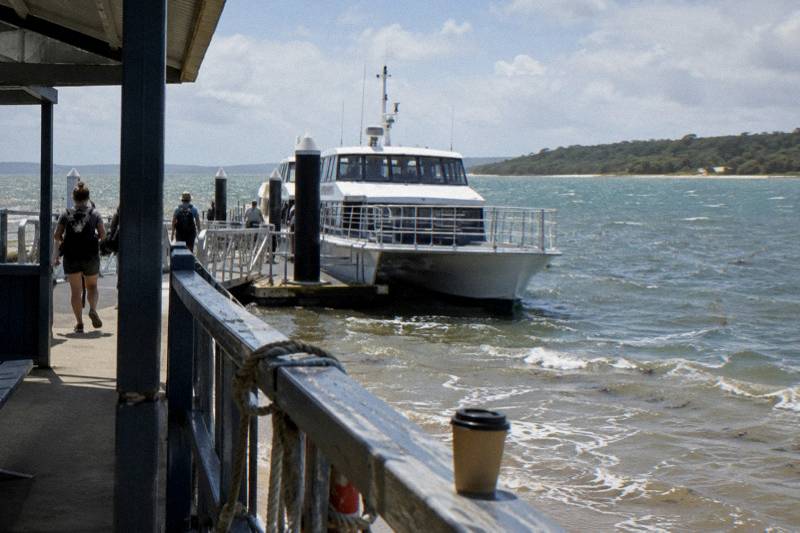
Will You Definitely See Wildlife On A Straddie Tour?
No tour can guarantee wildlife sightings on North Stradbroke Island, but koalas, kangaroos, whales, dolphins and manta rays are all genuinely possible. Here is what each tour actually promises, and what it does not.
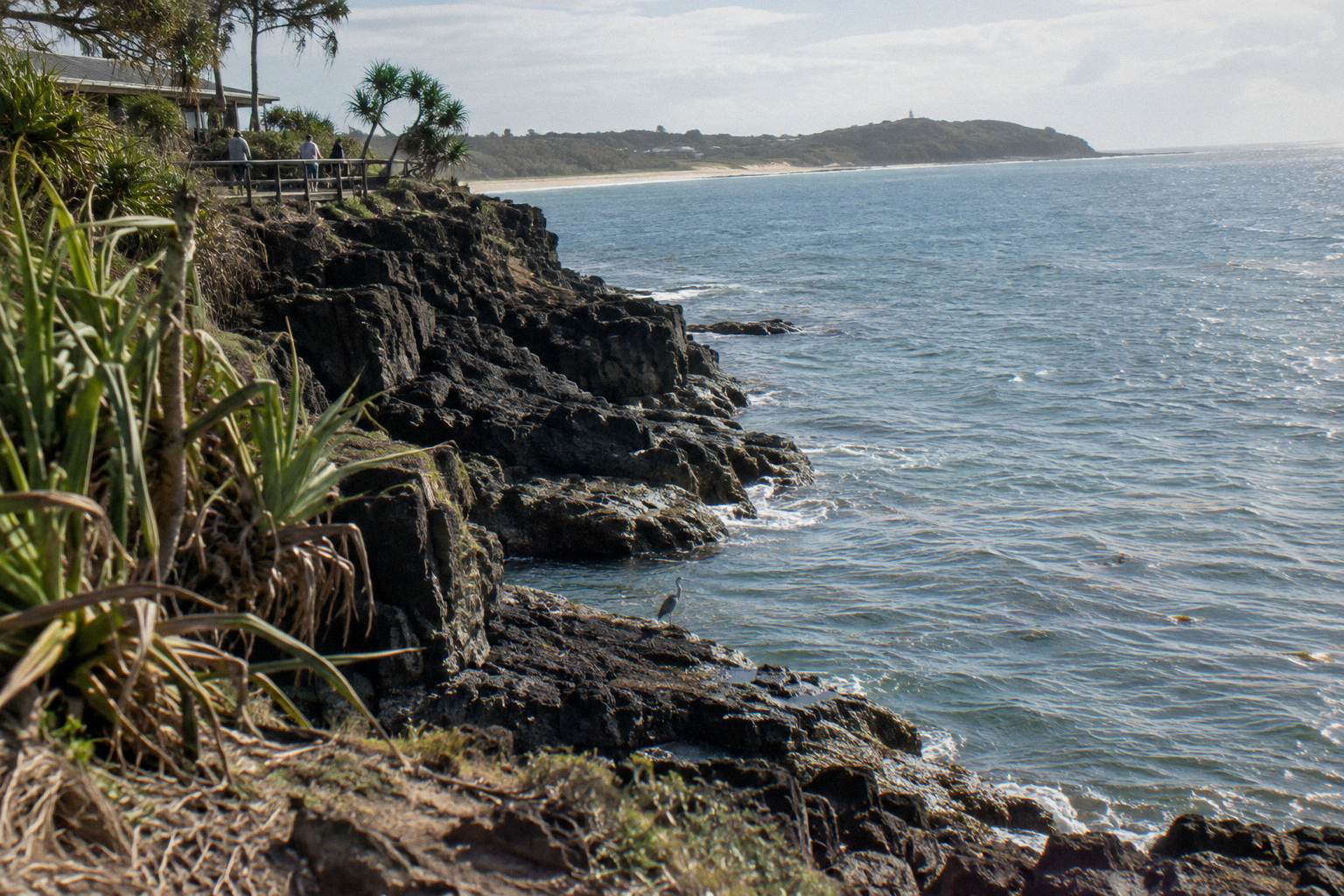
No, and you should be wary of any listing that says otherwise. Wildlife sightings on North Stradbroke Island (Minjerribah) are possible and never certain, which is exactly how Queensland Parks words it and how every truthful booking page phrases its stops. The island's koalas, kangaroos, manta rays, turtles, dolphins and humpback whales are wild animals, and no operator controls where they are on any given morning.
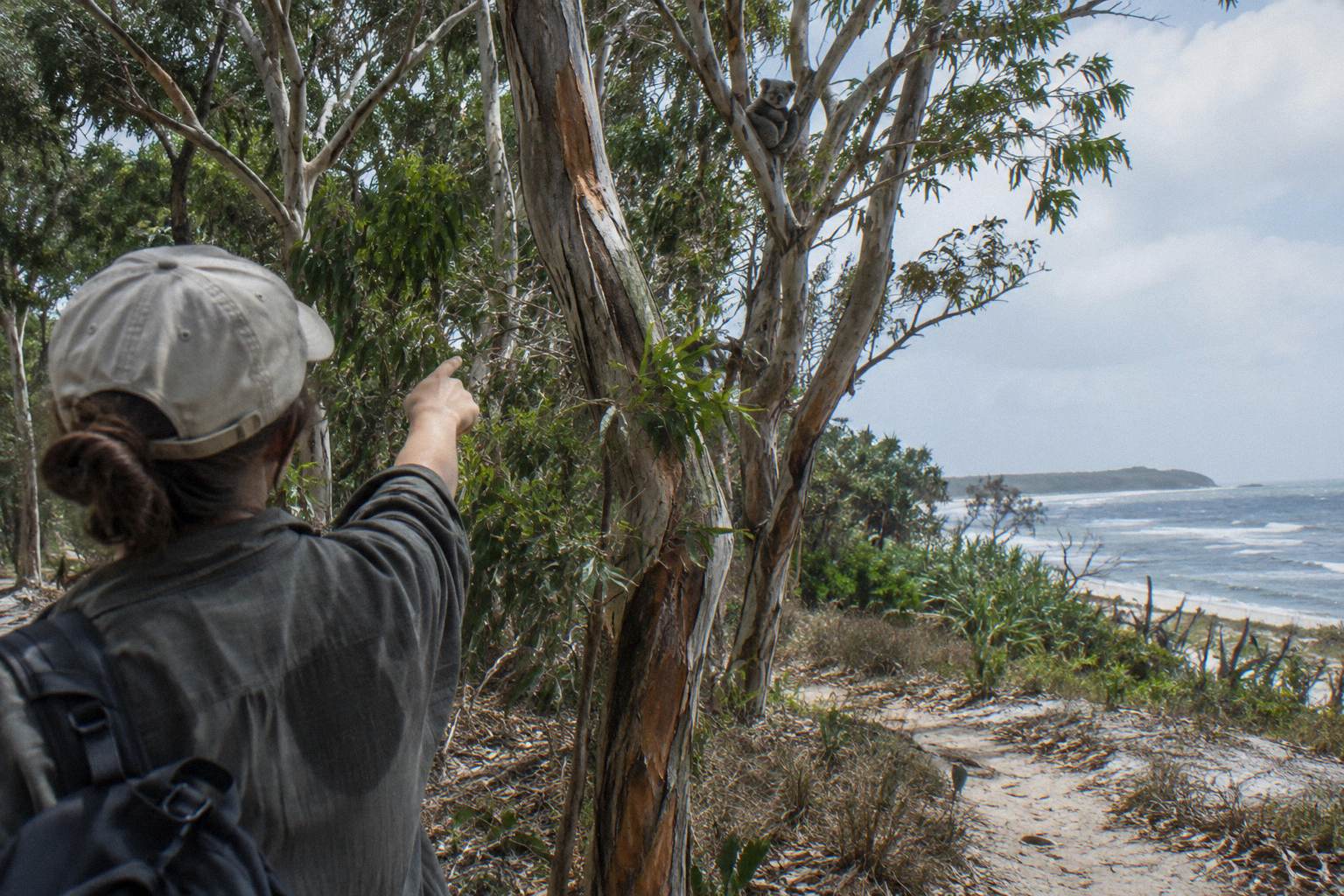
That answer is not a disclaimer bolted on for legal cover. It is the difference between a good day tour and a disappointing one, and it starts before you book. A tour that promises a koala sighting is selling you something no guide can deliver. A tour that says koalas can be spotted with the guide, which is the actual wording on the Wildlife And Beaches booking page, is telling you the truth: the guide knows where koalas are usually found, and the outcome still depends on whether a sleepy grey bundle is visible in the canopy that day.
The realistic picture is genuinely encouraging. Straddie is the second largest sand island in the world, about 40 km south-east of Brisbane, and it is wrapped by the Moreton Bay Marine Park. Queensland Parks names a genetically distinct koala population and golden wallabies, a swamp wallaby form found on North and South Stradbroke only, among the island's resident animals, and humpback whales, manta rays and turtles as marine life regularly seen from headlands. Roughly half the island is Naree Budjong Djara National Park, jointly managed by the Quandamooka people and the Queensland Parks and Wildlife Service since 2011. That is a lot of habitat packed into a day trip from Brisbane, and it is why the odds here are better than on most city day tours, even though they are never a certainty.
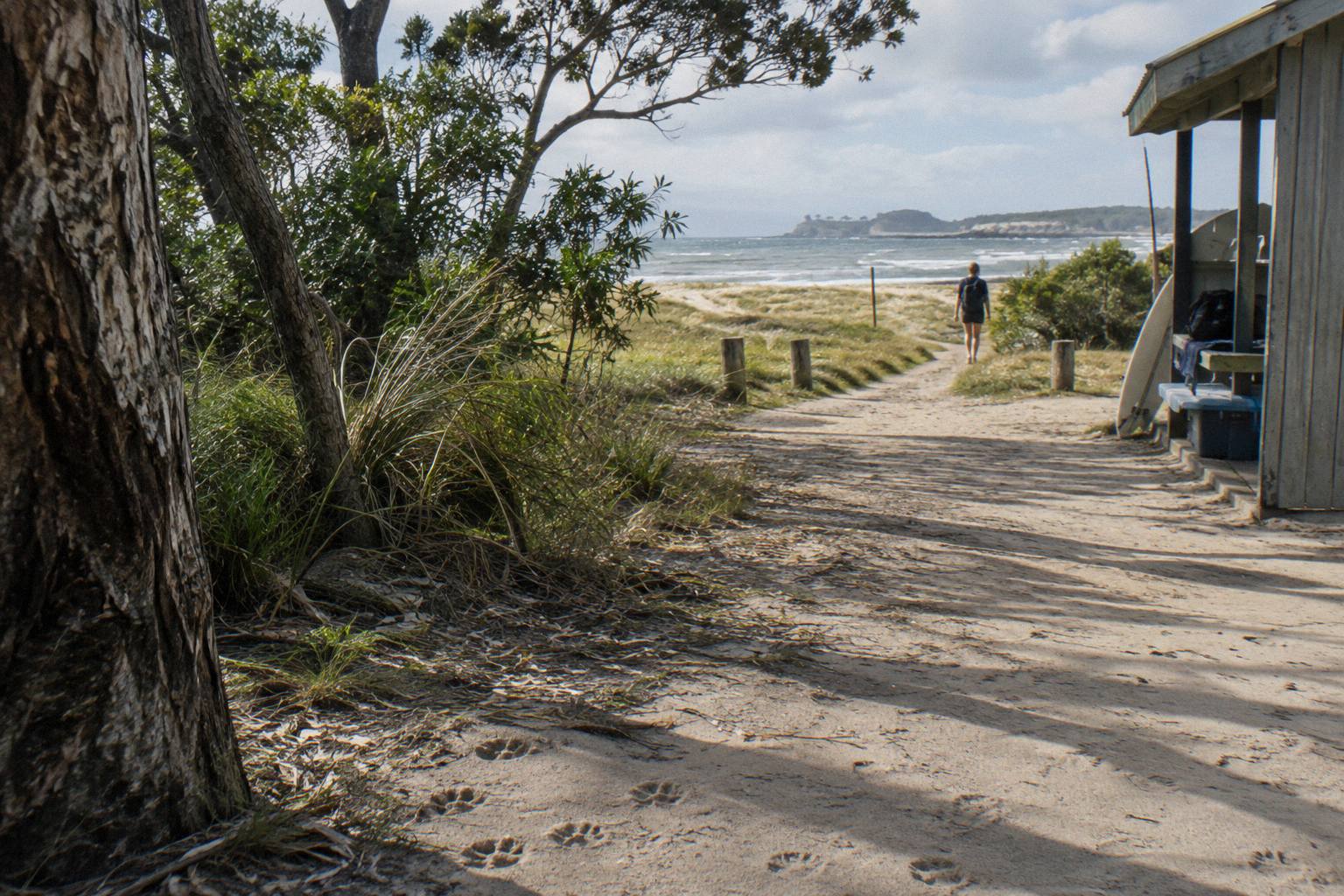
If your goal is to spend a full day with wildlife as the organising idea, three formats dominate the realistic shortlist. Each includes the return ferry, each runs as a small group, and each describes wildlife truthfully on its listing.
The Hit The Road Wildlife Day Trip is the trip with the most reviews on the booking pages, rated 4.9 from 547 reviews, from A$149 per person for 9 hours 30 minutes. It meets outside the Adina Apartment Hotel Anzac Square in Brisbane at 7:45 AM, and the booking page warns there are two Adina hotels in the city, so double-check which one before you set out. The whole day is built around wildlife, which is in the trip's own title, and water and the ferry ticket are included. Before you commit to any date, this North Stradbroke Island Tours guide walks through what each format actually delivers, so your expectations match the listing rather than the brochure fantasy.
What Wildlife Actually Lives On The Island?
The resident list is long for a sand island: a genetically distinct koala population, eastern grey kangaroos, golden wallabies, dolphins, turtles, manta rays and dugong in nearby waters, plus humpback whales passing close to the coastline from June to November. Queensland Parks confirms every one of these, and also confirms that sightings are never guaranteed, because these are wild animals moving through habitat that covers half the island.
The koalas here matter more than most visitors realise. Queensland Parks describes the island's population as genetically distinct, a pocket of animals that has been isolated long enough to be scientifically notable. That distinctness is a drawcard, but it does not make the animals easier to find. Koalas sleep for most of the day, high in eucalypts, and a guide's skill lies in knowing which stands of trees are being used this week. Kangaroos and the island's golden wallabies are more cooperative, grazing in open areas at either end of the day, which is why tours with early starts hold a real advantage.
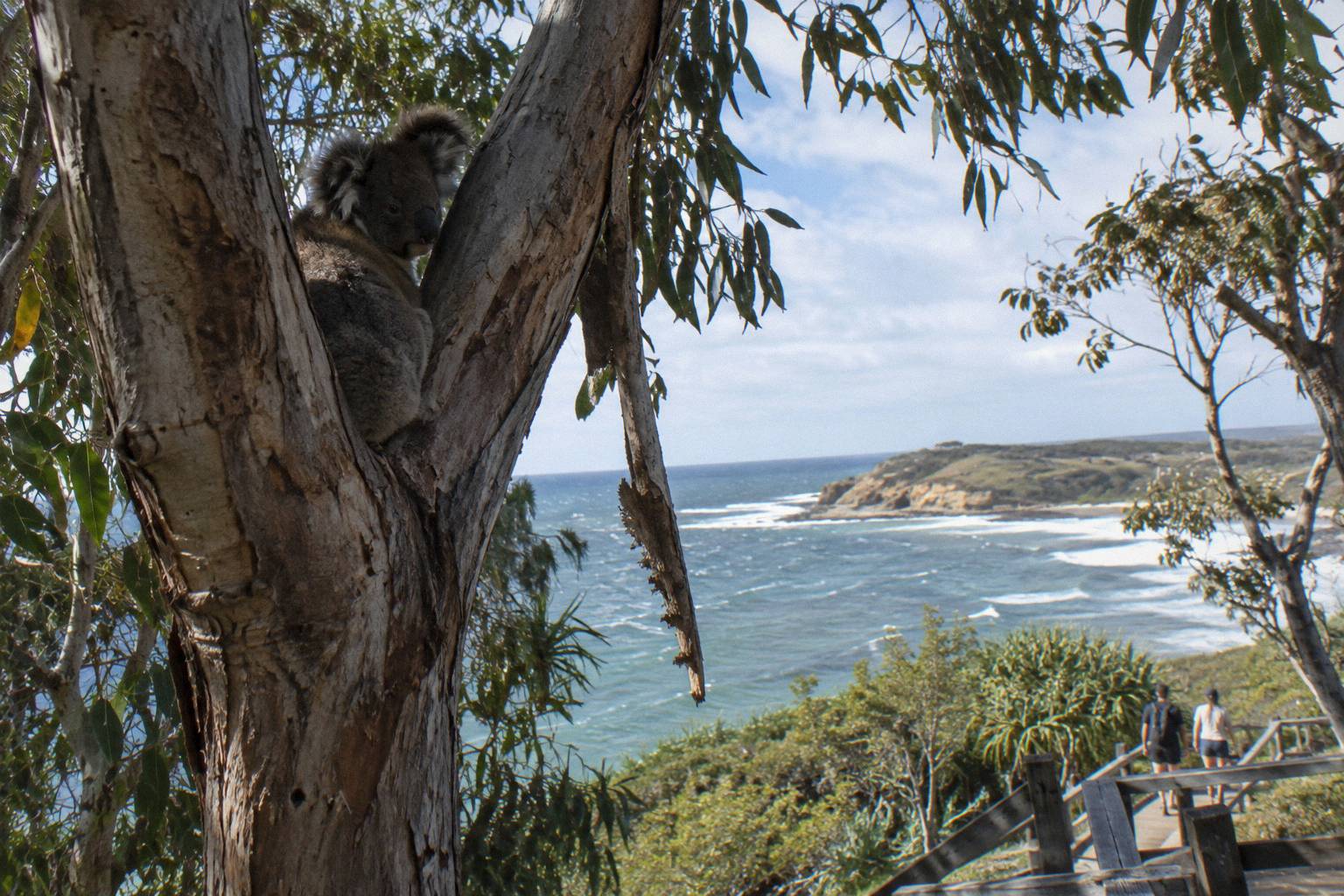
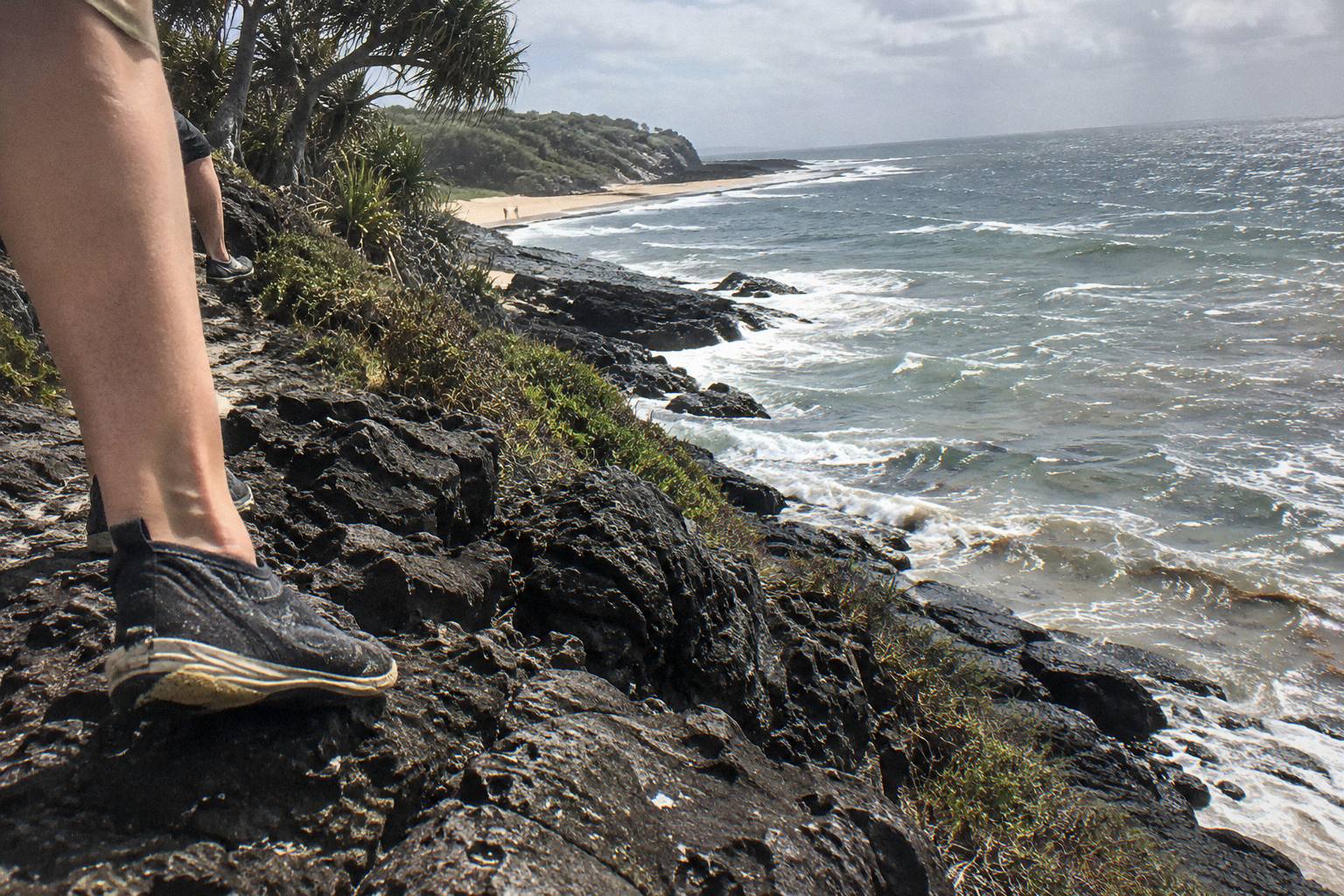
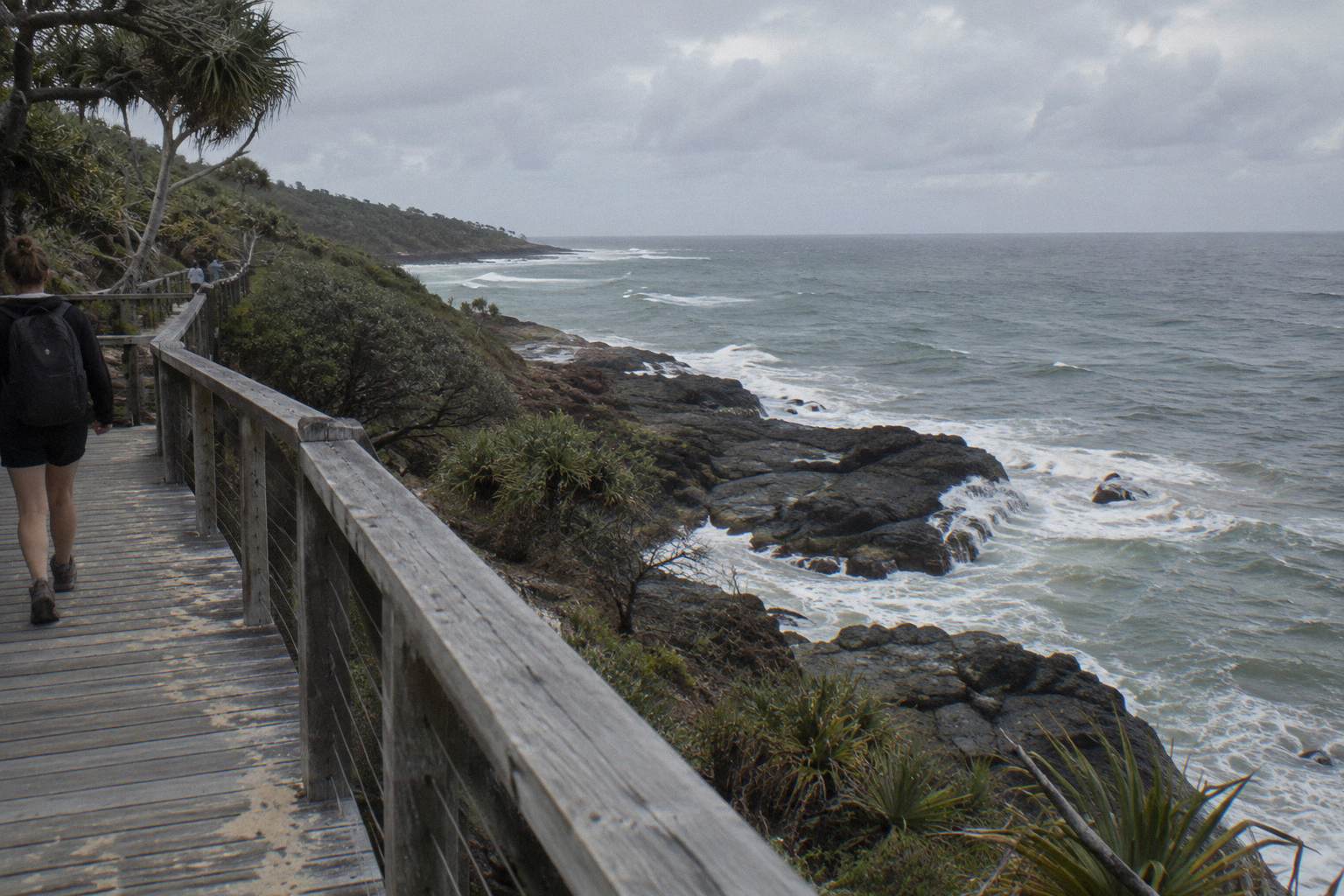
The marine list is the part that surprises first-time visitors. Moreton Bay Marine Park surrounds the island entirely, and Queensland Parks names humpback whales, manta rays and turtles as regularly seen from headlands, with dugong and grey nurse sharks in nearby waters. The headlands at Point Lookout are the vantage point, and the Queensland Parks page for Naree Budjong Djara describes the North Gorge Walk as a gentle walk with ocean views where turtles, dolphins and manta rays are the named marine life. For a deeper look at the resident land animals and where they hide, see the site's guide to Straddie wildlife: kangaroos, koalas, turtles and rays.
| Animal | Status on the island | Best window | Ever promised? |
|---|---|---|---|
| Koala | Genetically distinct resident population | Daytime, in eucalypt canopy | No, spotted with a guide at best |
| Kangaroo | Resident, grazes open ground | Early morning and late afternoon | No |
| Golden wallaby | Found on North and South Stradbroke only | Early morning and late afternoon | No |
| Humpback whale | Passes close to the coastline on migration | June to November | No, land sightings only |
| Manta ray, turtle | Regularly seen from headlands | Year round, from lookouts | No |
| Dolphin | Named marine life of the island | Year round, from headlands | No |
| Dugong, grey nurse shark | In nearby waters | Not tied to a season | No |
Which Tours Mention Koalas And Kangaroos?
Two of the three wildlife-focused day trips put koalas and kangaroos in their listing text directly: the Wildlife And Beaches day trip says koalas and kangaroos with the guide, and the Hit The Road Wildlife Day Trip is built around wildlife by its own title. The Small Group Eco Tour says look for koalas and kangaroos alongside its marine list. All three wordings describe a search, not a delivery.
The wording matters more than the animal count. The Wildlife And Beaches, 11 Hours trip, run by Stradbroke Island Tours from A$199 per person and rated 4.9 from 119 reviews, is the most specific: koalas and kangaroos with the guide is listed as a stop, and the guide is a named inclusion on the page. That phrasing tells you a person who knows the island will take you to the places these animals frequent. It does not tell you the animals will pose.
Booking a wildlife day is a genuine decision moment, and the question to ask yourself is simple.
The Hit The Road Wildlife Day Trip takes a broader approach. Its listing names no verified stop list at all beyond the wildlife framing, the ferry and the small-group format, capped at 11 people, with bottled water and an air-conditioned vehicle included and lunch not included. The guide recommends takeaway options for a beachfront picnic, or you bring your own. That absence of a stop list is not a weakness; it is a trip designed to react to where the animals are rather than march to a fixed timetable.
The Small Group Eco Tour, from A$199 per person and rated 4.7 from 294 reviews, takes the most structured route: Myora Springs, a guided hike on the North Gorge Walk to Point Lookout, the fishing village of Amity, Cylinder Beach and Frenchmans Beach, a lake stop with free time on the shore, and a listing that says look for dolphins, turtles, manta rays and whales and see koalas and kangaroos. Look for is the accurate verb, and it appears across Straddie listings because it is the truthful one.
One more practical note on choosing: the Small Group Eco Tour is not suitable for people with mobility impairments, and hotel pickup is not included, since it meets at Brisbane Skytower by CLLIX on Margaret Street. Free cancellation up to 24 hours before start applies to every trip listed here, which matters when your whole goal depends on weather and animal behaviour you cannot control.
| Trip | Length | Koalas and kangaroos on the listing | Marine life on the listing | Ferry | Group size |
|---|---|---|---|---|---|
| Hit The Road Wildlife Day Trip | 9 hours 30 minutes | Wildlife is the trip's framing | Not itemised on the listing | Included | Up to 11 |
| Wildlife And Beaches | 11 hours | Koalas and kangaroos with the guide | Wildlife viewing opportunities | Included | Up to 11 |
| Small Group Eco Tour | 10 hours | Look for and see koalas and kangaroos | Look for dolphins, turtles, manta rays, whales | Included | Small group |
When Can You See Whales From Point Lookout?
Humpback whales pass close to the coastline of the island from June to November on their annual migration, and Queensland Parks is the source of that window. The vantage points are the headlands at Point Lookout and the North Gorge Walk, seen from land, not from a boat. No whale-watching cruise, boat or kayak trip exists among the Straddie day tours, so a whale sighting is always a bonus from a lookout, never the product.
This is the single most misunderstood part of Straddie wildlife. People read that whales pass close to the coastline, and they imagine booking a whale-watching vessel. There is none among the island's day tours. What exists instead are day tours whose booking pages mention whales: the Small Group Eco Tour lists whales among the marine animals to look for, and other trips, including the Indigenous Culture Day Tour and the 4WD Beach Day, list seasonal whales in the same possible-not-promised register. The sighting, if it comes, happens while you stand on a headland in the middle of a broader day out.
That is not a poor substitute. Point Lookout is one of the better land-based whale vantage points on the east coast, because the migration route genuinely hugs the coastline here, and Queensland Parks says the whales pass close. In season, standing on the Gorge headlands for even twenty minutes gives you a real chance of a blow, a fluke or a full breach, and the park's culture page explains the joint Quandamooka and QPWS management that keeps this coastline as intact habitat. If your timing is flexible, the site's guide to the island's whale watching season breaks down what June to November actually looks like from the headlands.
Two cautions from the same official sources. The North Gorge Walk is a 1.2 km self-guided walk that is partly closed at present, so check the park alerts before you build your day around it. And no tour promises a whale even in peak season: the standard phrasing everywhere is seasonal whales, possible, from land.
What About Dolphins, Turtles And Manta Rays?
Dolphins, turtles and manta rays are named marine life of the island, regularly seen from headlands according to Queensland Parks, and several tour listings include them in a look-for list rather than a stop list. No trip names a dolphin stop at any beach, and no fact says dolphins come close at any particular point. Every dolphin, turtle and ray sighting on Straddie is written as possible, and that is the correct reading.
The look-for phrasing is worth pausing on, because it tells you how the day actually works. The Small Group Eco Tour includes a guided hike on the North Gorge Walk, and from that headland the ocean below is where turtles, dolphins and manta rays appear on the park's own description of the walk. Your guide will stop the group when eyes catch movement, and groups often linger at lookouts precisely because the marine traffic is real. But the listing still says look for, because a ray that surfaces a hundred metres offshore for four seconds cannot be scheduled.
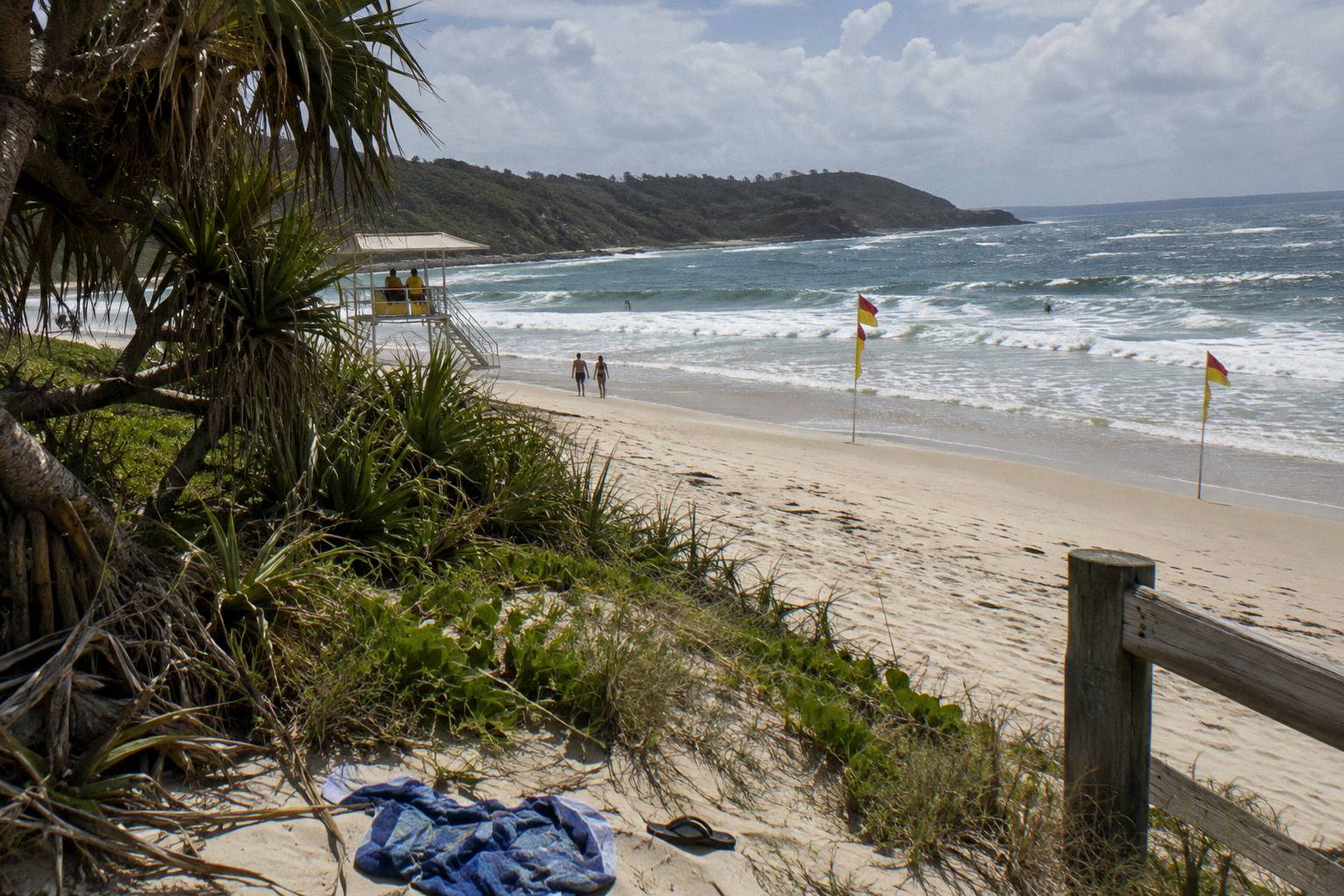
Swimming adds a different dimension. Several trips include beach time or swimming stops, and Cylinder Beach is a named stop on both the Small Group Eco Tour and the 4WD Beach Day. The patrolled areas matter here: patrols at Main Beach and Cylinder Beach run weekends and public holidays from September to early May, with school-holiday lifeguards at some beaches, so swim between the flags and ask a lifeguard, because bluebottles and fire jellies occur in Moreton Bay waters. For the full picture on which tours actually get you in the water, see the site's post on whether you can swim on a Straddie day tour.
If you are weighing whether the wildlife alone justifies the drive from Brisbane, the fair framing is this: the island concentrates koala habitat, open kangaroo country, a whale migration corridor and a marine park onto one headland walk, and no other day trip from the city offers that combination. The Small Group Eco Tour with national park fees included puts you on that headland with a guide, from A$199 per person.
What Actually Improves Your Odds Of A Sighting?
Four things genuinely move the needle: timing your visit around animal activity rather than midday, choosing a trip with a guide who knows current koala locations, picking a season that stacks the odds, and spending unhurried time at headlands rather than driving past them. None of these converts possible into guaranteed, but together they are the difference between a day of glimpses and a day of nothing.
Start with season. The months either side of the June to November whale window overlap with the driest part of the island's year. Bureau of Meteorology averages for the Point Lookout station put September at a mean 53.7 mm of rainfall and August at 68.9 mm, against a wettest March of 179.6 mm, and the full climate averages table is public. Clear winter and spring days do two things: they put humpbacks in the migration window and they put you at a lookout long enough to scan the water, rather than sheltering in the vehicle. Mean maximums of 21.2 °C in July make standing on a headland for an hour genuinely comfortable.
| Factor | Why it helps | Who it suits |
|---|---|---|
| Early start (7:30 to 8:00 AM departures) | Kangaroos and wallabies graze at either end of the day | Any traveller who can make the pickup |
| A guided walk on the headlands | Time spent scanning is how marine sightings happen | Readers comfortable with a gentle walk |
| June to November travel | Adds the humpback migration to the possible list | Flexible-date travellers |
| Small group of 11 or fewer | More eyes, quieter stops, longer at each site | Almost everyone |
| A guide who tracks koala locations weekly | Local knowledge is the single biggest koala factor | First-time visitors especially |
Group size is the quiet advantage. All three trips cap at small numbers, 11 or fewer, and the Wildlife And Beaches listing names the small group format as an inclusion in its own right. A dozen quiet watchers on a headland spot more animals than a coach load, and a small vehicle can pause for five minutes when a koala is spotted instead of negotiating a 50-seat parking bay. Slow down, stay quiet at lookouts, and let the guide linger: impatience is the most reliable way to see nothing.
How Do You Read A Tour Listing?
Read the verbs. A listing that says wildlife viewing opportunities or look for koalas is describing a search, which is truthful and matches how wild animals behave. A listing that guarantees sightings does not deserve your money, because no operator controls a koala's nap schedule or a whale's route. The three trips compared here all use search language, and their review counts are the better evidence of what a day actually delivers.
Put the numbers side by side and the pattern is calm rather than salesy. Hit The Road Wildlife Day Trip: from A$149 per person, 4.9 from 547 reviews, 9 hours 30 minutes. Wildlife And Beaches: from A$199 per person, 4.9 from 119 reviews, 11 hours. Small Group Eco Tour: from A$199 per person, 4.7 from 294 reviews, 10 hours, national park fees included. All prices are in Australian dollars per person and all three carry free cancellation up to 24 hours before start, which is exactly the flexibility a wildlife-dependent day deserves. Never compare these ratings as better or worse; the review pools differ in size, and the best use of a review pool is reading what guests say about the animal outcomes, not the number alone.
When you scan reviews, look for the phrase that recurs on good wildlife days: the guide found. Guides who found a koala, found a ray, stopped for a whale. That single verb, repeated across independent guests, tells you more than any guarantee, because it describes a person doing the work of locating animals. It also tells you what happens when the work fails: those reviews exist too, on every trip, and a balanced read includes them.
So, will you definitely see wildlife on a Straddie tour? No. Will you probably see something, on a small-group day in a good season with a guide who knows the island? The weight of evidence, official and independent alike, says the odds are on your side, and the island's concentration of habitat is the reason.
Common Questions About Straddie Wildlife Tours
Will You Definitely See Wildlife On A Straddie Tour?
No. Sightings are possible and never certain. Queensland Parks and every truthful booking page use search language like look for and wildlife viewing opportunities, because koalas, kangaroos, whales and rays are wild animals no operator can schedule.
Which Animals Are Most Likely On A Straddie Day Tour?
Kangaroos and golden wallabies grazing in open country are the most cooperative, especially early and late in the day. Koalas are regularly spotted with a guide who tracks their locations. Dolphins, turtles and manta rays are regularly seen from headlands, and humpback whales pass close to the coastline from June to November.
Can You Book A Whale-Watching Cruise From North Stradbroke Island?
Not among the day tours available. No whale-watching cruise, boat or kayak trip exists for the island. Whales are seen from land, from the headlands at Point Lookout and the North Gorge Walk, on day tours whose booking pages mention seasonal whales.
Do The Tours Guarantee Koalas?
No. The Wildlife And Beaches listing says koalas and kangaroos with the guide, the Small Group Eco Tour says look for and see koalas and kangaroos, and the Hit The Road Wildlife Day Trip is built around wildlife without naming a stop list. All three describe a guided search, not a guaranteed sighting.
What Is The Best Season For Wildlife On Straddie?
There is no single best month. June to November adds humpback whales to the possible list, and the driest months on the Bureau of Meteorology averages, September and August, make long lookout stops comfortable. The right question is which condition matters most to you.
Can I Cancel If The Wildlife Outlook Is Poor?
Yes. Free cancellation up to 24 hours before start applies to every trip mentioned here, including all three wildlife-focused day trips, so you can rebook a better day if the weather or the season turns against you.