Can You Swim On A Straddie Day Tour? Beaches And Lakes
Beach swimming on a Straddie day tour happens at patrolled beaches between the flags, while the island's lakes are not recommended for swimming. Here is what each tour day actually allows.
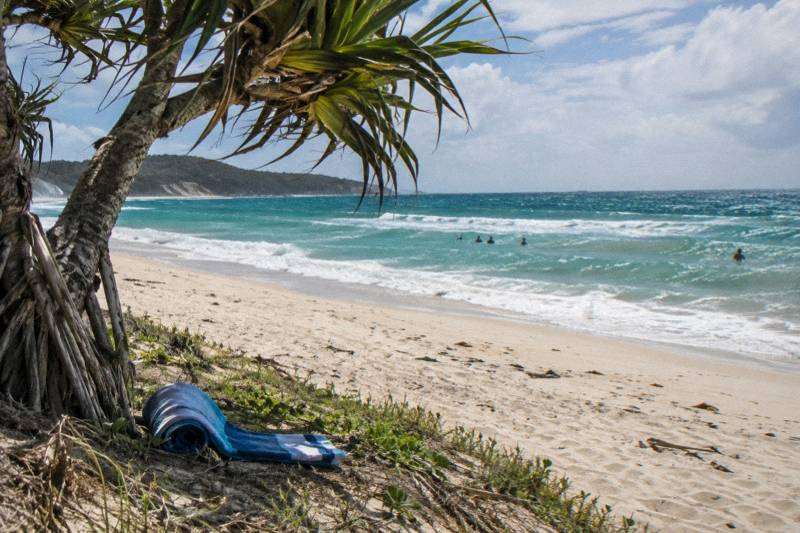
Yes, on most tour days you can swim, but only at the beaches, and the safest swimming is between the flags at a patrolled beach. Cylinder Beach and Main Beach are regularly patrolled on weekends and public holidays from September to early May, with school-holiday lifeguards at some beaches. The lakes are a different story: the Quandamooka people ask visitors not to swim in Blue Lake, and the park discourages swimming in the lakes generally.
That split, beach yes and lake no, is the single most useful thing to understand before you book. A day tour from Brisbane to North Stradbroke Island (Minjerribah) is built around wildlife, headland walks and beach time, and swimming stops are part of most tour days. But the island is not a theme park of swimming holes. It is a sand island in Moreton Bay where rips and side currents are possible on the ocean side, where bluebottles and fire jellies occur in the bay waters, and where the freshwater lakes carry cultural and environmental rules that Queensland Parks states plainly.
The tour formats that touch water most directly are easy to identify from their booking pages. The Wildlife And Beaches, 11 Hours day trip lists beach time and swimming stops and beach games among its inclusions. The Small Group Eco Tour, All Inclusive names Cylinder Beach and Frenchmans Beach as stops and includes free time in the afternoon. The 4WD Beach Day, BBQ Included lists Cylinder Beach on its booking page. A wildlife-focused day like the Hit The Road Wildlife Day Trip is built around animals rather than swimming, though a beachfront picnic lunch is part of the plan.
Every one of them includes the return ferry, and free cancellation up to 24 hours before start applies to each.
Which format suits you depends on what you want from the water. If swimming is the point, the Wildlife And Beaches day trip is the one whose inclusions say it outright: beach time and swimming stops, plus beach games. If you want swimming as one ingredient in a day that also walks the headlands and visits a lake, the Small Group Eco Tour covers more ground. Prices for all three are in Australian dollars: the Small Group Eco Tour and the Wildlife And Beaches day trip both run from A$199 per person, while the Hit The Road Wildlife Day Trip runs from A$149 per person. The price of the 4WD Beach Day, BBQ Included for your date shows on the booking page.
Which Beaches Can You Swim At On Straddie?
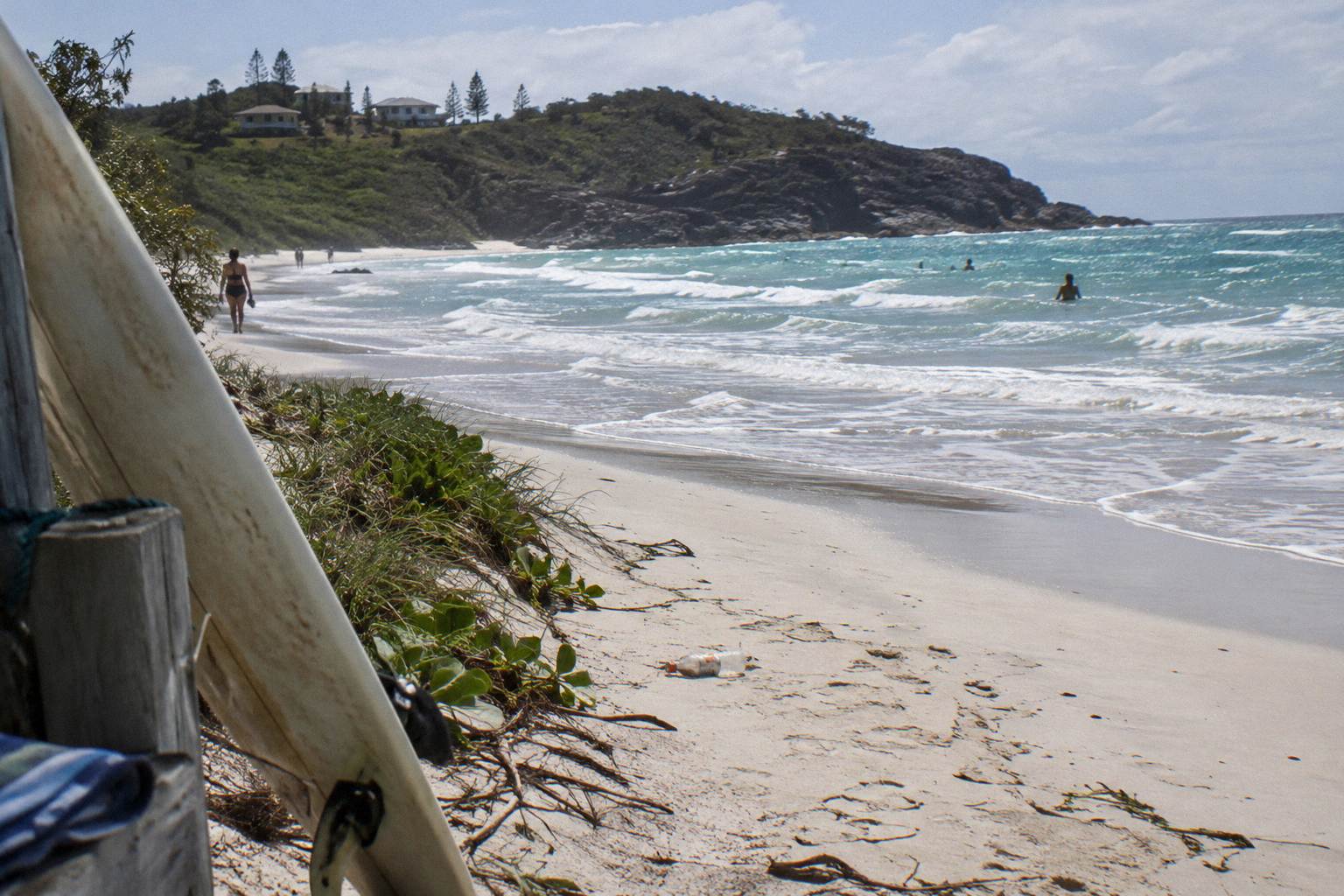
That is the core beach safety picture, and it comes from Queensland Parks, SeaLink and Surf Life Saving Queensland. The patrolled area at Point Lookout earns its popularity for good reason: it is the stretch of Cylinder Beach that most day tours can reach on foot from the headlands, and it is where the flags go up when patrols are running. Cylinder Beach and Main Beach are the two regularly patrolled beaches. On weekends and public holidays from September to early May you can plan a swim around the flags, and school-holiday lifeguards extend that cover at some beaches, including Adder Rock.
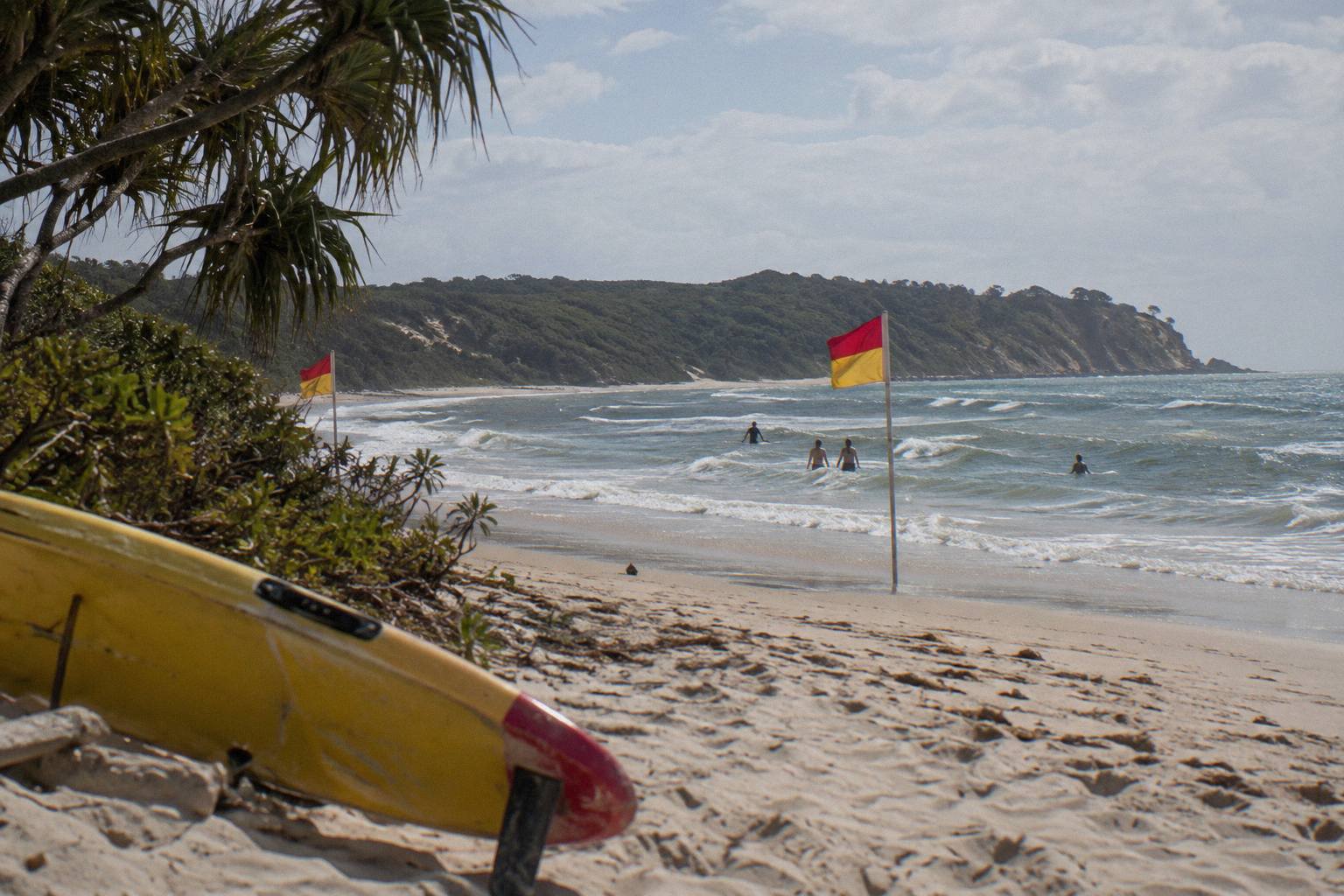
Outside the flags and outside patrol season, the ocean side of the island demands respect. Queensland Parks warns that rips and side currents are possible at Point Lookout, and the same warning logic applies anywhere surf is running. On the bay side, Dunwich and Amity Point have enclosed swimming areas, which makes them the calm-water options, particularly for families. One place to avoid absolutely: Queensland Parks says do not swim in the deep channel off Amity Point, because of strong currents and possible sharks. The enclosed area is the swim spot at Amity, not the channel.
Here is the rule-by-place summary:
| Beach or swim spot | Where | The stated rule |
|---|---|---|
| Cylinder Beach | Point Lookout | Regularly patrolled; a named stop on the Small Group Eco Tour and the 4WD Beach Day |
| Main Beach | Point Lookout end to the south | Regularly patrolled; 4WD recreation area, speed limit 60 km/h on the sand |
| Patrolled area at Point Lookout | Point Lookout | The most popular swimming beach; rips and side currents possible |
| Adder Rock | Point Lookout end | School-holiday lifeguards at some beaches; not a regular patrol beach |
| Enclosed swimming areas | Dunwich and Amity Point | Calm bay-side option; at Amity, never swim in the deep channel off the point |
Marine stingers are part of the picture too, and this is worth saying clearly rather than glossing. Bluebottles and fire jellies (Morbakka) occur in Moreton Bay waters. They are not a reason to skip the island, but they are a reason to swim between the flags and ask a lifeguard rather than guessing. The dangerous tropical stinger species that dominate northern Queensland are not Moreton Bay's, so the advice here is the simple, local kind: check the water, check with the lifeguard, and swim where the flags are. More on what that means for your packing is in our guide on what to pack for a Straddie day tour.
If your swim time matters most, the tour whose inclusions name it directly is the Wildlife And Beaches day trip, an 11-hour day rated 4.9 from 119 reviews, from A$199 per person, with beach time and swimming stops and beach games listed among what is included.
Can You Swim In Blue Lake Or Brown Lake?
No, and this is the part many visitors get wrong. The Quandamooka people ask visitors not to swim in Kaboora (Blue Lake) because it is a place of significant cultural value, and Queensland Parks says swimming and sunscreen pollute lakes and lagoons generally. Bummiera (Brown Lake) is never a recommended swim. A tour that includes a lake stop means shore time, not a swim.
The lake rules are cultural and environmental at once. Kaboora (Blue Lake) sits inside Naree Budjong Djara National Park, a park the Quandamooka people jointly manage with Queensland Parks, and the park's guidance is explicit that Kaboora is a place of significant cultural value and that visitors are asked not to swim in it. The walk in is 3 km one way from the Kaboora car park, which is about 9 km from Dunwich along Alfred Martin Way, and Queensland Parks describes it as an easy walk to the viewing platform. The reward is the view, the tea-coloured water and the quiet, not a dip.
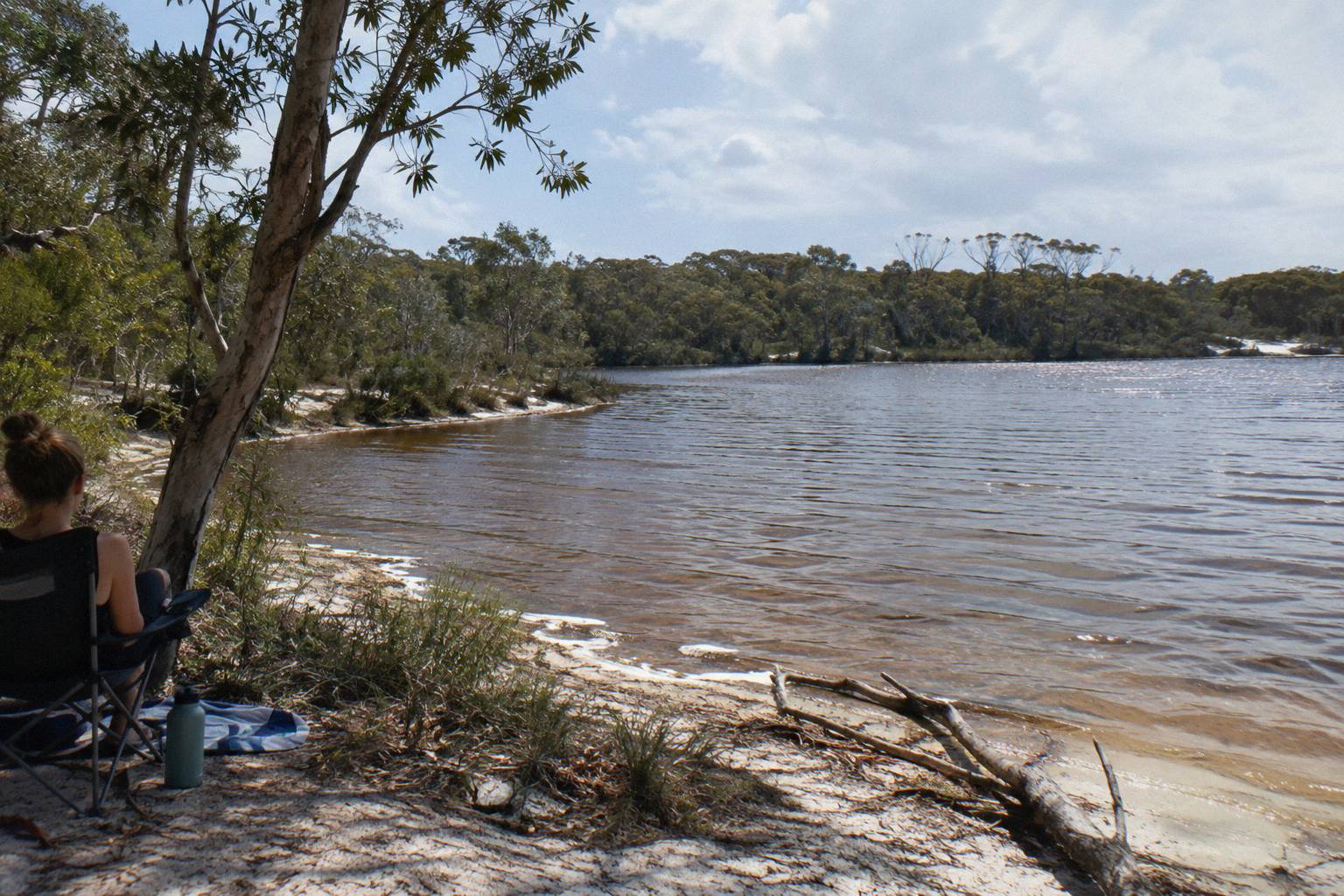
Bummiera (Brown Lake) is closer to the road: 3.5 km from Dunwich along Alfred Martin Way, with picnic and toilet facilities. The activities the park names there are walking the fire tracks, bird watching and wildflowers. The general park guidance applies: swimming and sunscreen pollute lakes and lagoons. So a Brown Lake stop on a tour day is a picnic and a look, and that is genuinely worth having; the lake's colour comes from the tannins in the groundwater, and it is one of the island's signature sights. If you want to go deeper on the lake that gets asked about most, read whether you can swim in Blue Lake Kaboora.
One practical note for independent plans: access tracks to Brown Lake can close temporarily, and Queensland Parks posts alerts on the park page, so check before driving out. A day tour that includes Brown Lake as a stop handles that timing for you.
| Lake | Distance and access | The stated rule |
|---|---|---|
| Kaboora (Blue Lake) | 3 km one way from the car park, about 9 km from Dunwich along Alfred Martin Way | Significant cultural value; visitors asked not to swim |
| Bummiera (Brown Lake) | 3.5 km from Dunwich along Alfred Martin Way; picnic and toilet facilities | Swimming never recommended; park says swimming and sunscreen pollute lakes and lagoons; access tracks can close temporarily, check park alerts |
| Myora Springs (Capembah) | Freshwater spring | A shore stop on the Small Group Eco Tour and the Indigenous Culture Day Tour, not a swim spot |
Where this meets tour days: the Small Group Eco Tour's booking page lists a lake stop with free time on the shore, alongside Myora Springs, a guided North Gorge Walk hike to Point Lookout, the fishing village of Amity, and Cylinder Beach and Frenchmans Beach. The lake stop on that trip is shore time, and the framing is exactly the one above: the park asks visitors not to swim in Blue Lake and discourages swimming in the lakes, so the beach stops are where the swimming happens. Queensland Parks explains the joint management of the park and the lakes' cultural values on its Naree Budjong Djara culture page.
Which Day Tours Include Swimming Stops?
The Wildlife And Beaches, 11 Hours trip lists beach time and swimming stops outright, the Small Group Eco Tour stops at Cylinder Beach and Frenchmans Beach with free time in the afternoon, and the 4WD Beach Day lists Cylinder Beach. The Hit The Road Wildlife Day Trip is built around wildlife rather than swimming. No tour promises a swim; the beach stop is the window for one.
Reading the booking pages literally is the clearest way to answer this, because the differences are real. The Wildlife And Beaches day trip, run by Stradbroke Island Tours, is the most explicit: beach time, swimming stops and beach games are in the inclusions column, alongside a professional guide, a small group of up to 11, the ferry ticket and an air-conditioned vehicle. It runs 11 hours, is rated 4.9 from 119 reviews, and costs from A$199 per person. Its meeting points on the booking page include Pullman Brisbane King George Square, the SeaLink Departure Lounge Cafe in Cleveland and Novotel Surfers Paradise, which makes it one of the few formats with a Gold Coast option.
The Small Group Eco Tour, run by Queensland Day Tours, is the broader day: 10 hours, from A$199 per person, rated 4.7 from 294 reviews, meeting at Brisbane Skytower by CLLIX, 222 Margaret St. It includes a guided North Gorge Walk hike to Point Lookout, Cylinder Beach, Frenchmans Beach, the Amity fishing village, Myora Springs and a lake stop with free time on the shore, plus afternoon free time. National park fees and the return ferry are included; hotel pickup and drop-off are listed as not included, and the trip is not suitable for people with mobility impairments.
The 4WD Beach Day, BBQ Included, run by Straddie Kingfisher Tours, is a different format again: 7 hours 30 minutes, hotel pickup from the booking page's pickup points at about 7:30 am or a meet at the SeaLink water taxi terminal in Cleveland, a group of up to 10, lunch and national park fees included, and Cylinder Beach and koala spotting on the booking page along with whales June to November. It is rated 4.9 from 33 reviews, and the price for your date shows on the booking page. Because it is a 4WD day, beach driving is part of the experience; the swimming, if it happens, is at the beach stops.
Is A Tour Day Long Enough For A Proper Swim?
Yes, if you pick the format that matches. An 11-hour day like the Wildlife And Beaches trip has room for a real swim stop without squeezing out the wildlife viewing and the Point Lookout time. A 10-hour day like the Small Group Eco Tour spreads itself across more stops, so the swim is one of several things that happen at Cylinder Beach rather than the whole reason for the stop. The trade is simple: more inclusions means less time at each one. Every one of these trips has free cancellation up to 24 hours before start, so the decision is low-risk at the point of booking.
Do You Need To Worry About Currents And Stingers?
Rips and side currents are possible at Point Lookout, bluebottles and fire jellies occur in Moreton Bay waters, and the deep channel off Amity Point is off limits for swimming because of strong currents and possible sharks. None of this means swimming is unsafe; it means swimming happens between the flags, at patrolled beaches, with lifeguard advice taken.
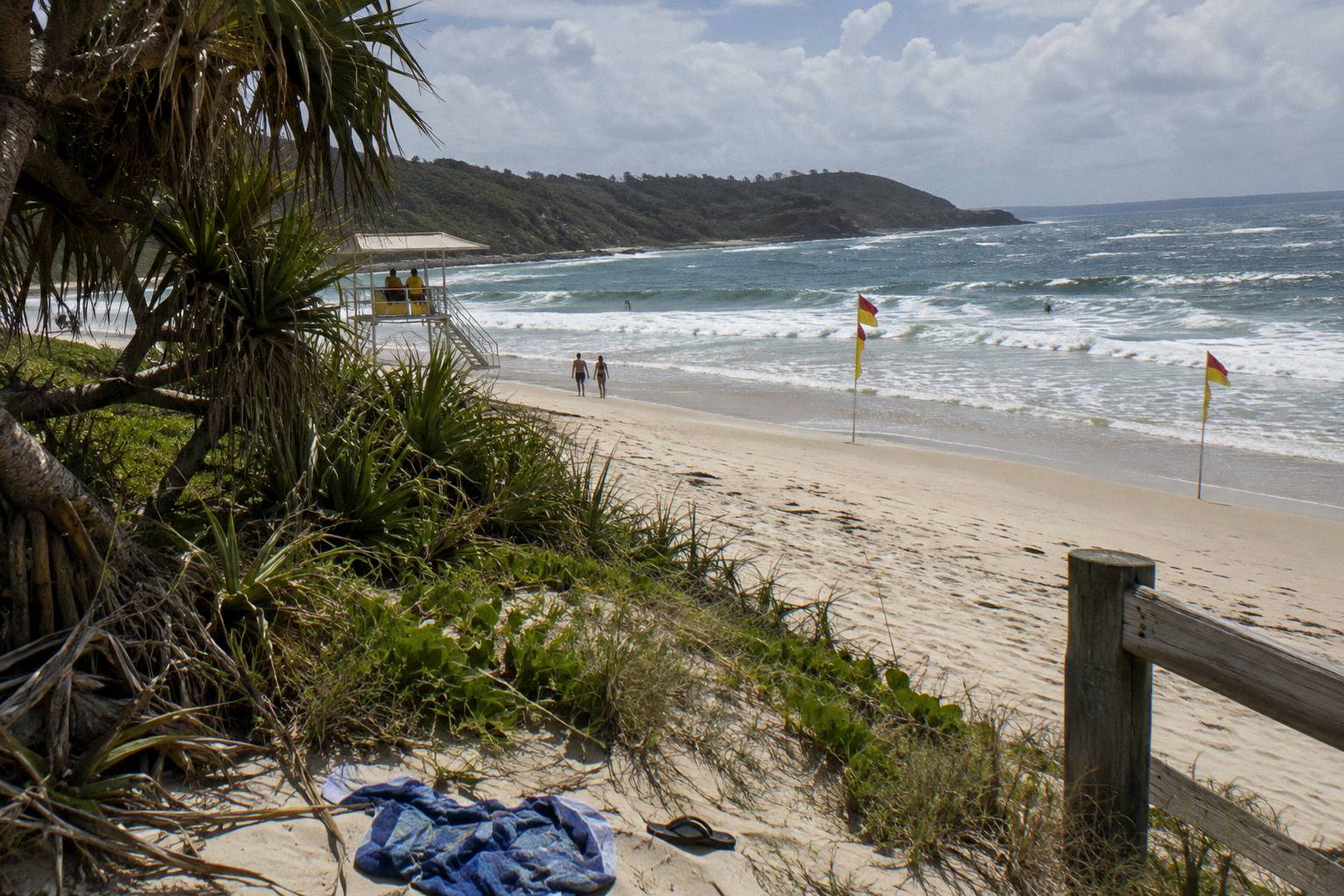
The ocean side of Straddie faces open Pacific swell, which is exactly why the headlands are so good for watching whales pass close to the coastline from June to November, and why the water needs respect. The patrolled area at Point Lookout is the most popular swimming beach for good reason: the flags sit where the sandbars manage the energy best. Queensland Parks is the source for the rip and side-current warning, and for the two enclosed swimming areas at Dunwich and Amity Point that give calm-water alternatives on the bay side.
Stingers are the quieter part of the picture. The species that matter here are bluebottles and fire jellies (Morbakka), which occur in Moreton Bay waters. They are seasonal visitors rather than a constant presence, and the advice is not to avoid the water but to swim between the flags and ask a lifeguard, who will know what has been washing in. The dangerous tropical box jellyfish and Irukandji that shape swimming rules in far northern Queensland are not Moreton Bay's, so the stinger conversation on Straddie is a shorter one than in the tropics.
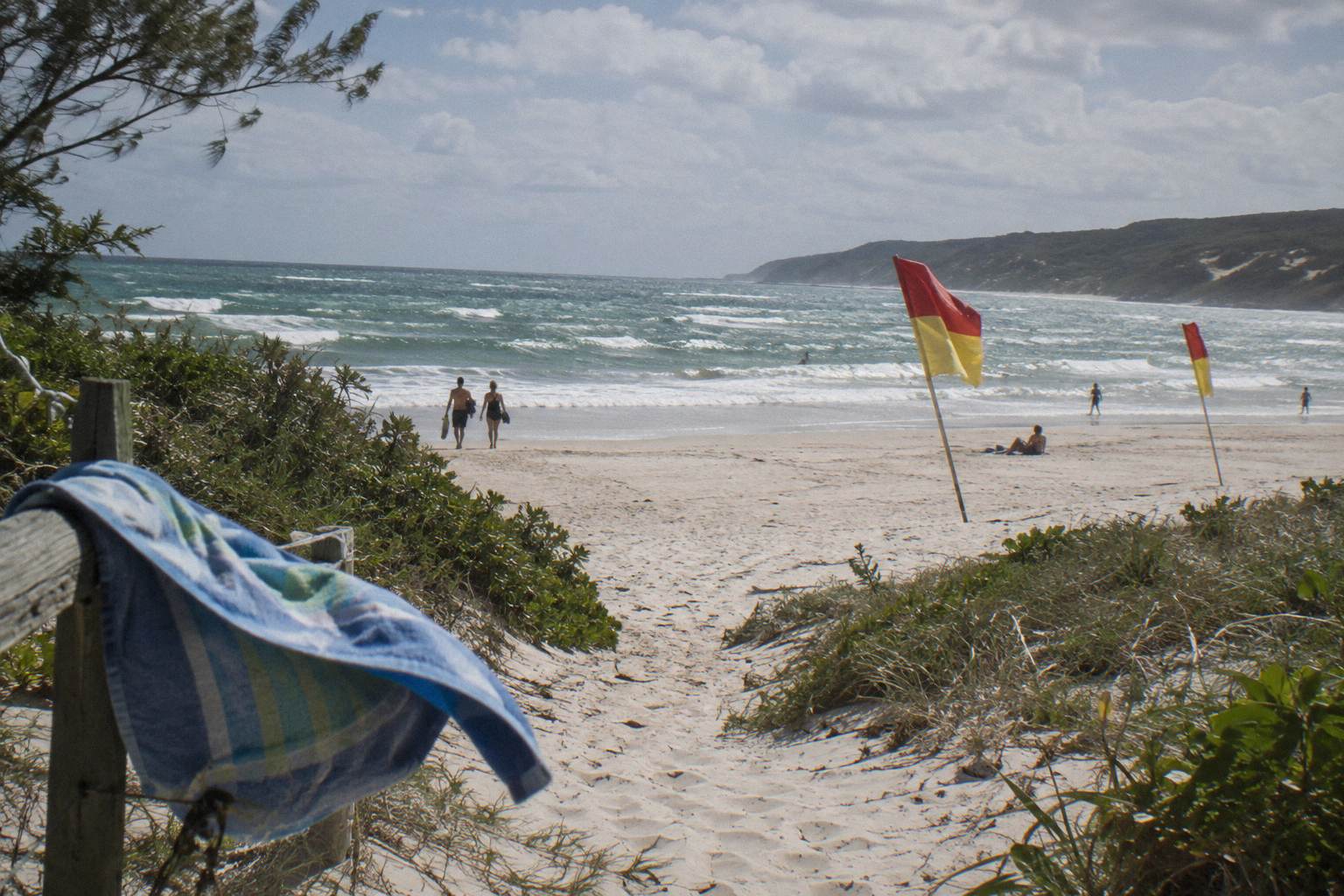
Weather is worth a sentence too. The Bureau of Meteorology's Point Lookout station records a mean annual rainfall of 1,517.7 mm, with March the wettest month at 179.6 mm and September the driest at 53.7 mm; mean maximums run from 29.6 °C in January to 21.2 °C in July. There is no best month to name, because the decision logic is which condition matters to you: whale season runs June to November, patrol season runs September to early May on weekends and public holidays, and the warmest water sits in the southern summer. The Bureau's Point Lookout climate averages carry the full table.
A practical note on tour days: if the surf is up or stingers have been washing in, a good guide will adjust the stop, and the beach time becomes beachcombing or the beach games the Wildlife And Beaches trip carries. Tours carry their own weather on the day rules, and the on-island 3-hour Minjerribah Cultural Driving Tour by Yura Tours is the format that runs regardless, though it is a driving day rather than a swimming one. SeaLink's own island information pages cover the current ferry and terminal details for independent travellers.
What Should You Pack For Swimming On A Tour Day?
Pack swimwear worn or easily reachable, a towel, a rash shirt, reef-safe sunscreen applied before you arrive at a lake, drinking water and dry clothes for the ferry home. The lake rule makes sunscreen a shore-only item: the park says swimming and sunscreen pollute lakes and lagoons, so cream up for the beach, not the lake stop.
The packing list follows directly from the swimming rules above. A day tour from Brisbane is long, 7 hours 30 minutes to 11 hours across the formats, and the ferry each way is about 25 minutes on the passenger service. Swim time comes in a window: at Cylinder Beach on the Small Group Eco Tour or the 4WD Beach Day, or at the swimming stops on the Wildlife And Beaches trip. Wear your swimwear under your clothes or keep it at the top of your bag, because the window is shorter than the day.
| Item | Why it earns its space |
|---|---|
| Swimwear worn or at the top of the bag | Swim windows are short on a multi-stop day |
| Towel and dry clothes | The ferry home is more comfortable dry; sea breeze cools fast |
| Rash shirt | Sun on the ocean side is direct, and a rash shirt doubles as stinger protection |
| Sunscreen | For the beach; the park says sunscreen pollutes lakes and lagoons, so skip it at lake stops |
| Water bottle | Bottled water is included on the Small Group Eco Tour and the Hit The Road trip; bring your own volume |
| reef-safe sunscreen and a dry bag | Sand, spray and a shared vehicle; a dry bag keeps the wet things contained |
Lunch is worth planning rather than packing, on most formats: the Hit The Road guide recommends takeaway lunch options for a beachfront picnic or bring your own, the 4WD Beach Day includes lunch with coffee and tea, and lunch is listed as not included on the Small Group Eco Tour, the Wildlife And Beaches trip and the Hit The Road day. The three formats below are the ones whose beach stops make the swimming question easiest to answer, and North Stradbroke Island Tours keeps each one's live availability current. For the fuller picture of the townships and stops, our Cylinder Beach and Point Lookout guide covers the ground a swim day is built around.
Common Questions About Swimming On A Straddie Day Tour
Can You Swim On A Straddie Day Tour? Beaches And Lakes
Yes, at the beaches. Swim between the flags at a patrolled beach: Cylinder Beach and Main Beach are regularly patrolled, and the patrolled area at Point Lookout is the most popular swimming beach. The lakes are not for swimming; the Quandamooka people ask visitors not to swim in Blue Lake, and the park discourages swimming in the lakes.
Can You Swim In Blue Lake (Kaboora)?
No. Kaboora is a place of significant cultural value and the Quandamooka people ask visitors not to swim in it. The walk to the viewing platform, 3 km one way from the car park, is the way to experience it.
Can You Swim In Brown Lake (Bummiera)?
Swimming in Brown Lake is never recommended. Queensland Parks says swimming and sunscreen pollute lakes and lagoons, and the activities it names at Brown Lake are walking the fire tracks, bird watching and wildflowers. Access tracks can close temporarily, so check park alerts.
Are There Stingers At North Stradbroke Island?
Bluebottles and fire jellies (Morbakka) occur in Moreton Bay waters. Swim between the flags and ask a lifeguard. The dangerous tropical stinger species of far northern Queensland are not Moreton Bay's.
Which Day Tour Has The Most Swimming Time?
The Wildlife And Beaches, 11 Hours trip lists beach time and swimming stops and beach games in its inclusions, making it the most explicit swimming format. The Small Group Eco Tour stops at Cylinder Beach and Frenchmans Beach, and the 4WD Beach Day lists Cylinder Beach.
Is It Safe To Swim At Amity Point?
Amity Point has an enclosed swimming area, which is the safe option there. Do not swim in the deep channel off Amity Point: Queensland Parks warns of strong currents and possible sharks.