Can You Swim In Blue Lake (Kaboora) On A Straddie Tour?
No, the Quandamooka people ask visitors not to swim in Blue Lake (Kaboora) on North Stradbroke Island. Here is what the park says, what a visit looks like, and where you can swim instead.
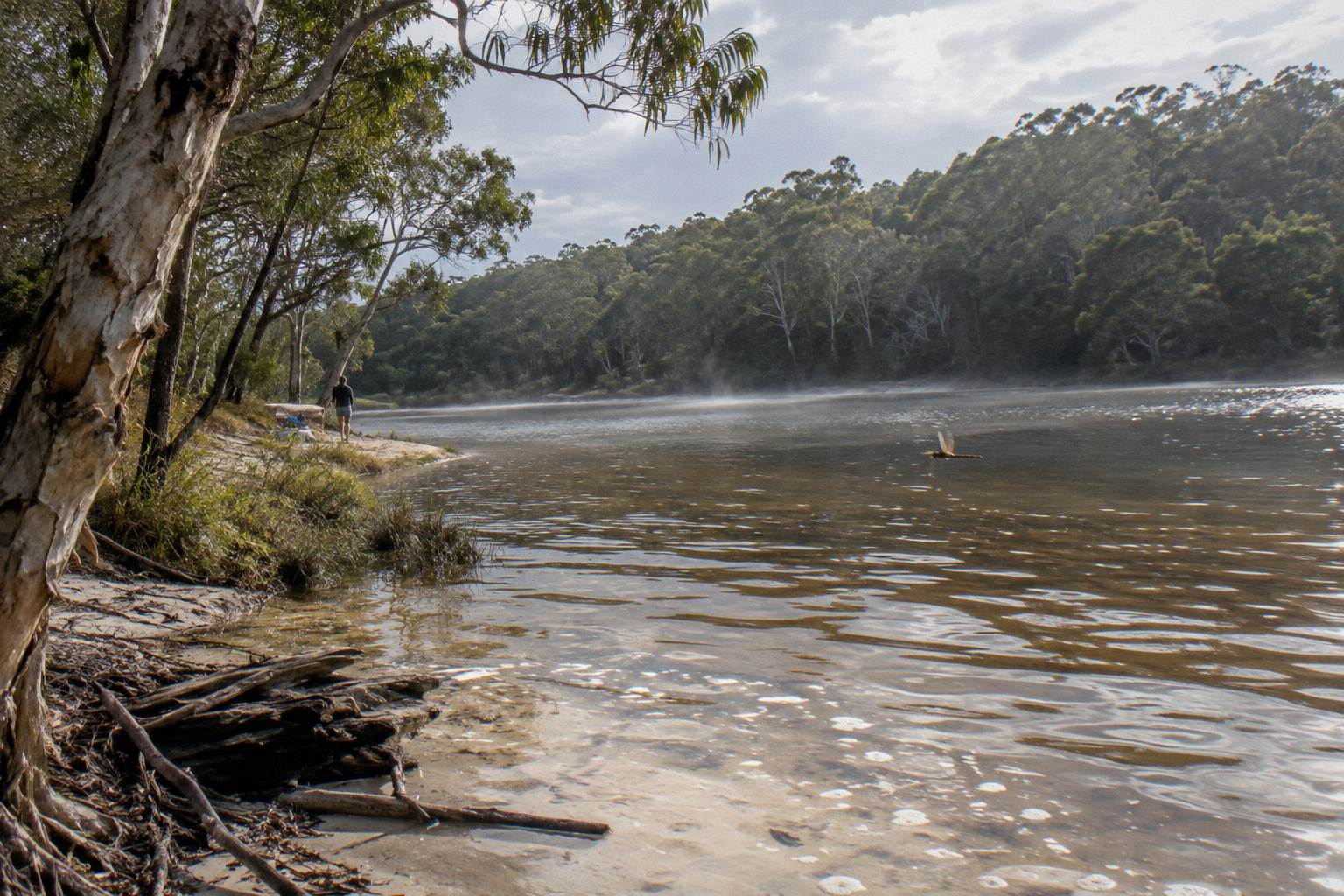
No. Blue Lake (Kaboora) on North Stradbroke Island (Minjerribah) is a look-don't-swim place: the Quandamooka people, whose Country the lake sits on, ask visitors not to swim in it, and Queensland Parks and Wildlife repeats that request on the park's own pages. No day tour stops at Kaboora, so the question never really arises on a guided trip.
That answer surprises people who remember Blue Lake as a swimming hole. Older guidebooks and secondhand blog posts sometimes describe it that way, and the lake's clear water over pale sand genuinely looks inviting on a hot afternoon. But the current position is unambiguous, and it comes from the joint managers of the national park the lake sits in rather than from tour operators or tourism marketing.
Kaboora lies inside Naree Budjong Djara National Park, which covers about 50 per cent of the island and has been jointly managed by the Quandamooka people and Queensland Parks and Wildlife Service since 2011. The park's name means "My Mother Earth", and the lake is described by the park as a place of significant cultural value. That is the basis of the request: it is not a water-quality ruling or a safety ruling dressed up in polite language, it is a cultural one, and the park asks visitors to respect it. Queensland Parks explains the cultural background on the park's culture page.
For most travellers the practical question is not "can I swim here" but "what does a Straddie day actually include". If you are booking a guided day, the answer is that every swimming stop on the guided trips is a beach stop, not a lake stop, and the two things are not interchangeable.
The three trips above are the ones to keep coming back to, because they are the day tours with the clearest stop lists on their booking pages. The Hit The Road Wildlife Day Trip from HIT THE ROAD TOURS costs from A$149 per person, runs 9 hours 30 minutes and is rated 4.9 from 547 reviews, the deepest review pool of any trip here. The Wildlife And Beaches day trip and the Small Group Eco Tour, from Stradbroke Island Tours and Queensland Day Tours respectively, are both from A$199 per person for 11 and 10 hours. Every one of them includes the return ferry and offers free cancellation up to 24 hours before start.
Worth spelling out, because it confuses first-time visitors: the island's two famous lakes are separate places with separate names and separate access roads, and tour itineraries that mention "a lake stop" are never describing Kaboora. Confusion between the two is the single most common mix-up in planning threads about Straddie, and it leads directly to disappointed expectations on the day, so it pays to know which lake your itinerary means before you pack a towel.
Why Is Swimming In Kaboora Not Allowed?
The Quandamooka people ask visitors not to swim in Kaboora because the lake is a place of significant cultural value inside Naree Budjong Djara National Park, and the park service, which co-manages the park with the Quandamooka Yoolooburrabee Aboriginal Corporation, carries that request in its official guidance. No fine schedule appears on the park page; the ask is cultural and the expectation is that visitors simply respect it.
The background matters if you want to understand the strength of the wording. Native title over much of the island was recognised in a consent determination handed down on 4 July 2011, and joint management of the national park followed that same year. The park's pages now present Quandamooka cultural places, from Eighteen Mile Swamp to midden and bora ring sites and the Moongalba (Myora) Mission and springs, as part of one living landscape rather than as scenery with separate rules attached. Kaboora sits inside that frame.
There is also a practical layer that applies to every lake and lagoon on the island, not just this one. The park says swimming and sunscreen pollute lakes and lagoons, which is why its general guidance discourages swimming in the island's freshwater bodies altogether. So even at lakes where no specific cultural request applies, the default park position is that these are not swimming venues. Two reasons, one conclusion: bring your togs for the ocean, not the lakes.
Here is what the park actually says, gathered in one place so you are not piecing it together from forum threads:
| Topic | What the park says | Practical consequence |
|---|---|---|
| Swimming in Kaboora | The Quandamooka people ask visitors not to swim in it | Do not swim; the viewing platform walk is the visit |
| Why | Kaboora is a place of significant cultural value | Respect applies year round, no exceptions stated |
| Other lakes | Swimming and sunscreen pollute lakes and lagoons | Freshwater bodies island-wide are not swimming venues |
| The walk | 3 km one way from the Kaboora car park to the viewing platform, called an easy walk in the park's photo caption | Allow a return walk and bring water |
| Getting there | The car park is about 9 km from Dunwich along Alfred Martin Way | You need a vehicle; no tour stop at Kaboora is verified |
| Dogs | Not permitted in the national park | Leave pets at home for any park walk |
One more thing worth knowing: sand mining on the island has ended, and the emphasis of the park's visitor messaging has shifted firmly toward protecting what remains. Roughly 2,150 residents share the island, and a large share of the landscape they live beside is jointly managed conservation estate. The no-swimming request at Kaboora is part of that broader settlement, not a quirky local rule.
A note on pets and the park, since families often ask: dogs are not permitted in the national park at all, and pets are not allowed on the island's public buses either, so a dog-friendly Straddie day is a mainland day. On the ferries, pets must stay in the vehicle or be muzzled on the passenger service. None of this is aimed at you specifically; it is standing park policy aimed at protecting wildlife, and the genetically distinct koala population and golden wallabies the park names are part of the reason the rules are written so plainly.
If the lake itself interests you as much as the rule, the dedicated Blue Lake (Kaboora) walking guide covers the walk, the access track and what the viewing platform actually shows you.
What Does A Blue Lake Visit Actually Look Like?
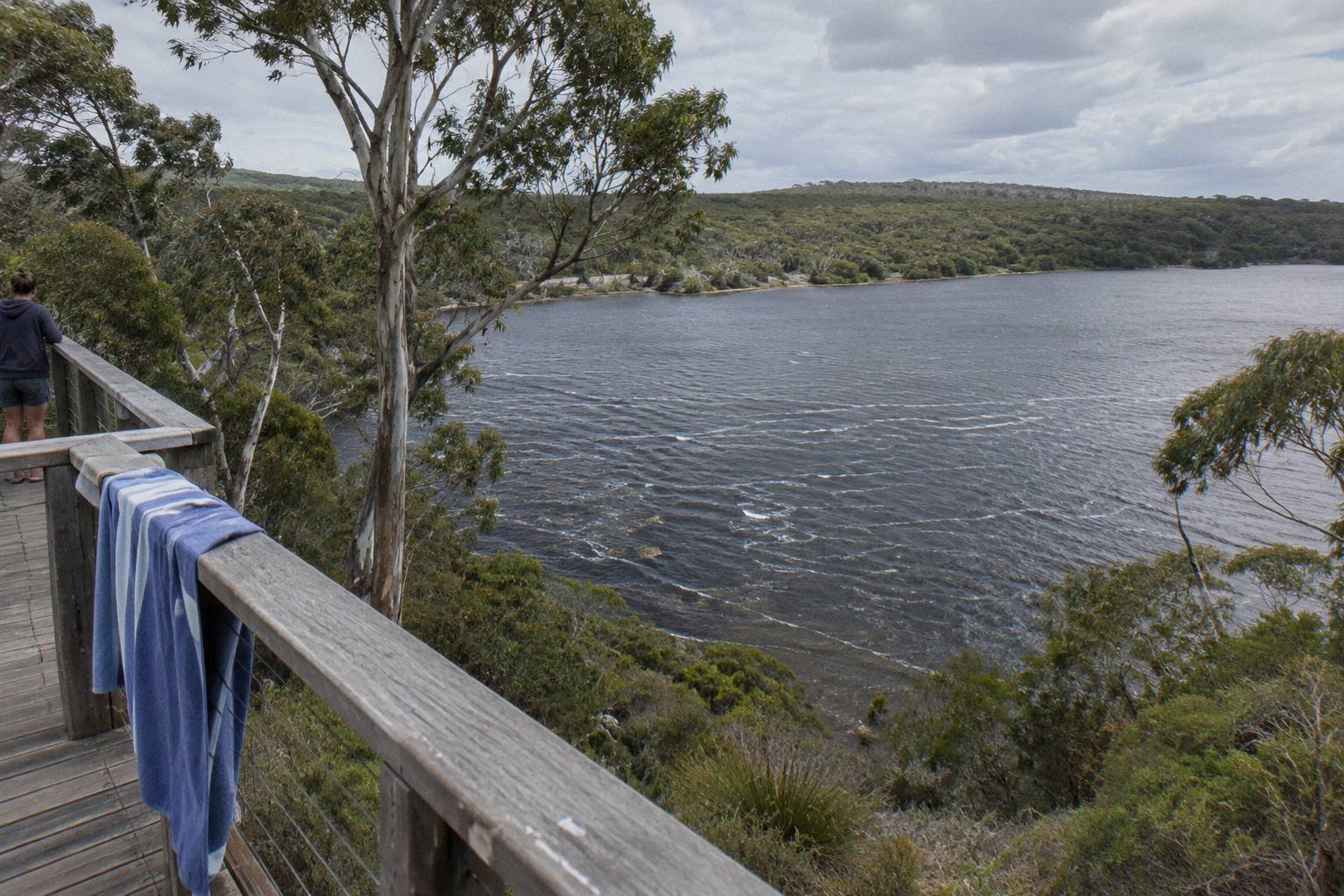
The visit is a walk, not a swim: 3 km one way from the Kaboora car park to a viewing platform, described as an easy walk in the park's own photo caption, through wallum heath and eucalypt forest to a lookout above a remarkably clear lake. The car park sits about 9 km from Dunwich along Alfred Martin Way, so independent visitors need a vehicle to reach the start.
The lake itself is the payoff. Because it sits in a depression of the sandmass with groundwater keeping it full, the water is strikingly clear and tea-stained, and from the platform it reads almost blue against the white sand below. The walk passes through heathland that flowers brightly in spring, and the park names birdwatching and wildflowers among the activities in this part of the island. Queensland Parks also notes the park shelters a genetically distinct koala population and golden wallabies, a swamp wallaby form found only on North and South Stradbroke. Sightings are possible on any walk, never certain.
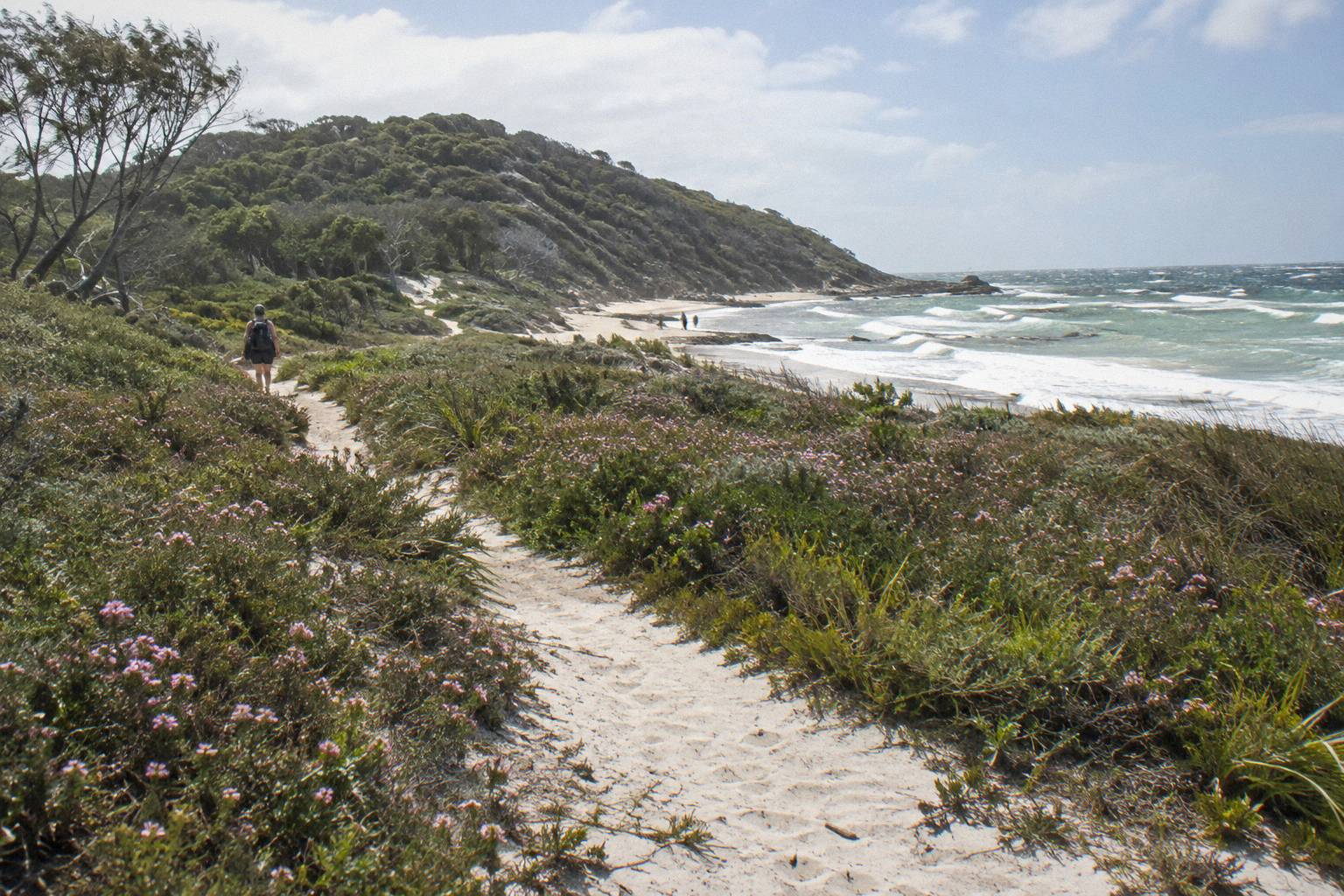
Timing is a matter of light and heat rather than seasons. The Bureau of Meteorology's Point Lookout station records a mean maximum of 29.6 °C in January against 21.2 °C in July, so the 6 km return walk is a different proposition in summer than in winter, and the heath offers little shade. Take water, stay on the track and take rubbish out, which is standing park guidance. Drones are also worth flagging: CASA rules apply and a Queensland Government permit may be needed to fly in a park, so check before you pack one.
Photographers should plan around midday rather than golden hour for once. The lake's famous blue reads best when the sun is high and the water column is lit from above, and the viewing platform's angle rewards a steep sun. Early morning walkers get cooler track conditions and better wildlife odds, particularly for wallabies grazing at the heath edges, but a flat grey lake in exchange. There is no single right answer, only the trade you prefer.
If you are weighing Kaboora against the island's other famous lake, the Brown Lake (Bummiera) guide covers that one, 3.5 km from Dunwich with picnic and toilet facilities. The short version: the park's activities list for Bummiera is walking the fire tracks, birdwatching and wildflowers, and the same swimming-and-sunscreen guidance applies, so neither lake is a swimming stop under current park messaging.
Which Tours Include A Lake Stop On Minjerribah?
No tour stops at Kaboora itself. Among the guided trips, three list a lake stop of some kind, and in each case the stop is Brown Lake (Bummiera), a different lake on the other side of the island: the Indigenous Culture Day Tour, the Small Group Eco Tour and the Meanjin To Minjerribah First Nations Day Tour. On guided trips, the swimming is at the beaches.
Start with the Small Group Eco Tour from Queensland Day Tours, from A$199 per person, 10 hours, rated 4.7 from 294 reviews. Its booking page lists a lake stop with free time on the shore, alongside Myora Springs, a guided North Gorge Walk hike to Point Lookout, the fishing village of Amity, Cylinder Beach and Frenchmans Beach. The lake stop on that page is not Kaboora, and the plain framing is this: the trip includes a lake stop, while the park asks visitors not to swim in Blue Lake and discourages swimming in the lakes generally. Free time on the shore is shore time.
The Indigenous Culture Day Tour, run by Stradbroke Island Tours as a longer cultural format from A$359 per person for 11 hours, lists a Brown Lake visit among its stops, together with Myora Springs, the North Gorge headland walk and a 90-minute cultural experience with a local Quandamooka guide, with lunch included. The Meanjin To Minjerribah First Nations Day Tour from Yura Tours also includes a Brown Lake stop on its 8-hour itinerary, with a fish and chips lunch, entry fees and ferry transfers included. Neither is a swimming itinerary, and both frame the lake as a cultural place to visit rather than a place to plunge.
The Wildlife And Beaches day trip, the other Stradbroke Island Tours format, goes the opposite way: its booking page lists beach time and swimming stops, beach games, koalas and kangaroos with the guide and Point Lookout, from A$199 per person, rated 4.9 from 119 reviews over 11 hours. If swimming is the point of your day, that format, or any beach-focused day, is the natural match for it.
For readers comparing the guided option with a self-drive day, the Straddie tour versus DIY comparison works through the trade-offs. The one-line version for this question: a tour makes the no-swimming rule easy to follow because the itinerary never puts you at Kaboora, whereas an independent visit hands you the choice, and the respectful answer is the one above.
| Trip format | Duration | From price | Lake stop on the booking page | Swimming on the itinerary |
|---|---|---|---|---|
| Small Group Eco Tour, All Inclusive | 10 hours | A$199 per person | Yes, a lake stop with free time on the shore | Beach stops (Cylinder Beach, Frenchmans Beach) |
| Indigenous Culture Day, 11 Hours | 11 hours | A$359 per person | Brown Lake (Bummiera) | No swimming stops listed |
| First Nations Day Tour, 8 Hours | 8 hours | price on the booking page | Brown Lake (Bummiera) | White-sand beaches listed, no swim stop promised |
| Wildlife And Beaches, 11 Hours | 11 hours | A$199 per person | No lake stop listed | Beach time and swimming stops listed |
| Hit The Road Wildlife Day Trip | 9 hours 30 minutes | A$149 per person | No lake stop verified | Built around wildlife; no stop list verified |
A word on how to read that table. A row with "no lake stop verified" is not a row that promises the tour avoids lakes; it means no verified stop list exists for that trip, so nothing can be said either way. Formats differ for real reasons too: a wildlife-focused day spends its time where animals are, a cultural day spends it with guides and stories, and a beach day spends it in the water. Choosing between them is a question of what kind of day you want, not which operator wins some imaginary contest, and the price spread between A$149 and A$359 per person mostly reflects length and inclusions such as lunch.
Where Can You Actually Swim On North Stradbroke Island?
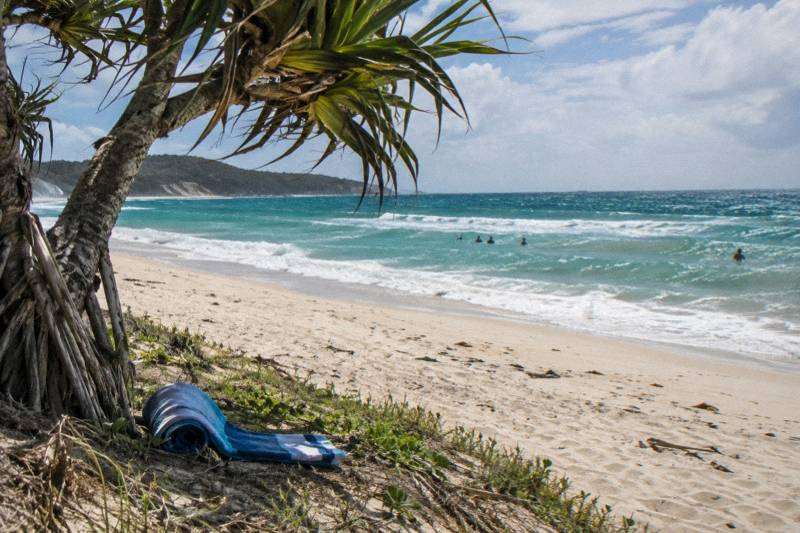
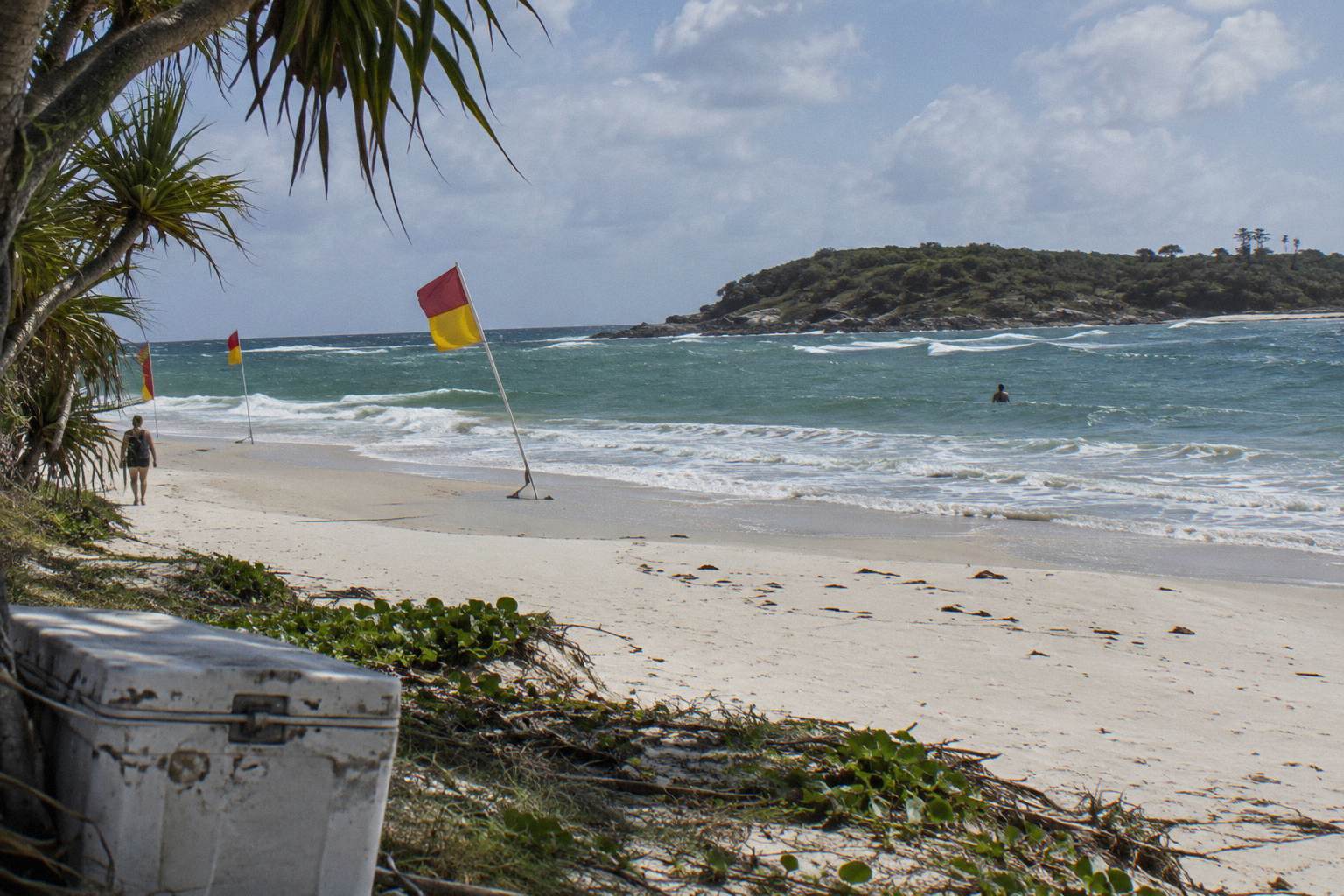
Swimming on Straddie happens at the beaches: Cylinder Beach and Main Beach are regularly patrolled, with patrols on weekends and public holidays from September to early May plus school-holiday lifeguards at some beaches, and Dunwich and Amity Point have enclosed swimming areas. Swim between the flags, and never swim in the deep channel off Amity Point, where strong currents and possible sharks are named risks.
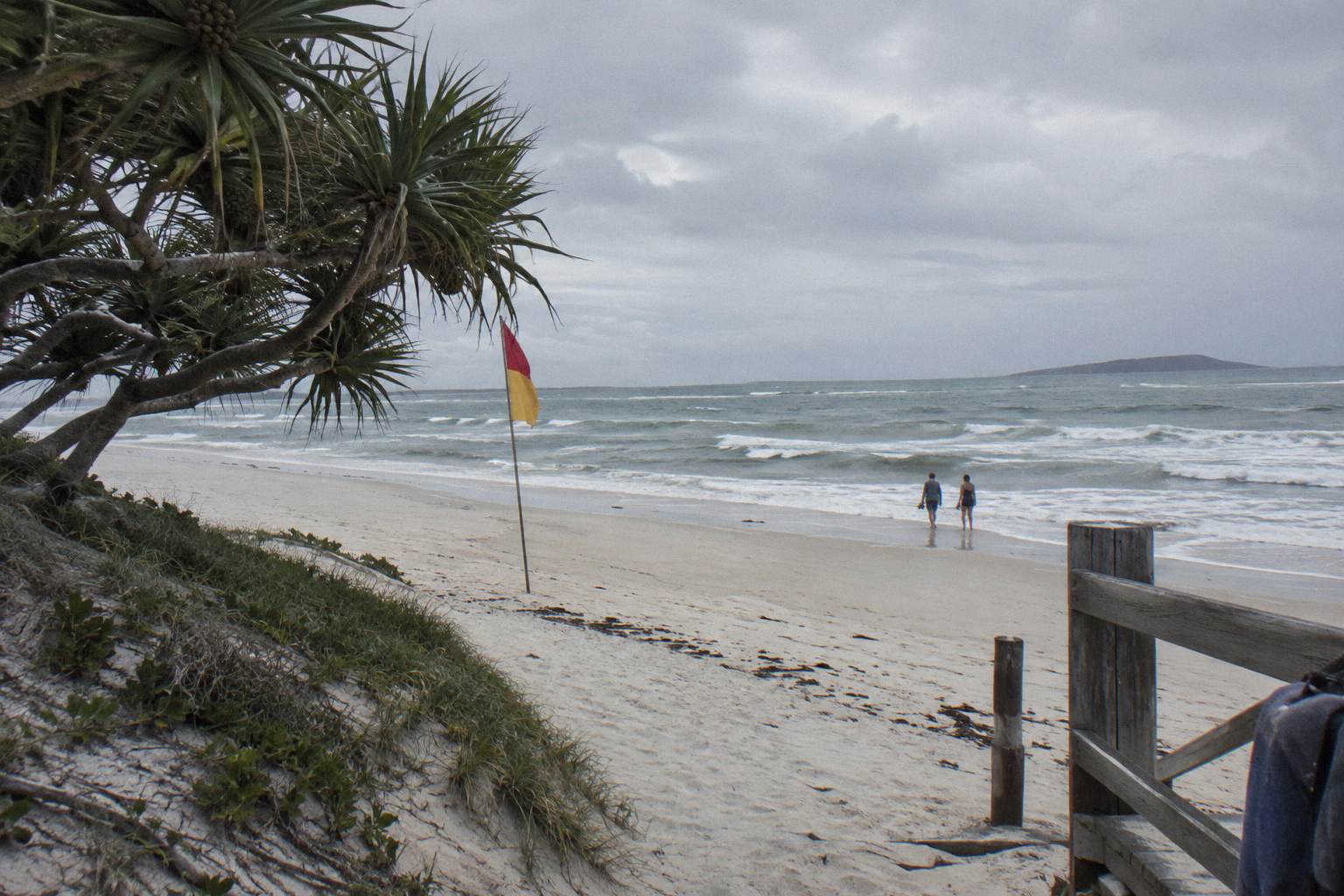
The patrolled area at Point Lookout is the most popular swimming beach on the island according to Queensland Parks, and it is the natural substitute for anyone whose heart was set on a lake dip. Rips and side currents are possible, so the flags matter rather than decorate. On guided days, Cylinder Beach is the stop most likely to appear, since it is a named stop on both the Small Group Eco Tour and the 4WD Beach Day; Frenchmans Beach is a named stop on the Small Group Eco Tour as well.
Marine stingers deserve one plain sentence: bluebottles and fire jellies occur in Moreton Bay waters, so swim between the flags and ask a lifeguard if stingers are about. That is the standard advice for every bay and ocean beach in the region, not a reason to skip the water.
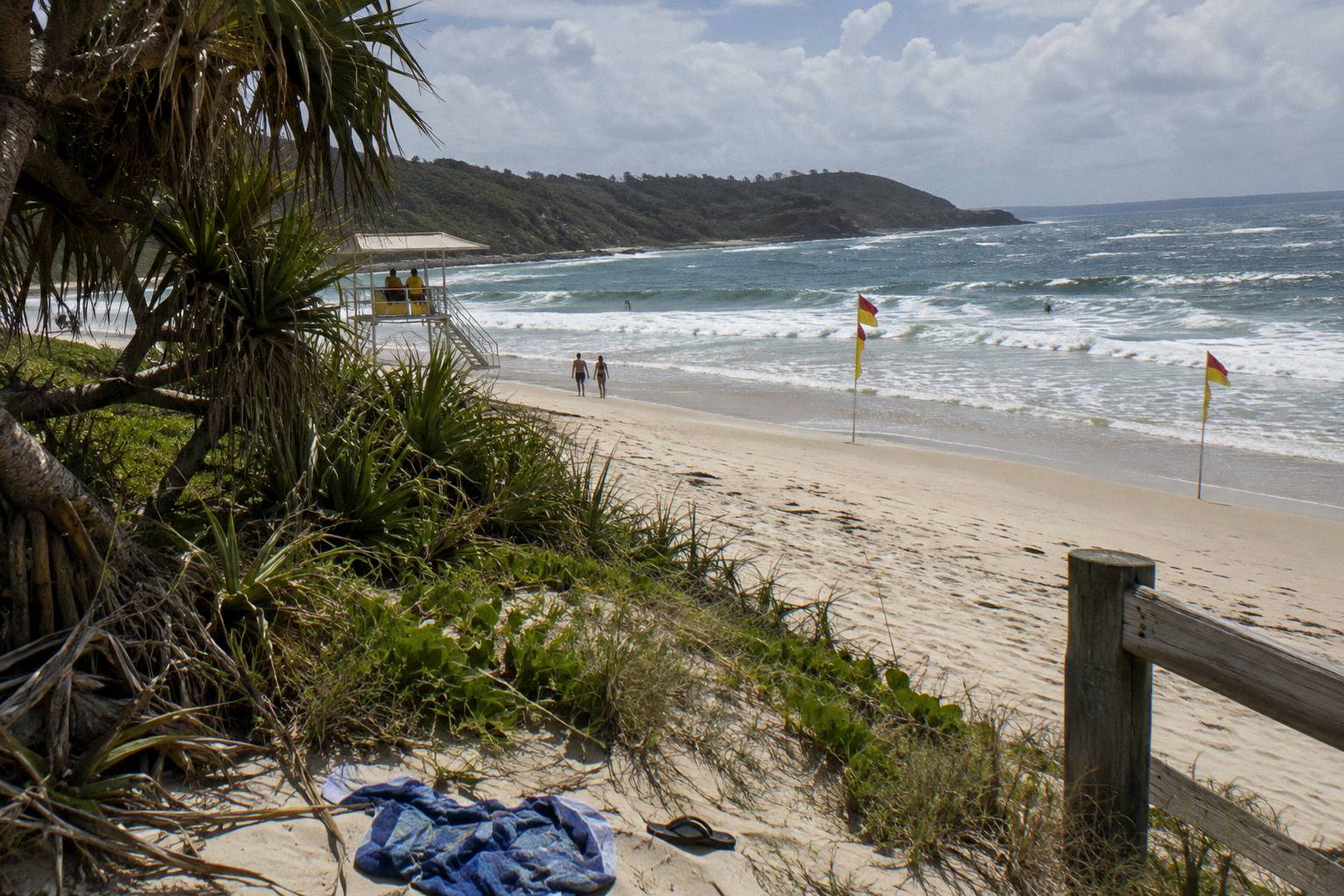
Families planning around small children tend to do best at the enclosed areas, where the water is calm and the edges are visible, while confident swimmers gravitate to the patrolled surf. Whatever you choose, read the conditions on the day rather than the season: a flat winter morning can be lovelier for a quick dip than a choppy summer afternoon, and lifeguards, where present, will tell you straight. The beach substitution is not a consolation prize, either. The island sits inside Moreton Bay Marine Park, and the same headlands that give you a view of the water give you a chance, never a promise, of spotting dolphins, turtles and even manta rays from dry land.
The Cylinder Beach guide has the practical detail on the beach most tours use, and the article on whether you can swim on a Straddie day tour answers the broader question across every trip format. Between them and the table above, you should be able to match a swimming plan to an itinerary in a couple of minutes.
How Do You Get To Kaboora If You Still Want To See It?
To reach Kaboora independently you need a vehicle on the island: drive about 9 km from Dunwich along Alfred Martin Way to the Kaboora car park, then walk 3 km one way to the viewing platform. The sealed roads between the three townships need no permit, but if your route involves beach driving you need a 4WD and a vehicle access permit, obtained before you drive Flinders or Main Beach.
Day visitors without a car can still get close to the island's water stories. The passenger ferry from Cleveland to Dunwich takes about 25 minutes, and island buses on routes 880 and 881 connect all three townships, with the 881 timetable guaranteed to connect with ferries. The buses take paper tickets only, A$0.50 for a single or A$1.00 for a daily ticket, and go cards are not accepted. But the buses serve the townships, not the Alfred Martin Way trailheads, so Kaboora is realistically a drive-or-tour-decision rather than a bus stop.
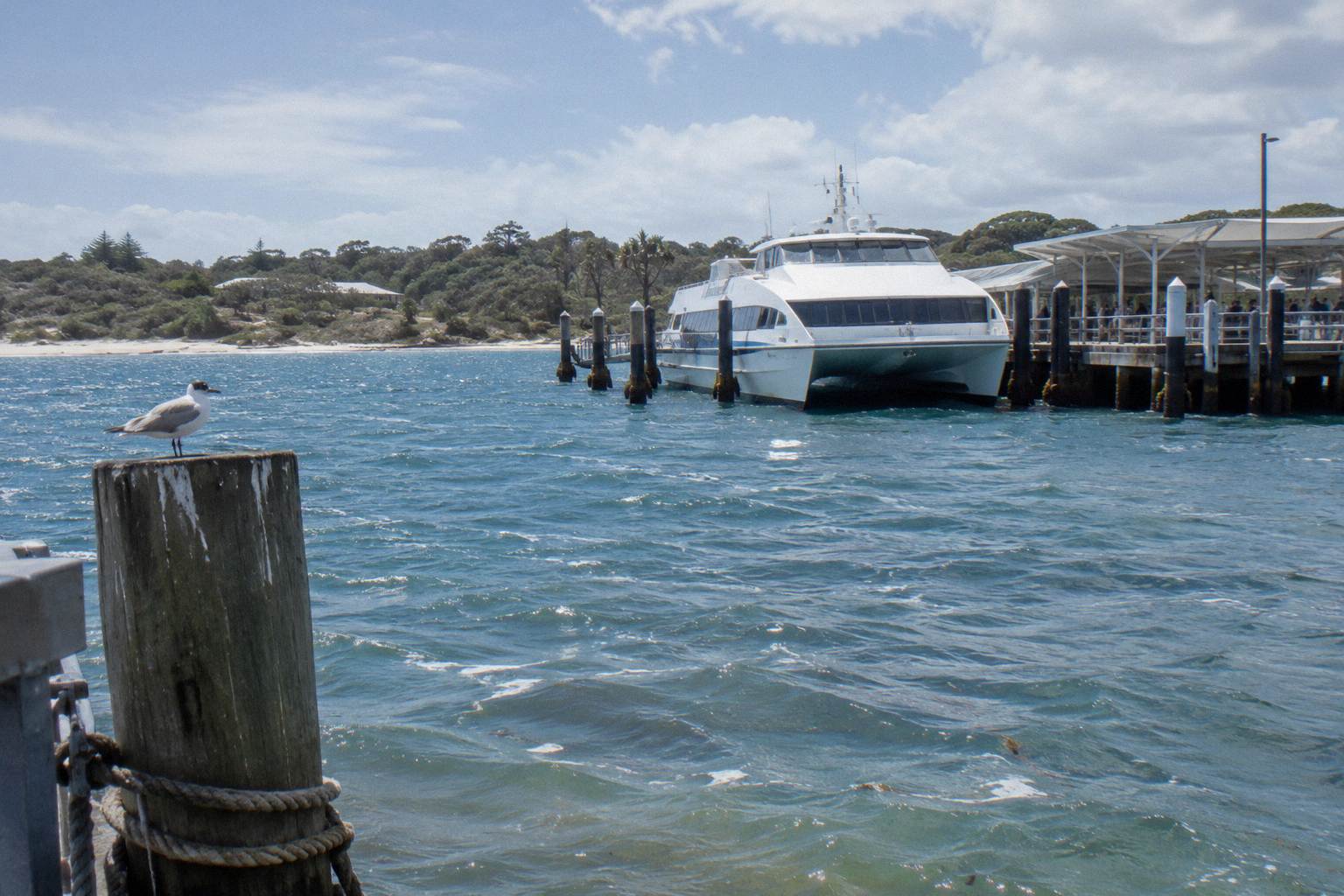
Bringing a car across adds its own logistics. The vehicle ferry from Toondah Harbour at Cleveland takes about 45 minutes, must be booked in advance, and asks drivers to arrive at least 30 minutes before sailing; parking near the terminals on the mainland fills fast on weekends and holidays. If you would rather skip all of that, the article on seeing the island without a car maps the car-free options, and it reaches the same conclusion this one does: the townships and headlands are reachable, the lake trailheads are not.
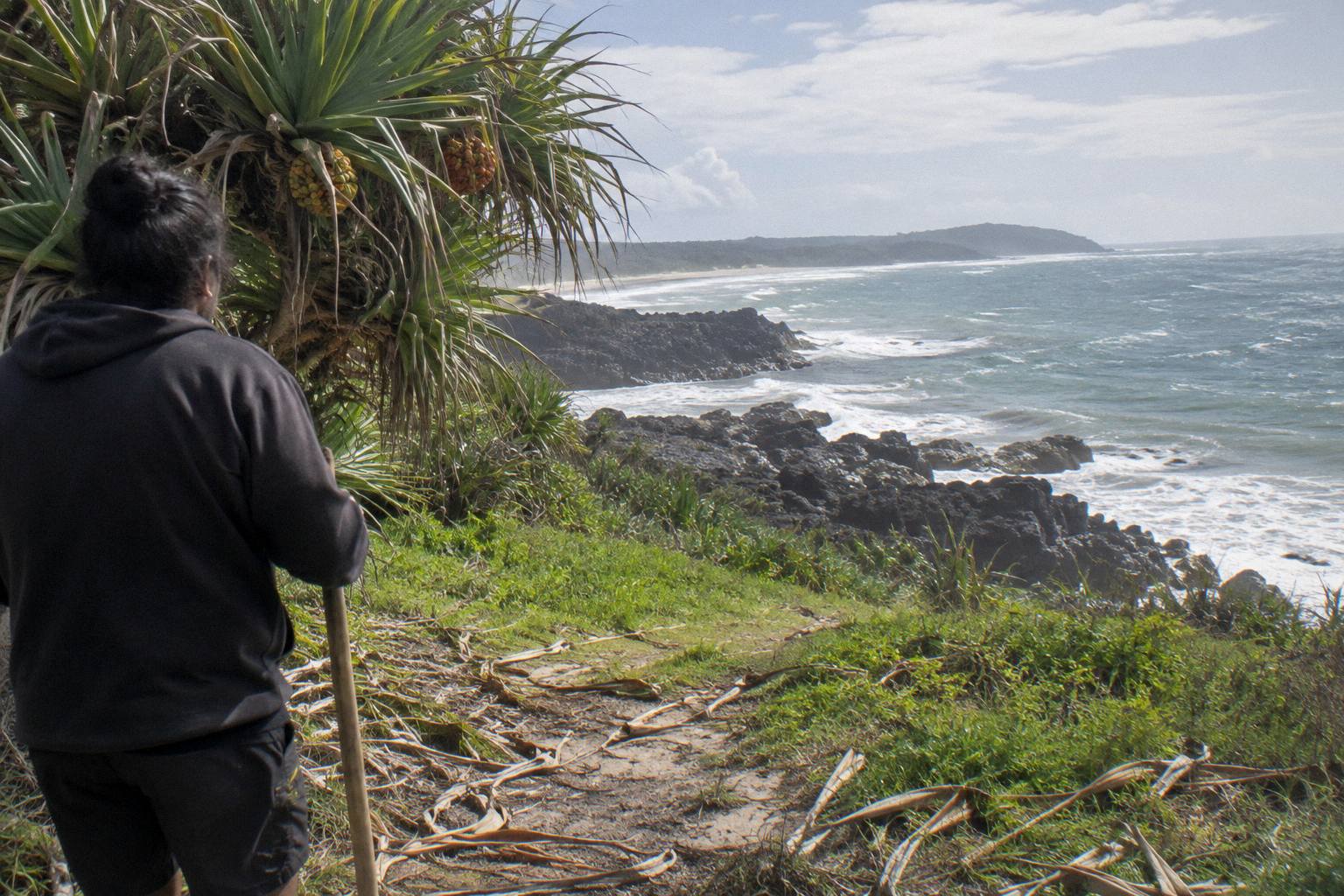
If you are staying overnight rather than day-tripping, the camping and overnight stays guide explains where you can base yourself, including the campgrounds near Cylinder Beach, Amity Point and Adder Rock. An overnight stay is the realistic way to combine a Kaboora walk with a full beach day, because the walk plus travel eats most of a short winter afternoon.
Whichever way you build the day, the site that brought you here, North Stradbroke Island Tours, lists every guided trip with its verified stop list, so you can check the lake and beach question against each itinerary before you book anything. The wildlife day trip from Brisbane, for instance, is explicit that the day is built around wildlife, with water included and takeaway lunch options recommended for a beachfront picnic.
Common Questions About Swimming In Blue Lake (Kaboora)
Can You Swim In Blue Lake (Kaboora) On A Straddie Tour?
No. The Quandamooka people ask visitors not to swim in Kaboora, and Queensland Parks repeats that request. No tour lists a Kaboora stop at all, and the guided lake stops that do exist are at Brown Lake (Bummiera), a different lake.
Why Is Swimming In Blue Lake Not Allowed?
Kaboora is a place of significant cultural value to the Quandamooka people, and the national park it sits in has been jointly managed by the Quandamooka people and Queensland Parks and Wildlife Service since 2011. The park also says swimming and sunscreen pollute lakes and lagoons island-wide.
Can You Swim In Brown Lake (Bummiera) Instead?
The park does not present Bummiera as a swimming venue either. Its named activities there are walking the fire tracks, birdwatching and wildflowers, and the general guidance that swimming and sunscreen pollute lakes and lagoons applies.
Which Tours Stop At A Lake On North Stradbroke Island?
Three guided trips list a lake stop: the Indigenous Culture Day Tour, the Small Group Eco Tour and the Meanjin To Minjerribah First Nations Day Tour, all at Brown Lake rather than Kaboora. None of them is a swimming itinerary.
Where Can You Swim On The Island?
Cylinder Beach and Main Beach are regularly patrolled on weekends and public holidays from September to early May, with school-holiday lifeguards at some beaches, and Dunwich and Amity Point have enclosed swimming areas. Swim between the flags, and do not swim in the deep channel off Amity Point.
How Long Is The Walk To The Kaboora Viewing Platform?
The walk is 3 km one way from the Kaboora car park, about 9 km from Dunwich along Alfred Martin Way, and the park's photo caption calls it an easy walk to the viewing platform. Allow a 6 km return walk and carry water.