Will Weather Cancel A Straddie Day Tour?
What actually cancels a North Stradbroke Island day tour: the verified weather rules, the 24-hour free cancellation on every trip, and what to check the day before you travel.
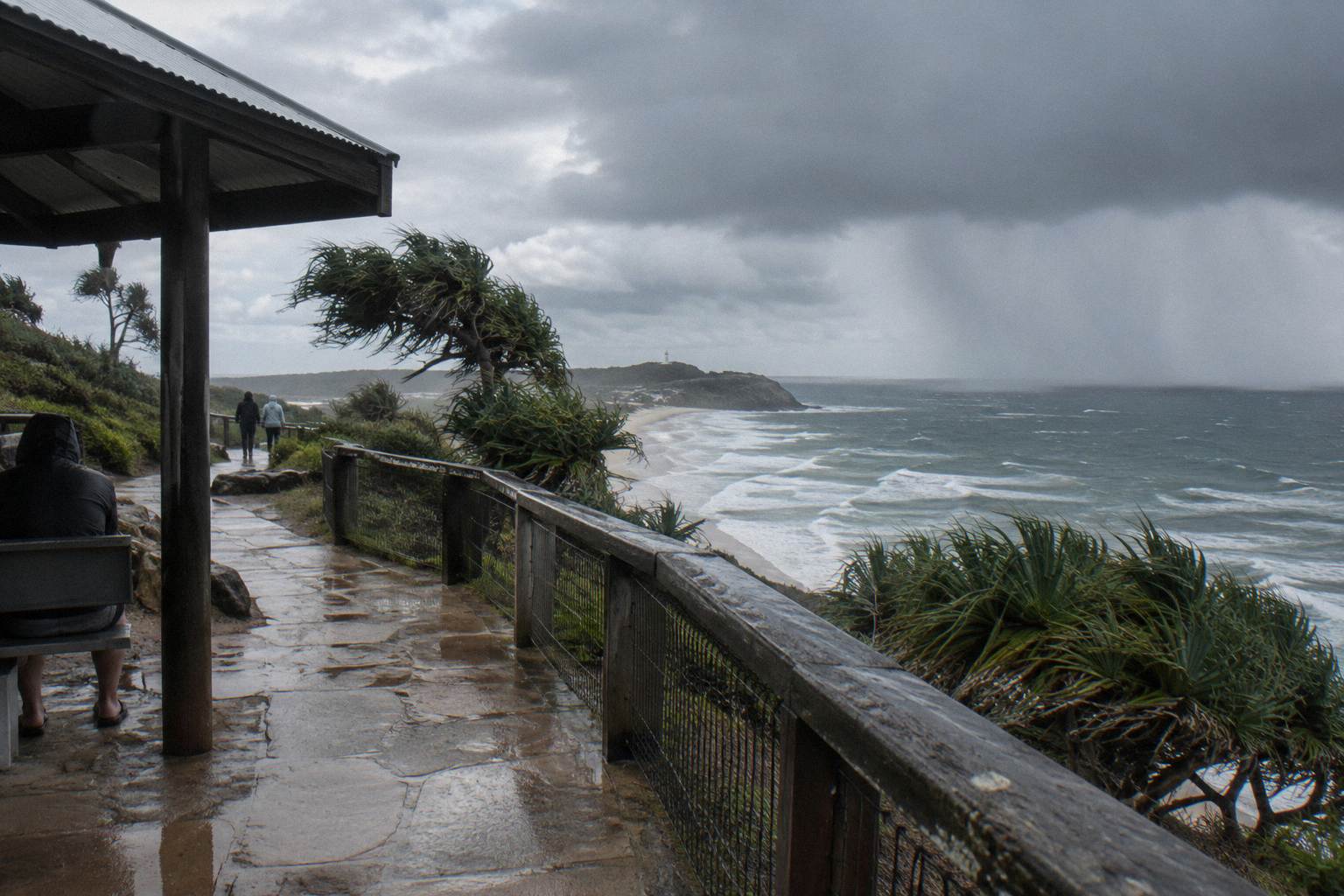
No, a Straddie day tour is rarely cancelled for weather, and rain alone won't stop your trip. Only two tours publish a weather rule: the Minjerribah Cultural Driving Tour has a stated weather policy, and the Oyster Farm Tour goes ahead in most conditions, timed to the low tide. For every other trip, weather terms aren't published, so ask the operator, and remember free cancellation applies up to 24 hours before start.
The worry is understandable. You are booking a full day out of Brisbane, often weeks ahead, to an island in Moreton Bay where the forecast you saw last Tuesday may have nothing to do with the sky on the day. The answer has three parts: day tours here are built for the outdoors and generally run through ordinary Queensland weather, the two operators who do publish a weather policy both say they run, and your real safety net is not the forecast at all but the 24-hour free cancellation window shown on every booking page.
That cancellation window matters more than most people realise. It means you do not have to gamble on a long-range forecast when you book. Book the date you want, watch the Bureau of Meteorology's Point Lookout station in the days before, and if the outlook turns genuinely ugly you can cancel for free up to 24 hours before start and rebook another day. The Hit The Road Wildlife Day Trip from A$149 per person, rated 4.9 from 547 reviews, works exactly this way, as does every other trip listed here.
One distinction to hold onto: a tour being cancelled by the operator, and you choosing to cancel, are two different events with two different rulebooks. The first is governed by whatever the operator's policy says, which for most trips here means you need to ask. The second is governed by the free cancellation term, which every trip carries. Keep the two separate, because conflating them is where most confusion about weather and refunds comes from.
If you are weighing which tour to book at all, these three full-day trips from Brisbane are the ones most readers comparing this question end up choosing between:
What Do The Booking Pages Actually Say About Weather?
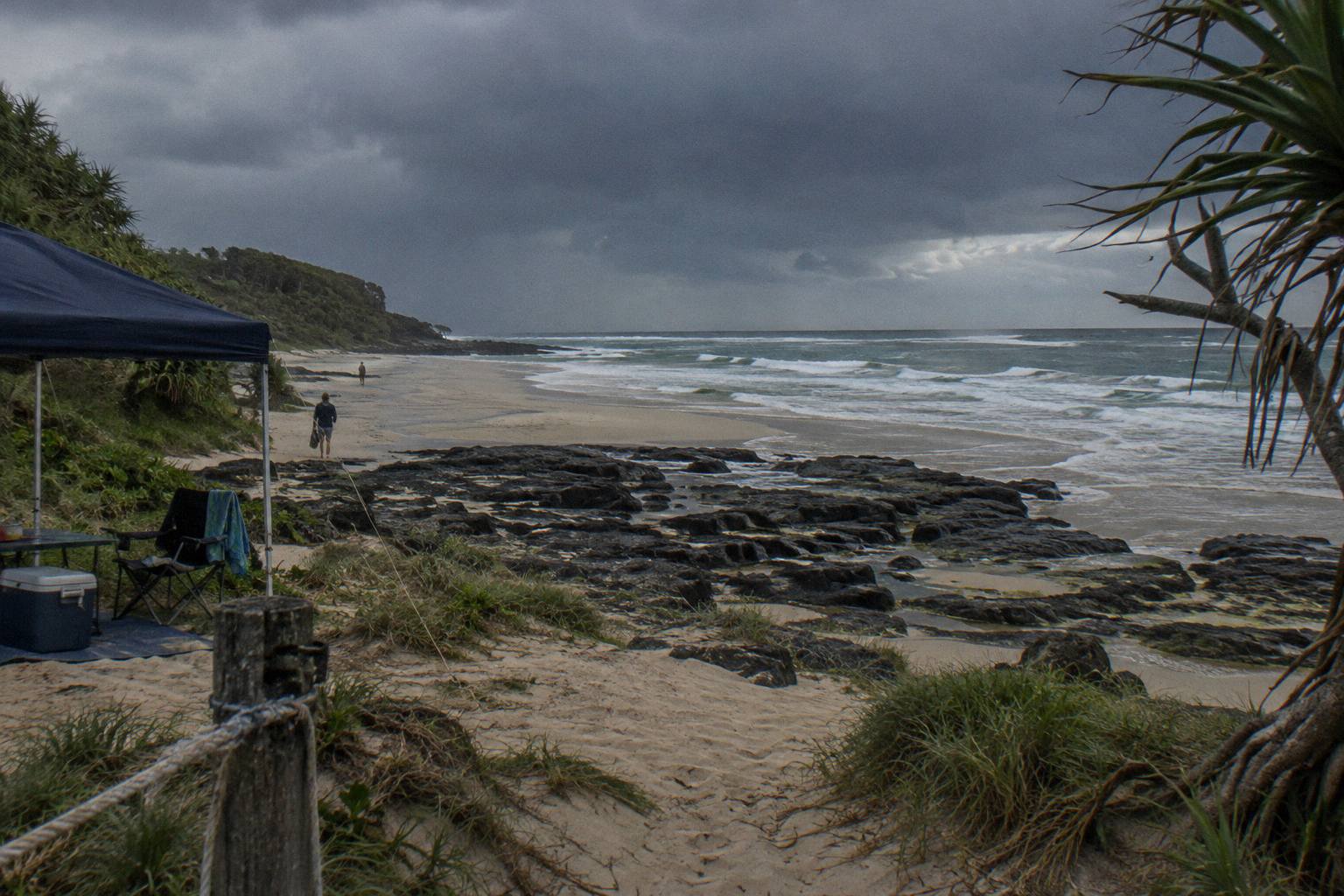
Very little, in truth. Only two of the Straddie booking pages state any weather rule at all: the Cultural Driving Tour has a stated weather policy and can adapt to accessibility needs, while the Oyster Farm Tour runs in most weather and sets start times by the low tide, confirmed before travel. Every remaining tour publishes nothing, so ask the operator directly, in writing, before your 24-hour window closes.
This is worth stating plainly because plenty of travel content invents reassurance. The verified picture is narrower: a booking page that says nothing about weather has not promised you anything about weather, and assuming "they always run" is not the same as a policy. The table below shows exactly what is verified per trip, and nothing more.
| Trip | Duration | Weather rule on the booking page | What to do |
|---|---|---|---|
| Hit The Road Wildlife Day Trip | 9 hours 30 minutes | No weather statement published | Ask the operator; free cancellation up to 24 hours before start |
| Wildlife And Beaches, 11 Hours | 11 hours | No weather statement published | Ask the operator; free cancellation up to 24 hours before start |
| Small Group Eco Tour, All Inclusive | 10 hours | No weather statement published | Ask the operator; free cancellation up to 24 hours before start |
| Cultural Driving Tour, 3 Hours | 3 hours | Has a stated weather policy; can adapt to accessibility needs | Weather rule on the booking page; ferry not included |
| Oyster Farm Tasting, 2 Hours | 2 hours | Runs in most weather; start times follow the low tide and are confirmed before travel | Confirm the tide-based start time before travel |
Two practical habits fall out of that table. First, when a trip says nothing, email the operator a short question after booking: "under what weather conditions does this tour not run, and what happens to my booking then?" A written answer is worth far more than a general assumption. Second, time that question before the 24-hour mark, so that if the answer is unsatisfying you can still cancel for free. The free cancellation window applies to every trip listed here, per the booking pages, and it is the one term you can rely on without asking anyone.
The other thing to weigh is what "bad weather" actually means for your day. A shower in Brisbane at 8 AM is not the same as a sustained rain band, and neither is the same as the strong winds that matter for the bay crossing. The next sections look at each of those separately, because they have different consequences for your trip.
What Does The Island's Climate Actually Look Like?
The island's climate is warm year-round: the Bureau of Meteorology's Point Lookout station records a mean annual maximum of 25.6 °C and minimum of 18.6 °C. January averages a 29.6 °C maximum, July 21.2 °C, and of the 1,517.7 mm of mean annual rain, March is wettest at 179.6 mm while September is driest at 53.7 mm.
That is a mild climate by any standard. Even the coldest month averages a 21.2 °C maximum, which is why rain, not cold, is the condition that actually shapes a day tour here. The rainfall spread is the more useful number for a visitor: the difference between the wettest month's 179.6 mm and the driest month's 53.7 mm is real, but both figures still leave most days dry, because subtropical rain tends to arrive in short heavy falls rather than all-day drizzle. You can read the full station record on the Bureau of Meteorology climate averages for Point Lookout.
| Measure | January | July | Annual |
|---|---|---|---|
| Mean maximum temperature | 29.6 °C | 21.2 °C | 25.6 °C |
| Mean minimum temperature | 22.6 °C | 13.8 °C | 18.6 °C |
What this means for the cancellation question is that the climate itself gives an operator little reason to stop. Heat is rarely extreme, cold is never the issue, and rain that would shut down a walking tour in a colder country usually just means a wet hour on a headland followed by a bright one. The genuine weather risks to a Straddie day are wind and sea state on Moreton Bay, which affect the ferry crossing, and lightning, which affects any open headland walk. Neither shows up in temperature averages, which is why you check a forecast, not a climate table, the day before. More of these guides are collected on North Stradbroke Island Tours.
One more climate-adjacent point that belongs here and nowhere else: whale season runs June to November, with humpbacks passing close to the coastline on their annual migration, according to Queensland Parks. That whole window sits across the cooler, drier half of the year, so a winter booking trades warmer swimming water for calmer skies and the possibility of whales from the headlands. Never treat a sighting as promised, but the season itself is a fixed fact of the calendar. Our guide to the island's whale watching season from land covers what that involves.
Can Bad Weather Stop The Ferry To The Island?
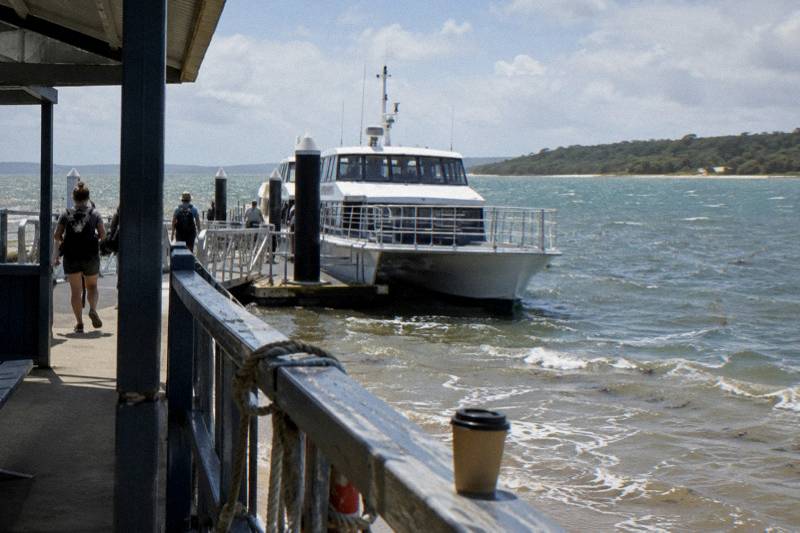
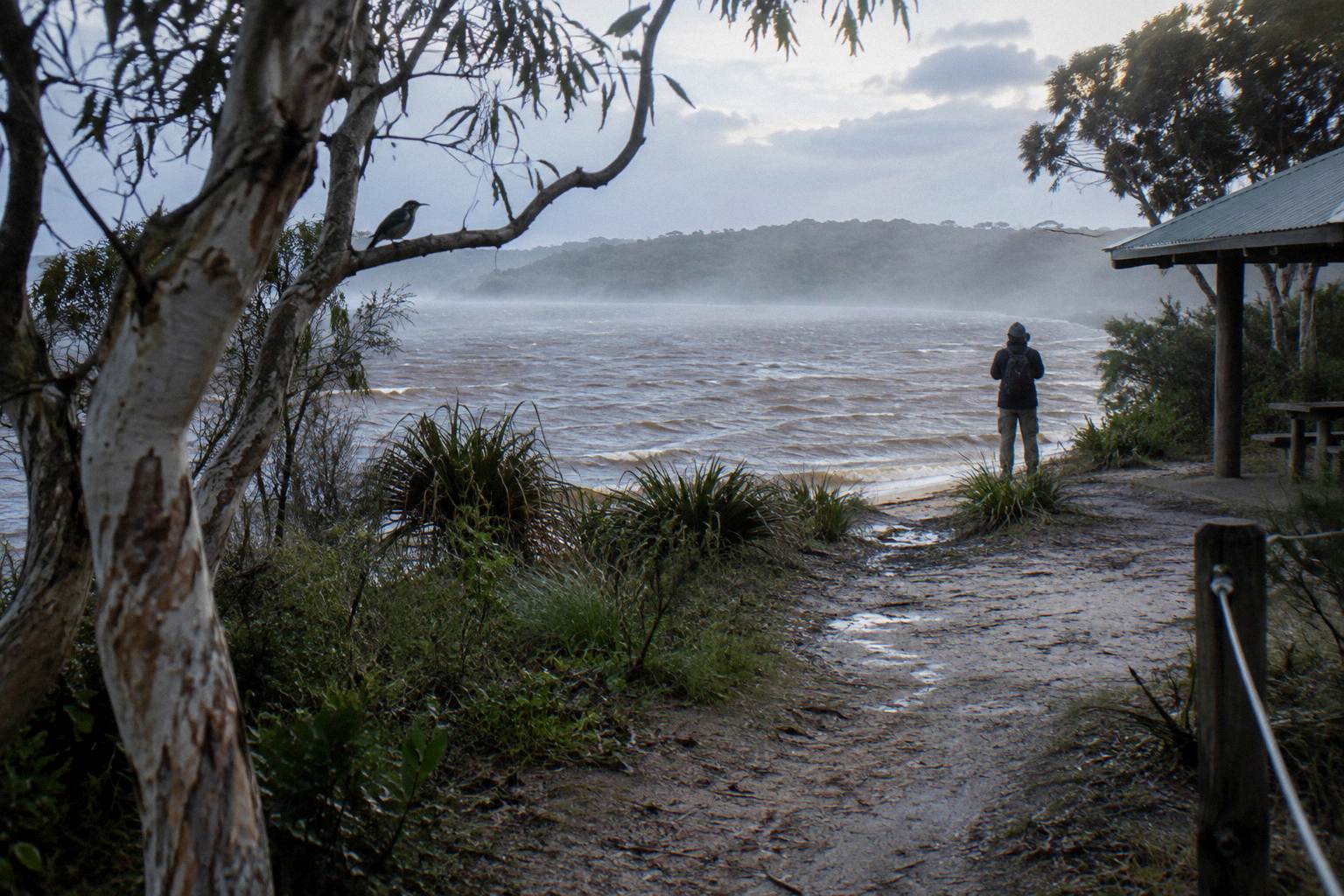
SeaLink's vehicle ferry takes about 45 minutes and the passenger ferry about 25 minutes across to Dunwich, and services run every day, but neither operator publishes a wind speed at which they stop. When sea conditions do suspend a sailing, a passenger ferry ticket stays valid on any service for 365 days from purchase, so weather disruption delays your crossing rather than voiding your ticket. Vehicle ferry bookings are essential and changes follow the operator's booking terms. Also see the best time to visit.
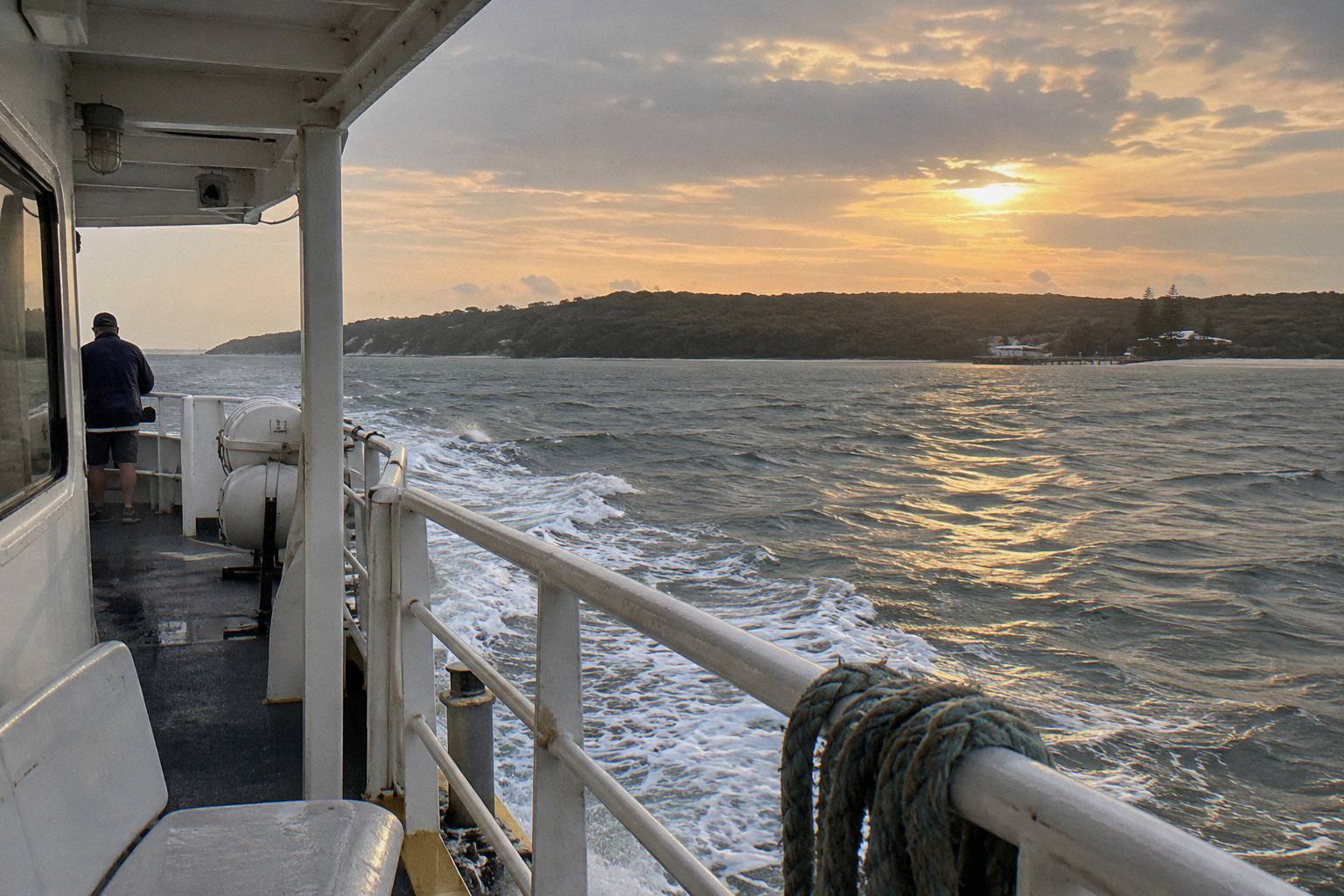
The ferry is the piece of a Straddie day tour that genuinely depends on the weather, because every full-day trip from Brisbane crosses the bay by boat with the fare included. Strong wind and heavy sea state in Moreton Bay are the conditions most likely to affect a crossing, and when that happens the consequence is usually delay or a later sailing rather than a lost ticket. SeaLink passenger tickets are no longer sold onboard; they are bought online or at the terminal, and they are valid on any service for 365 days from purchase, which makes a weather-delayed departure an inconvenience instead of a financial loss. Current fares are published as from-prices on the operator's fare page, adult A$13.50 one way and A$23.00 return, child 5 to 14 from A$8.75 one way, and fares change, so treat those as a guide and check the live table. You can verify schedules and any service notices on SeaLink's own North Stradbroke Island pages.
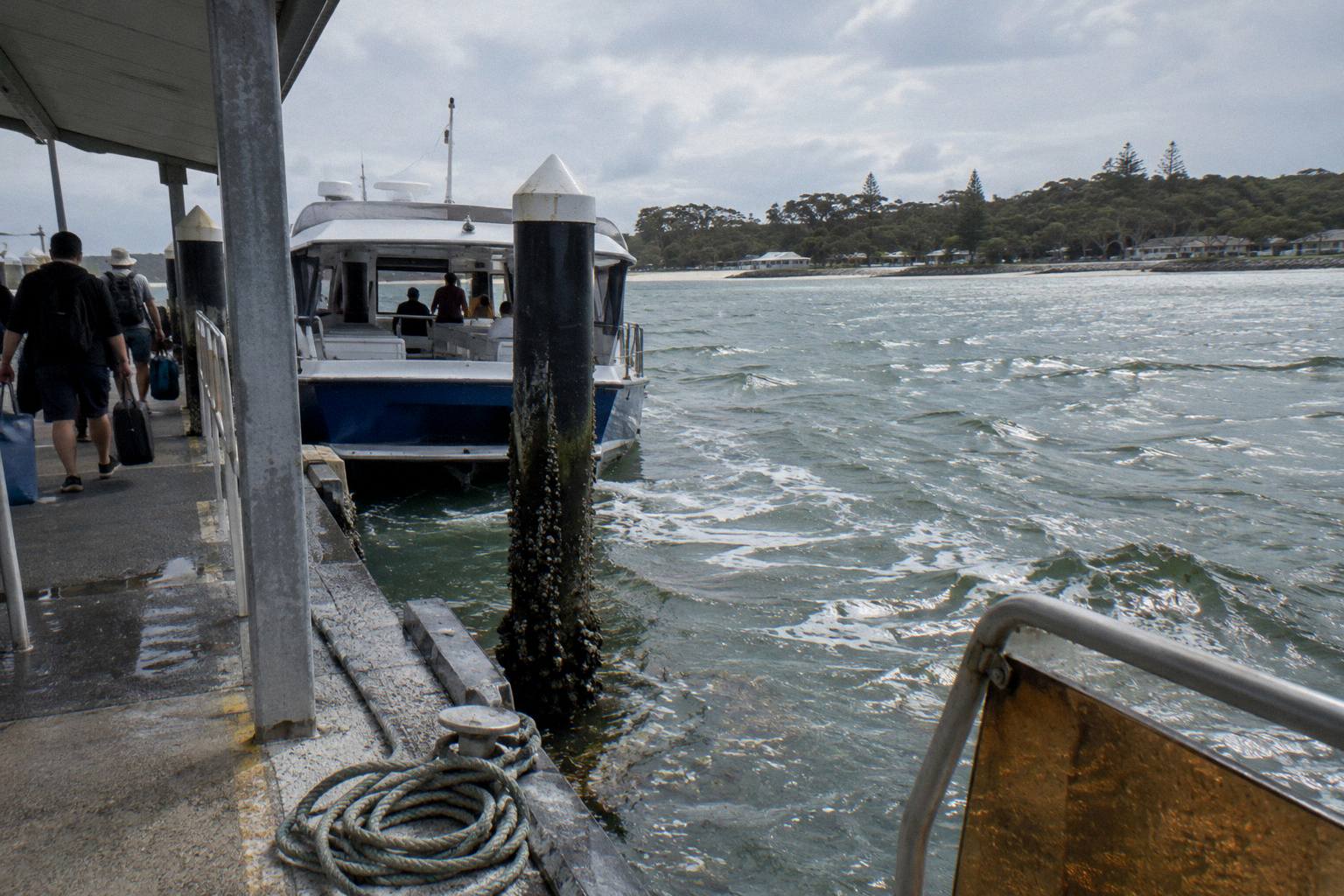
The Stradbroke Flyer water taxi, about 25 minutes from Toondah Harbour and landing at One Mile jetty in Dunwich, works differently: no online booking at all, tickets at the Flyer office in Cleveland or onboard. For a day tour, though, this is mostly background, because your tour's ferry ticket is included and the operator manages the crossing for you. Where the ferry question really bites is if you cancel your tour inside the 24-hour window and hold an unused ferry ticket: the 365-day validity means that ticket survives for a future trip, which softens the blow of a late change of plan. The details of terminals, timetables and parking are in our complete ferry guide for North Stradbroke Island.
The practical takeaway is a checklist for the evening before: check the Bureau's Point Lookout forecast, check SeaLink's service page if rough weather is forecast, and check the Queensland Parks alerts page, because the park itself can temporarily close tracks. Track closures are a park decision, not a weather decision, but they have the same effect on your day, and Queensland Parks publishes current alerts on the Naree Budjong Djara National Park page.
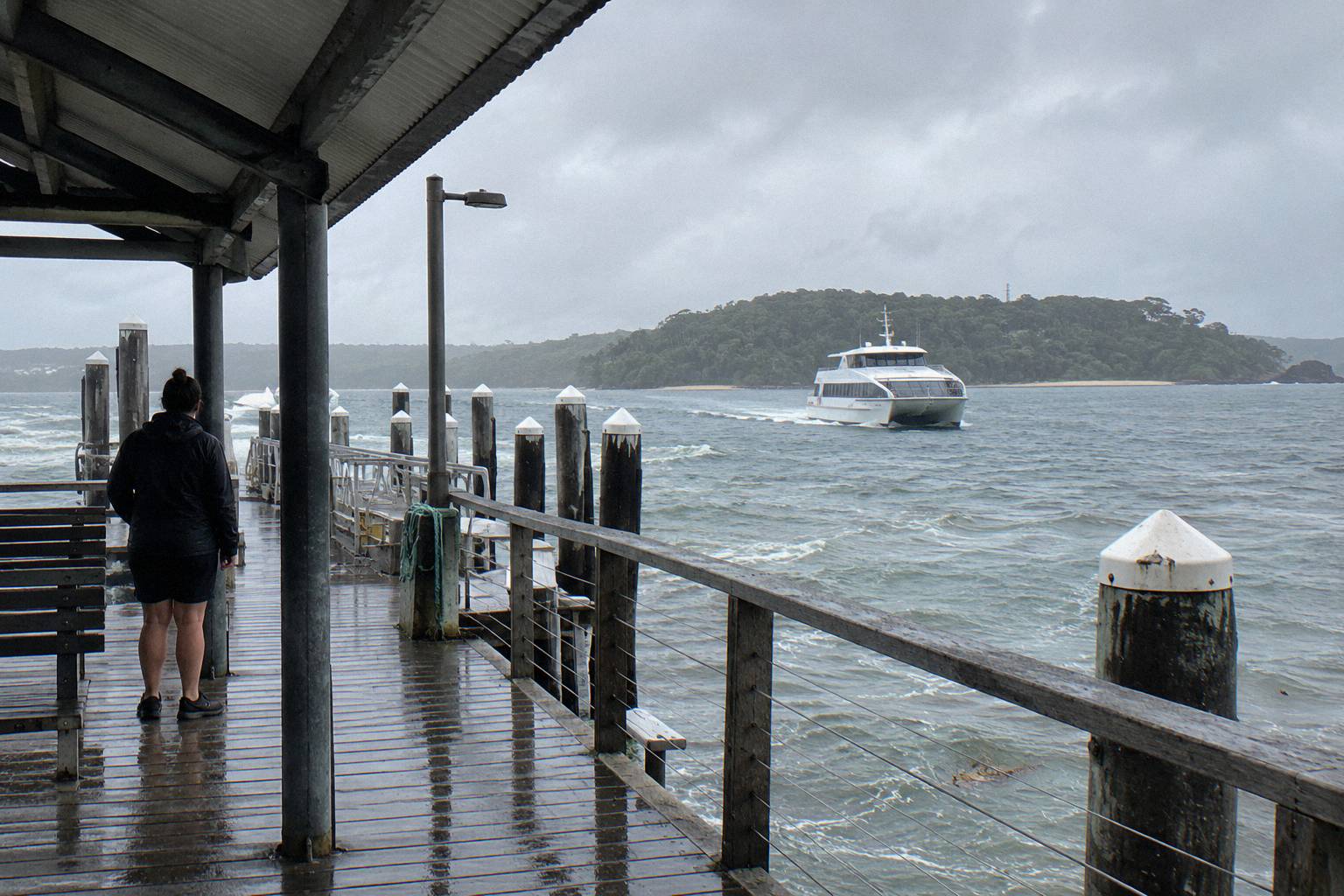
Which Tours Depend On The Tide Rather Than The Rain?
The Oyster Farm Tasting is the one trip whose schedule is set by the tide, not the sky: it runs in most weather, its start times follow the low tide and are confirmed before travel, and the walk crosses about 20 minutes each way over the Deanbilla Bay mudflats and shallow tidal water. It lasts 2 hours, costs from A$220 per person, takes groups up to 10, and excludes the passenger ferry fares.
Tide-dependent tours invert the usual weather question. Rain barely matters to an oyster farm walk, but the low tide absolutely decides when it happens, so your "confirmation before travel" is doing real work: you will be told the start time based on that day's tide rather than choosing a clock time yourself. That also means an innocent-looking booking can start surprisingly early or surprisingly late depending on the day, and the ferry ride over is not included in the price, so you need to build the crossing into your timing. The meeting point is on the island at Otter Street, Adams Beach access at Goompi, a 5 to 10 minute walk from the SeaLink passenger ferry landing.
The inclusions explain why weather is mostly irrelevant to the experience: a guided low-tide walk with a Quandamooka guide, a working oyster farm visit with hands-on farming, traditional tripod and modern oyster farming systems, a learn-to-shuck session, 18 fresh rock oysters per person with condiments and non-alcoholic refreshments, and farm footwear if required. Minimum age is 5, and the booking notes a moderate fitness level for the mudflat crossing. If your worry is rain rather than wind, this is the format least exposed to it.
The other explicitly weather-proof trip is the Cultural Driving Tour from Yura Tours, 3 hours on the island, starting at One Mile Jetty in Dunwich, with pickup and drop-off from the water taxi listed on the booking page. Its weather rule is stated on the booking page. The price for your date shows on the booking page, and the ferry is not included. Between the two of them, these trips show the two ways a tour can be weather-resilient: one moves with the tide, and one simply never cancels for sky.
What If The Tour Runs But The Weather Is Just Ordinary?
Ordinary weather means the tour runs exactly as booked, and no rule anywhere entitles you to a refund simply because the day is grey, windy or showery. You still get the full outdoor itinerary, wildlife, headlands, beaches and commentary, none of which require sunshine, and the booking pages never promise weather or guarantee a sighting, so this is the scenario to plan for.
Start with what a grey day does not take away. A small-group wildlife day such as the Hit The Road Wildlife Day Trip, from A$149 per person, 4.9 from 547 reviews, 9 hours 30 minutes starting 7:45 AM outside the Adina Apartment Hotel Anzac Square in Brisbane (the booking page warns there are two Adina hotels), still carries the return ferry, an air-conditioned vehicle and bottled water, and wildlife remains the point of the day whether the sun joins or not. Overcast conditions can even suit animal activity, though no sighting is ever guaranteed. Lunch is not included; the guide recommends takeaway options for a beachfront picnic, or you bring your own, and on a wet day that picnic becomes a sheltered lunch instead.
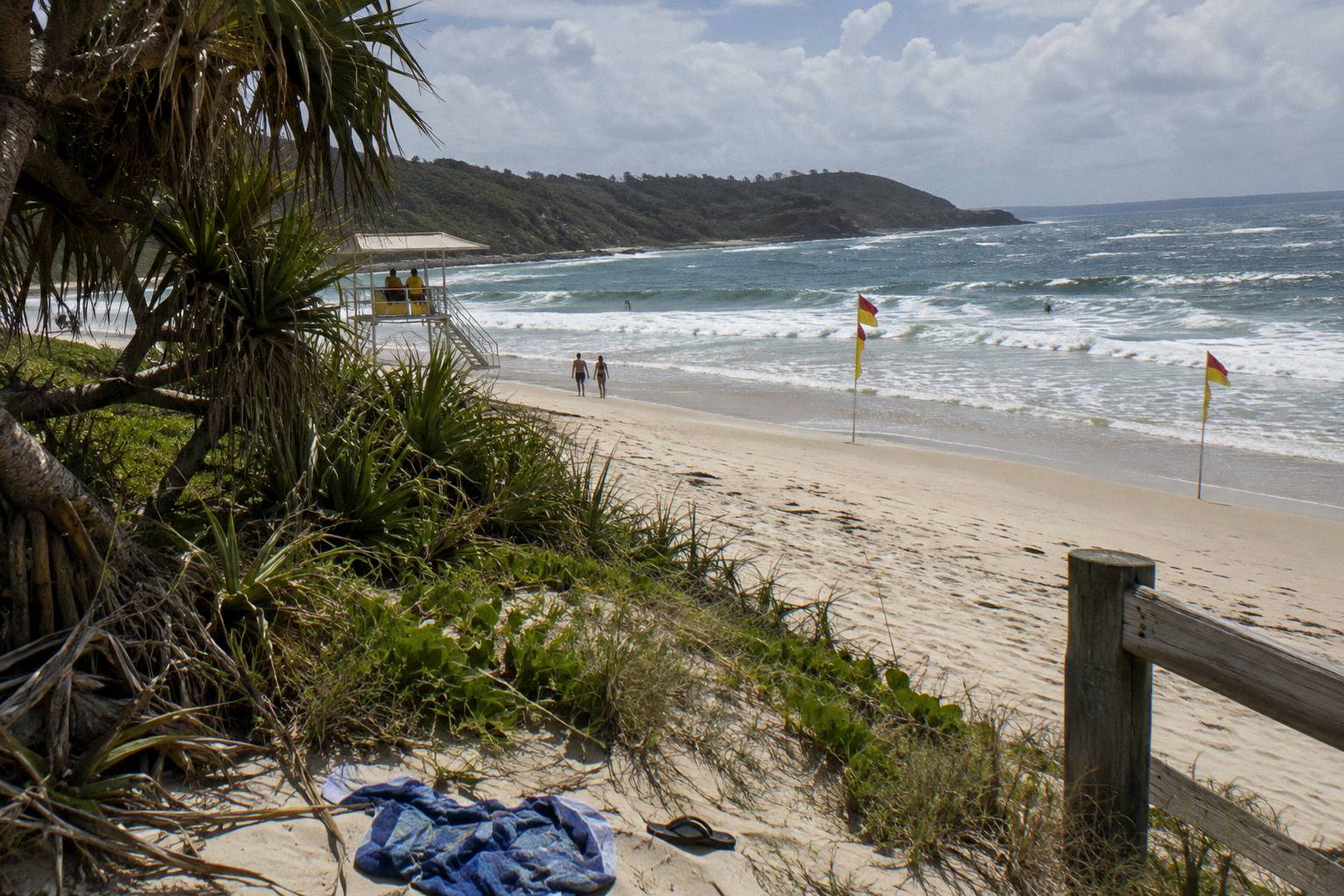
The full-day alternatives hold up similarly. The Wildlife And Beaches day trip, from A$199 per person and 4.9 from 119 reviews over 11 hours, includes beach games, beach time and swimming stops alongside koala and kangaroo viewing with the guide, and ordinary weather trims the swimming more than the wildlife. The Small Group Eco Tour, also from A$199 per person, 4.7 from 294 reviews over 10 hours, includes a guided North Gorge Walk hike to Point Lookout, Myora Springs, the fishing village of Amity, Cylinder Beach and Frenchmans Beach, with national park fees included; wind and rain will shape the walk but the itinerary is the itinerary. Neither page promises conditions, and none should.
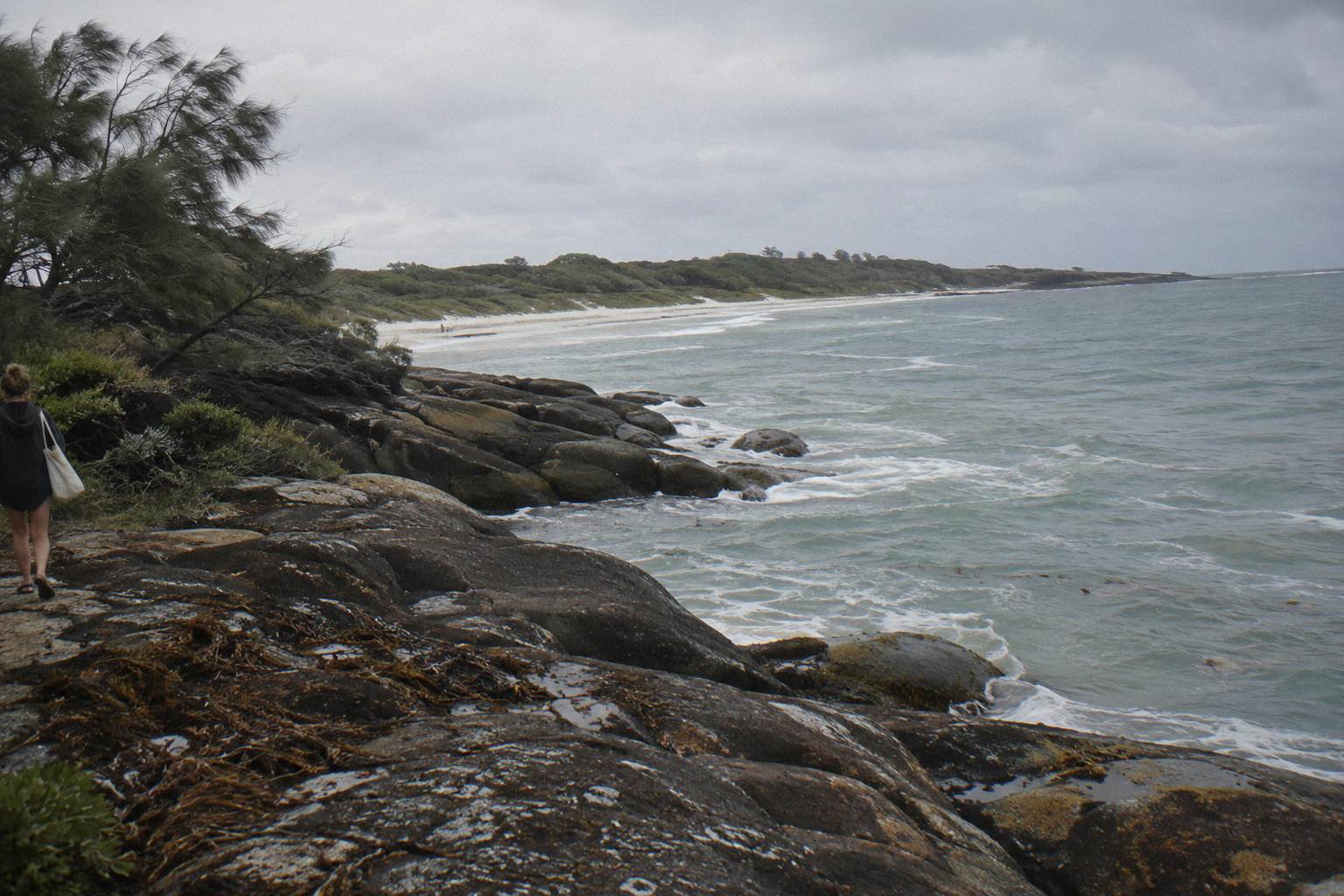
Two island-specific cautions belong here. The North Gorge Walk at Point Lookout is 1.2 km and partly closed, so check the park alerts before counting on it, whatever the weather. And swimming advice holds regardless of sky: Cylinder Beach and Main Beach are regularly patrolled, with patrols running weekends and public holidays from September to early May and school-holiday lifeguards at some beaches; swim between the flags, and know that bluebottles and fire jellies occur in Moreton Bay waters. The staff at North Stradbroke Island Tours suggest treating the forecast as a packing instruction rather than a verdict.
What Can You Cancel, And When?
Every trip listed here can be cancelled free of charge up to 24 hours before it starts, per each booking page, and it covers a change of mind, a bad forecast, illness or a missed connection in exactly the same way. Inside that final 24 hours the booking is committed, so run your forecast check the evening before, not the morning of.
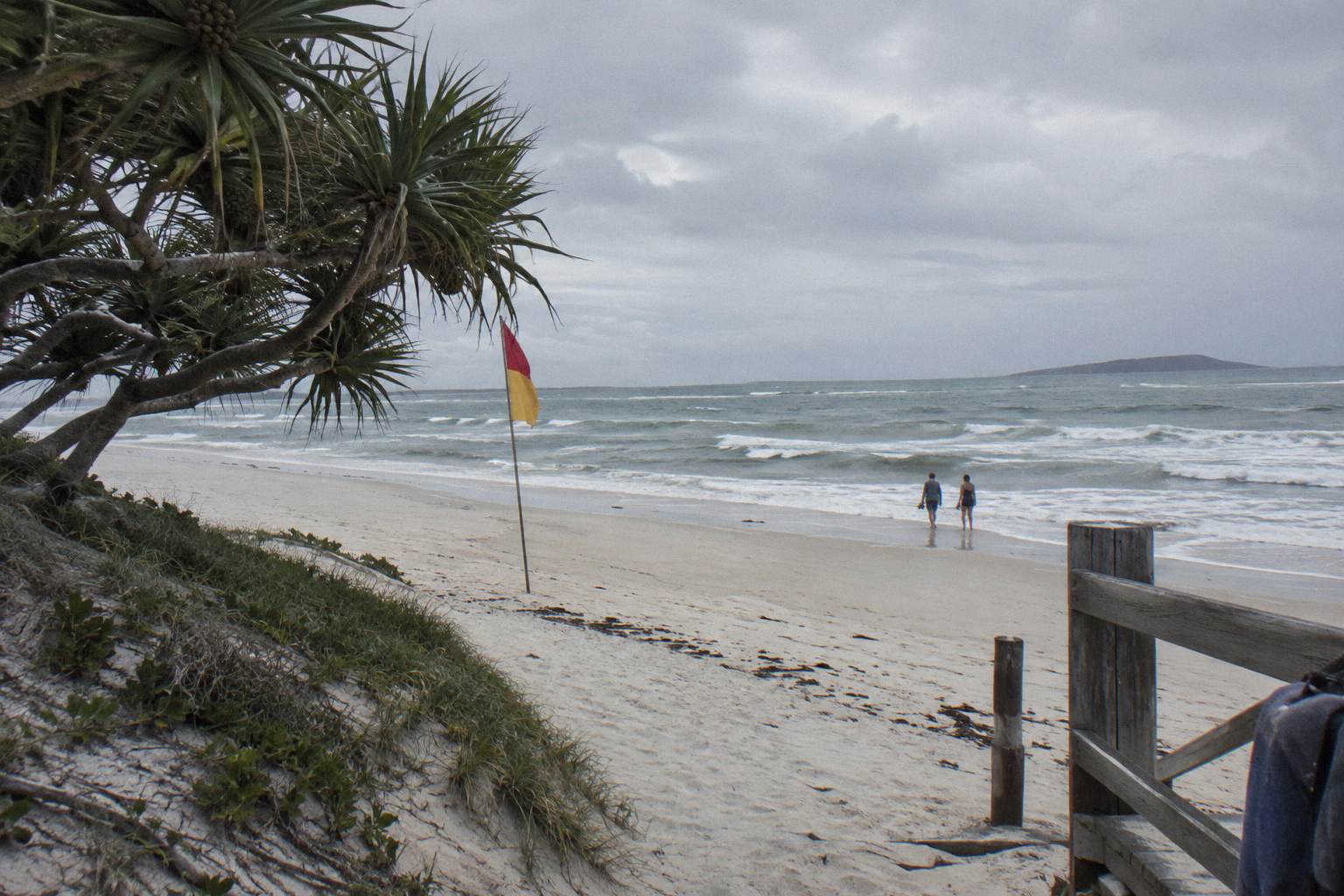
Think of the window as a decision deadline. Book whenever you like, because at booking time the forecast is unreliable anyway. Then, the day before, when short-range forecasts are at their most accurate, make the call: keep or cancel. Cancelling more than 24 hours before start costs nothing and you simply rebook a better date, and as covered earlier, a passenger ferry ticket bought separately stays valid for 365 days. Cancelling inside the window is a different matter and follows the operator's terms, so if you already know your morning looks risky, decide early.
For operator-side cancellation, the stance to take is the one worth repeating: no rule is published for most trips, so ask before the window closes and keep the answer. The two trips that do publish rules, the rain-or-shine Cultural Driving Tour and the runs-in-most-weather Oyster Farm Tour with its tide-set start times, tell you plainly that rain alone will not end your booking. For everything else, your two reliable facts are the 24-hour free cancellation and the ferry ticket's 365-day validity. Everything beyond that is a conversation with the operator, and having it early is free.
Common Questions About Straddie Day Tour Weather
Will Weather Cancel A Straddie Day Tour?
Very rarely. Only two trips publish an explicit rule, the Cultural Driving Tour has a stated weather policy and the Oyster Farm Tour runs in most weather, and no other trip lists weather cancellation terms. Your reliable protection is free cancellation up to 24 hours before start, which applies to every trip covered here.
Do Straddie Day Tours Get Cancelled For Rain?
No Straddie trip lists rain as a cancellation trigger, and the two operators who publish a weather rule both run through rain. Ordinary Queensland showers rarely stop an outdoor itinerary. If the forecast is genuinely severe, contact the operator and, if you prefer, use the free cancellation up to 24 hours before start.
What Happens If The Ferry Is Cancelled By Weather?
Passenger ferry tickets stay valid on any service for 365 days from purchase, so a weather-delayed crossing delays your ticket rather than voiding it. Vehicle ferry bookings are essential and follow the operator's change terms. Tour passengers have the ferry fare included and the operator manages the crossing.
Can I Cancel My Straddie Tour For A Bad Forecast?
Yes, outside the window. Free cancellation up to 24 hours before start applies to every trip listed here, and it covers your own change of mind for any reason, including the forecast. Inside 24 hours, the booking is committed under the operator's terms.
Which Straddie Tours Run No Matter The Weather?
The Minjerribah Cultural Driving Tour states a weather policy, a 3-hour on-island drive from One Mile Jetty, Dunwich, with pickup and drop-off from the water taxi listed on the booking page. The Oyster Farm Tour runs in most weather, with start times set by the low tide and confirmed before travel.
When Should I Check The Forecast Before A Straddie Day Tour?
The evening before, when short-range forecasts are most accurate and you are still outside the 24-hour cancellation window. Check the Bureau of Meteorology's Point Lookout station, SeaLink's service pages if strong wind is forecast, and Queensland Parks alerts, since the park can temporarily close tracks independently of the weather.