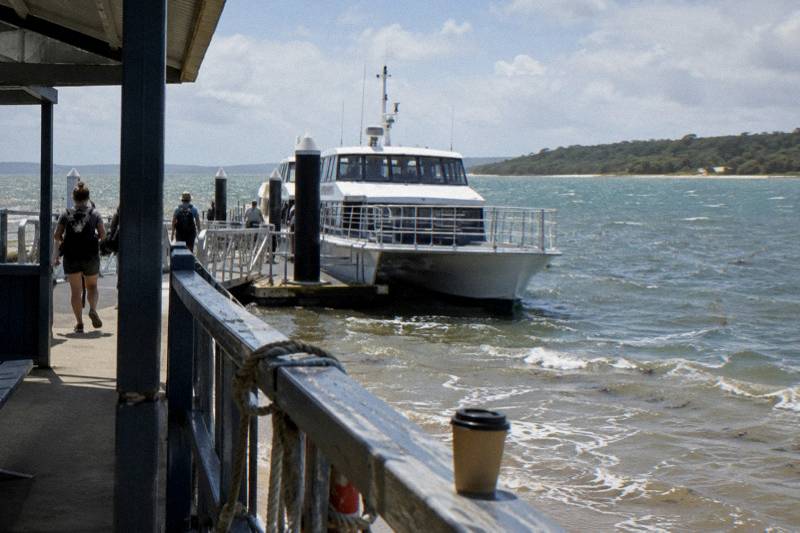
Cleveland To Straddie: Vehicle Ferry Versus Passenger Water Taxi For Tour Days
Every visit to North Stradbroke Island (Minjerribah) starts with a crossing from Cleveland, and the choice between the vehicle ferry, the passenger ferry and the Flyer water taxi shapes the whole day.
Short answer
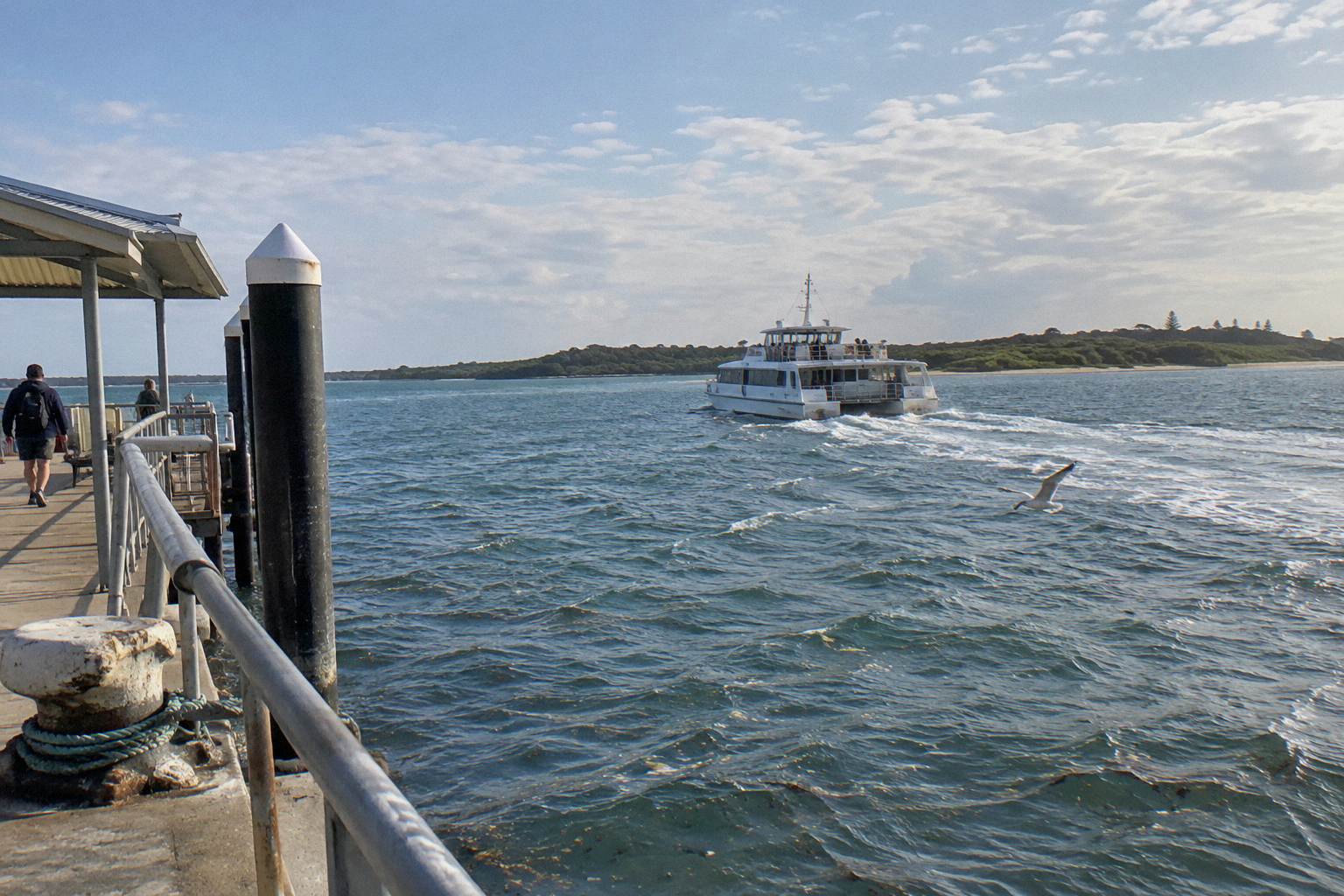
The SeaLink vehicle ferry from Toondah Harbour, Cleveland to Dunwich takes about 45 minutes and must be booked; the SeaLink passenger ferry takes about 25 minutes, needs no fixed departure booking and a ticket stays valid 365 days. The Stradbroke Flyer water taxi also takes about 25 minutes, runs daily and sells tickets at its Cleveland office or onboard.
Every trip to North Stradbroke Island (Minjerribah) begins the same way: a crossing of the bay from Cleveland. The island sits about 40 km south-east of Brisbane on the eastern side of Moreton Bay, and there is no bridge, so the ferry is not an optional extra, it is the front door. What trips up many first-time visitors is that there are actually three ways across: the SeaLink vehicle ferry, the SeaLink passenger ferry and the Stradbroke Flyer water taxi, each with its own booking rules, terminals and quirks.
The decision matters most on a tour day. Some day tours from Brisbane include the return ferry fare in the ticket price, which removes the question entirely. Others, notably the on-island experiences such as the oyster farm tasting and the cultural driving tour, expect you to be standing in Dunwich already, ferry paid and arranged by you. Knowing which side of that line your trip falls on, before you book anything, is the difference between a relaxed morning and a sprint through Cleveland.
Which Ferry Crossing From Cleveland Should You Take?
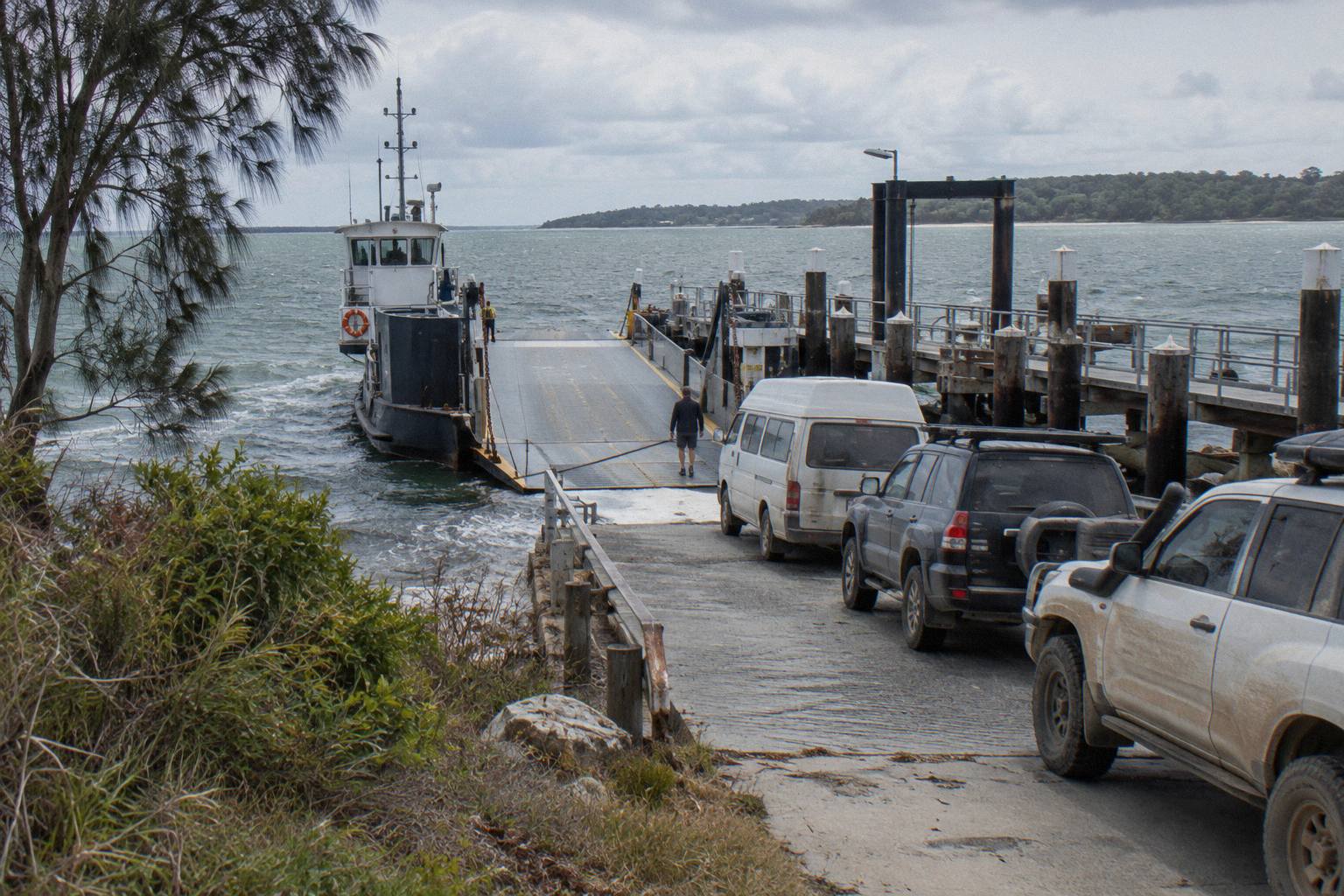
Three crossings link Toondah Harbour in Cleveland with Dunwich: the SeaLink vehicle ferry at about 45 minutes, the SeaLink passenger ferry at about 25 minutes, and the Stradbroke Flyer water taxi, also about 25 minutes. The vehicle ferry must be booked in advance; the passenger ferry ticket needs no fixed departure and stays valid for 365 days; the Flyer sells tickets on the spot with no online booking at all.
That is the whole decision in one paragraph, but the details matter. The vehicle ferry is the only option if you are bringing a car, and it is the one with the strictest rules: bookings are essential, SeaLink asks you to arrive at least 30 minutes before departure, and you follow the blue line on the ground to the check-in. The passenger ferry is more forgiving. You buy a ticket online or at the terminal, and because it is valid on any service for 365 days from purchase, a missed boat costs you nothing but time. Note that tickets are no longer sold onboard, so do not plan to pay as you step aboard.
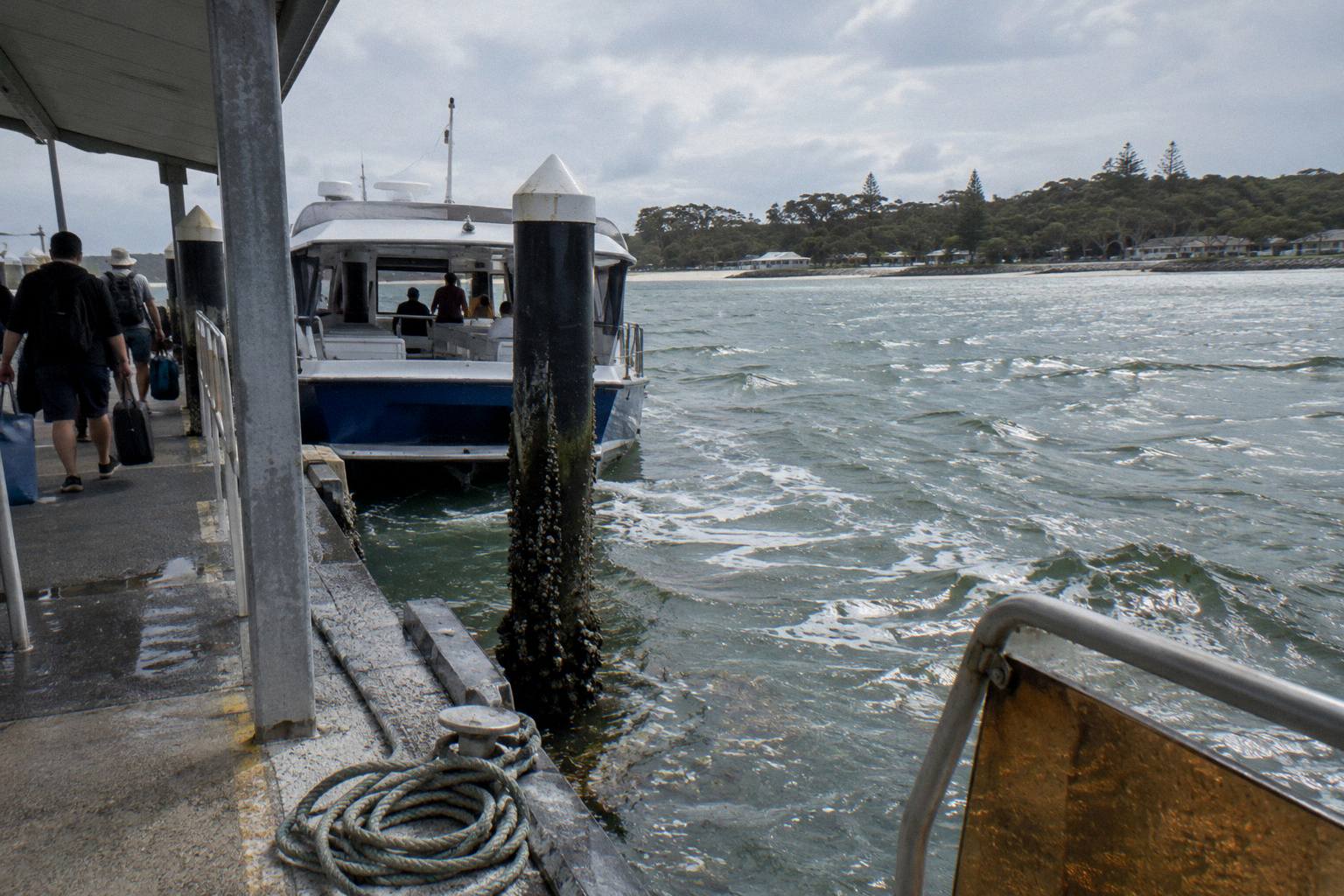
The Flyer occupies a third niche. It is a passenger-only water taxi running daily, 365 days a year, landing at One Mile jetty in Dunwich rather than the SeaLink terminal. There is no online booking and no need to book: you buy at the Flyer office at 13 to 21 Emmett Drive, Cleveland, or onboard with cash or EFTPOS. If you want a fuller picture of the water taxi option, the water taxi versus ferry comparison guide breaks down when the Flyer is the smarter pick.
| Crossing | Approximate time | Booking rule | Ticket and fare basis |
|---|---|---|---|
| SeaLink vehicle ferry | About 45 minutes (timetable says 45 to 50) | Essential, book ahead; arrive 30 minutes early | From A$83 one way for a standard car up to 5.4 m, plus per-person fares; flexible fares vary by date and time |
| SeaLink passenger ferry | About 25 minutes | No booking for a specific departure | Adult from A$13.50 one way, A$23.00 return; ticket valid on any service for 365 days |
| Stradbroke Flyer water taxi | About 25 minutes | No online booking, no need to book | Tickets at the Cleveland office or onboard, cash or EFTPOS; fares on the operator's timetable page |
Fares change, and SeaLink's own fare page carries the current table, so treat every figure here as a from-price rather than a promise. A temporary 3 per cent fuel surcharge applies to vehicle bookings on top of the fare. If you are weighing whether the island even works without bringing a car, read how to do Straddie without a car before committing to the vehicle ferry.
Vehicle Ferry Or Passenger Ferry: Which Suits A Tour Day?
Take the passenger ferry or the Flyer if your tour departs from Brisbane and includes the crossing, or if you are joining an on-island tour from Dunwich, because foot passengers board fastest and tickets are flexible. Book the vehicle ferry only when you are driving yourself, since it is the sole car option, runs about hourly from early morning, and demands a booked slot with a 30 minute early arrival.
The reason this question dominates tour days is timing. Most Brisbane-departing tours put you on the passenger ferry as a group with the guide, so the vehicle deck is irrelevant to you. The Hit The Road Wildlife Day Trip, from A$149 per person and rated 4.9 from 547 reviews, is built as a small-group ferry day from the start. The Wildlife And Beaches day trip, from A$199 per person and rated 4.9 from 119 reviews, even lists the SeaLink Departure Lounge Cafe in Cleveland among its meeting points, which tells you exactly where its crossing begins.
If you are driving yourself to Cleveland instead, the calculus changes. Public parking near the terminals fills fast on weekends and holidays, and once your car is parked it stays parked, because island buses cover the three townships. Some visitors park in Cleveland and cross as foot passengers precisely to avoid hauling a vehicle over; others want the car for beach access, and for them the vehicle ferry booking is non-negotiable.
Which Day Tours Include The Ferry Ticket?
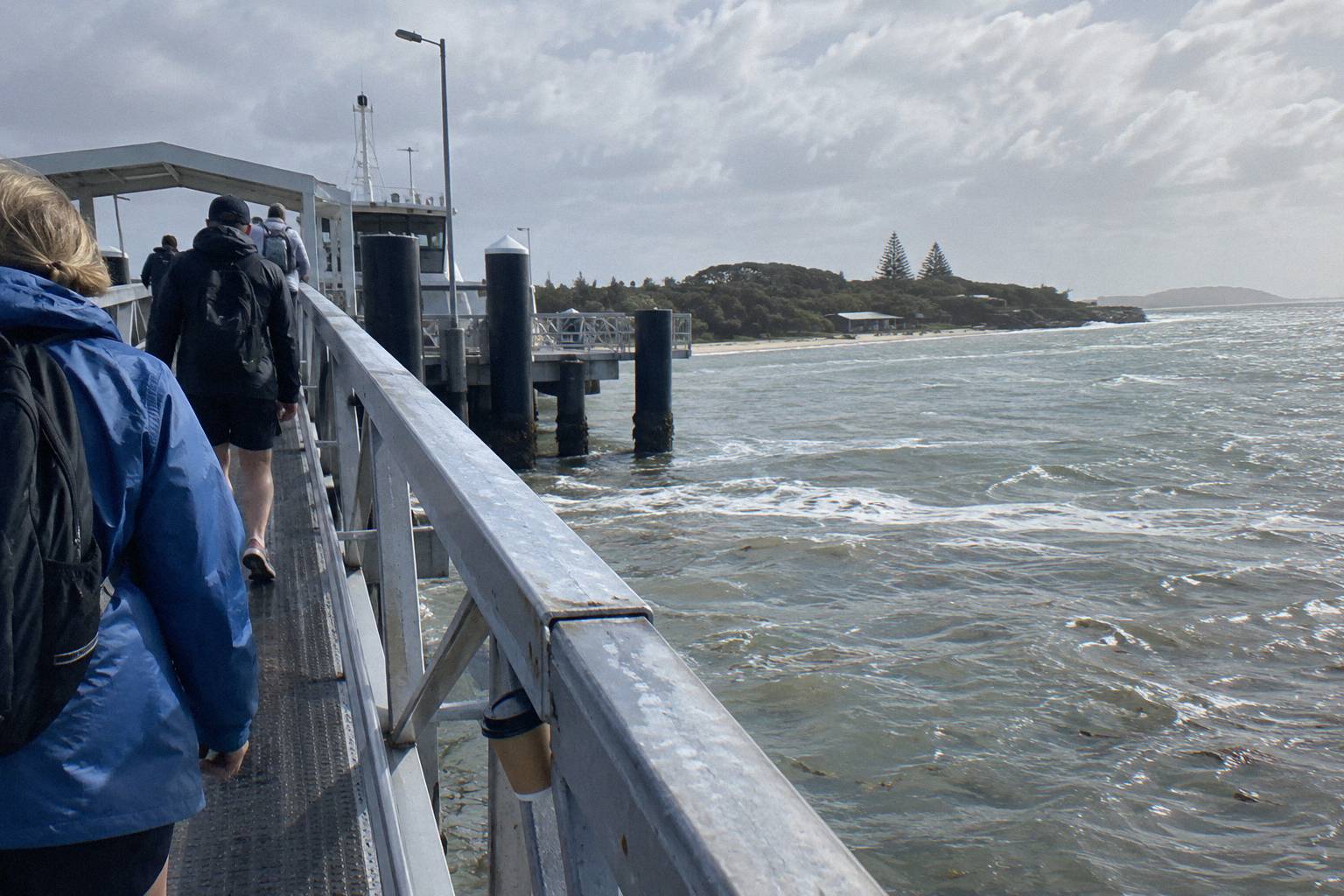
Six of the ten trips here include the return ferry: the Hit The Road Wildlife Day Trip, the Wildlife And Beaches day trip, the Small Group Eco Tour, the Indigenous Culture Day Tour, the First Nations Day Tour and the Private Cultural Tour. The Oyster Farm Tasting and the three-hour Cultural Driving Tour do not, because both start on the island at Dunwich and expect you to have made your own way across.
This split is the single most useful thing to check before booking anything, because a tour without a ferry included quietly adds a crossing you must book, pay for and time yourself. The oyster farm experience, from A$220 per person, meets at Otter Street, Adams Beach access, Goompi (Dunwich), a 5 to 10 minute walk from where the SeaLink passenger ferry lands, which is convenient but only once you have a ticket. The Cultural Driving Tour starts at One Mile Jetty, Dunwich, where the Flyer lands and where island bus route 881 begins.
| Trip | Duration | Ferry basis |
|---|---|---|
| Hit The Road Wildlife Day Trip | 9 hours 30 minutes | Return ferry included |
| Wildlife And Beaches, 11 Hours | 11 hours | Ferry ticket included |
| Small Group Eco Tour, All Inclusive | 10 hours | Return ferry included, national park fees too |
| Indigenous Culture Day, 11 Hours | 11 hours | Return ferry transfers included |
| First Nations Day Tour, 8 Hours | 8 hours | Ferry transfers and entry fees included |
| Private Cultural Tour, Entry Included | 8 to 9 hours | Return ferry included |
| 4WD Beach Day, BBQ Included | 7 hours 30 minutes | Meets at the Cleveland water taxi terminal, or hotel pickup |
| Oyster Farm Tasting, 2 Hours | 2 hours | Ferry fares NOT included |
| Cultural Driving Tour, 3 Hours | 3 hours | Ferry not included, starts at One Mile Jetty |
The Small Group Eco Tour, All Inclusive is the cleanest all-in-one for ferry-avoiders: from A$199 per person, rated 4.7 from 294 reviews, it bundles the return crossing and the national park fees into one price and meets at a single fixed point, Brisbane Skytower at 222 Margaret St. You can read more about the full itinerary of a guided eco tour day to see how the ferry leg fits between pickup and the first stop.
What Does The Crossing Cost?
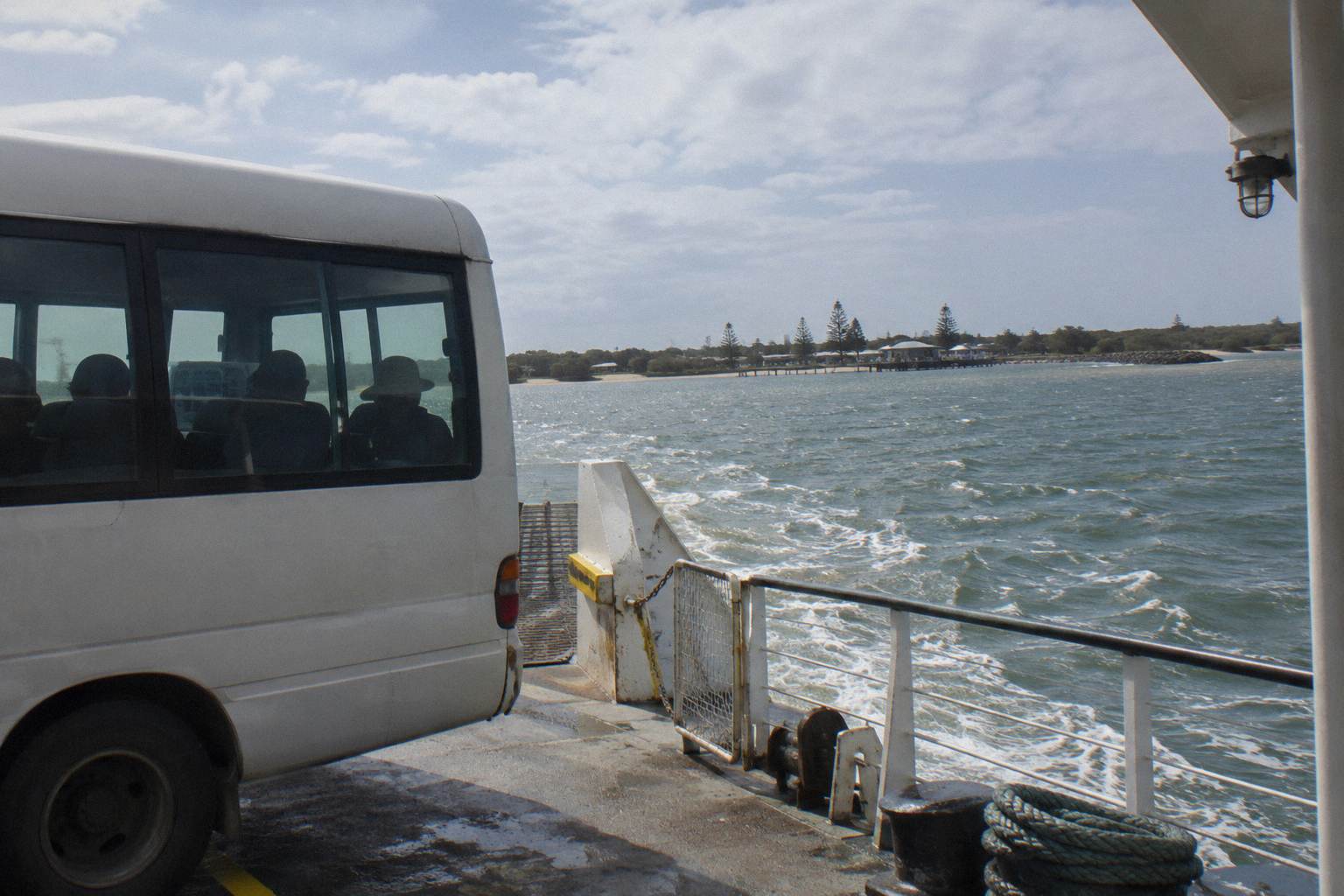
Fares start at A$13.50 one way or A$23.00 return for adults, with children aged 5 to 14 paying from A$8.75 one way and A$13.50 return, while children under 5 travel free. Vehicle charges range from A$20 for a kayak or canoe to A$83 for a standard car, A$90.50 for a large car, and A$42.50 for a motorbike, plus a 3 per cent fuel surcharge.
| Item | One way | Return |
|---|---|---|
| Adult passenger | From A$13.50 | From A$23.00 |
| Child passenger, 5 to 14 | From A$8.75 | From A$13.50 |
| Child 0 to 4 | Free | Free |
| Standard car up to 5.4 m (vehicle ferry) | From A$83 | Flexible fares by date and time |
| Large car (vehicle ferry) | From A$90.50 | Flexible fares by date and time |
| Motorbike (vehicle ferry) | A$42.50 | Flexible fares by date and time |
| Kayak or canoe (vehicle ferry) | A$20 | Flexible fares by date and time |
| Bicycle | Free with a passenger ticket | Free with a passenger ticket |
All amounts are in Australian dollars and are from-prices: SeaLink runs flexible vehicle fares that vary by date and time, so a summer Saturday costs more than a winter Tuesday. The operator's fare page lists the live table, and the passenger fares took effect on 1 July 2026 with vehicle fares set from 1 April 2026, so treat anything you read elsewhere with caution. Never copy a Flyer fare from memory either; that operator's timetable page is the only current source.
A rough budget for two adults doing the passenger ferry return comes in under A$50 in fares, while bringing a car multiplies the outlay several times over once the vehicle fare, the fuel surcharge and per-person charges are stacked together. That gap is why foot-passenger touring, or a tour with the crossing included, is often the cheaper as well as the simpler plan. Comparing the two approaches in full, including what you give up without a car, is exactly the question the is a tour worth it or go DIY piece works through.
Where Do The Ferries Leave From, And How Do You Reach Cleveland?
Both SeaLink services and the Flyer leave from Toondah Harbour in Cleveland, roughly a 45 minute drive from Brisbane CBD or Brisbane airport, and Cleveland sits on a train line so rail is a real option. The Flyer runs a free courtesy bus from Cleveland railway station and from the Middle Street bus stop; there is no Translink bus to the boats, and the courtesy bus does not wait for late trains.
The Flyer office at 13 to 21 Emmett Drive, on the corner of Middle Street, opens Monday to Friday 6:30am to 5:30pm and Saturday and Sunday 7:30am to 5:30pm, which covers early crossings comfortably. One practical note: the Straddie Kingfisher Tours 4WD Beach Day lists its meeting point at 12 Emmett Drive, Cleveland, at the water taxi terminal, so guests joining that trip are sent to the Flyer side of the harbour, not the SeaLink terminal. Getting those two terminals confused is a classic morning-of mistake, because they are separate operations on the same stretch of waterfront.
On the island side, Dunwich has two landings as well: the SeaLink terminal and the Flyer's One Mile jetty. The island buses start at One Mile, route 881 specifically, which is worth knowing if you arrive on the water taxi and need to reach Amity Point or Point Lookout. For the meeting points of the Brisbane-departing tours, including the two Adina hotels the Hit The Road booking page warns about, the details are in the hotel pickup answer.
If you are parking and riding, arrive earlier than feels necessary on a weekend. The public parking near the terminals fills fast on weekends and holidays, and the passenger ferry asks you there 15 to 20 minutes before departure anyway.
What Does The Ferry Timetable Look Like?
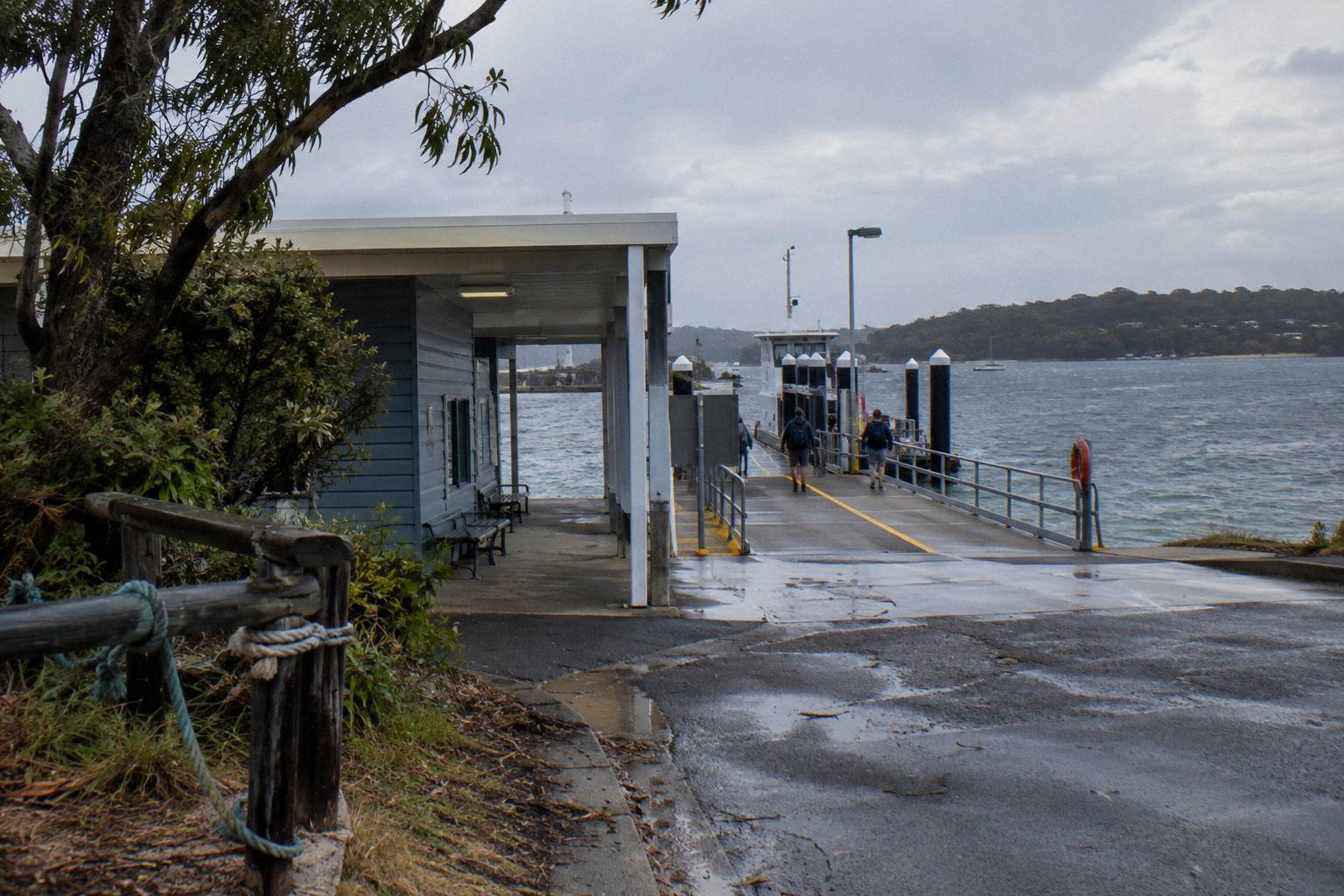
The base timetable starts the vehicle ferry from Cleveland at 6:00am Monday to Saturday, then roughly hourly through to a late-afternoon final departure, with an extra evening sailing on Sunday; Dunwich returns run about an hour after each outbound. The passenger ferry runs from about 4:45am to 7:15pm, extending to 8:15pm Friday to Sunday, but SeaLink adds and removes services, so treat these as a shape, not a schedule to plan against.
| Service | Shape of the day | Notes |
|---|---|---|
| Vehicle ferry from Cleveland | First sailing 6:00am Monday to Saturday, then roughly hourly to a late-afternoon final departure | Sunday adds an evening departure; bookings essential |
| Vehicle ferry from Dunwich | Returns follow about an hour after each outbound | Follow the blue line to check-in; arrive 30 minutes early |
| Passenger ferry | About 4:45am to 7:15pm | Friday to Sunday to 8:15pm; no booking for a specific departure |
| Stradbroke Flyer | Daily, 365 days a year | Times on the operator's timetable page; tickets at the office or onboard |
That caveat about added and removed sailings is important enough to repeat differently: the operator adjusts services with the seasons, so check the live timetable before you lock in a return crossing, especially if you are catching a tour that does not include the ferry and need to be back in Cleveland by a set hour. The safest anchor is your tour's own duration and start time. A trip that starts at 7:45 AM and runs 9 hours 30 minutes finishes roughly mid-afternoon, and from there you can work backwards to a realistic ferry.
The Flyer runs daily, 365 days a year, which makes it the fallback when a SeaLink sailing is full or missed. Because its tickets are sold on the spot, it is also the option most forgiving of a late start, though its frequency varies across the day, so the timetable page is the deciding factor.
For tour-goers who would rather never read a ferry timetable at all, the group-format trips shine. The Wildlife And Beaches day trip is an 11-hour day from A$199 per person with the ferry ticket already in hand, and the guide manages the crossing, the connections and the clock.
How Do You Get Around Once The Ferry Lands In Dunwich?
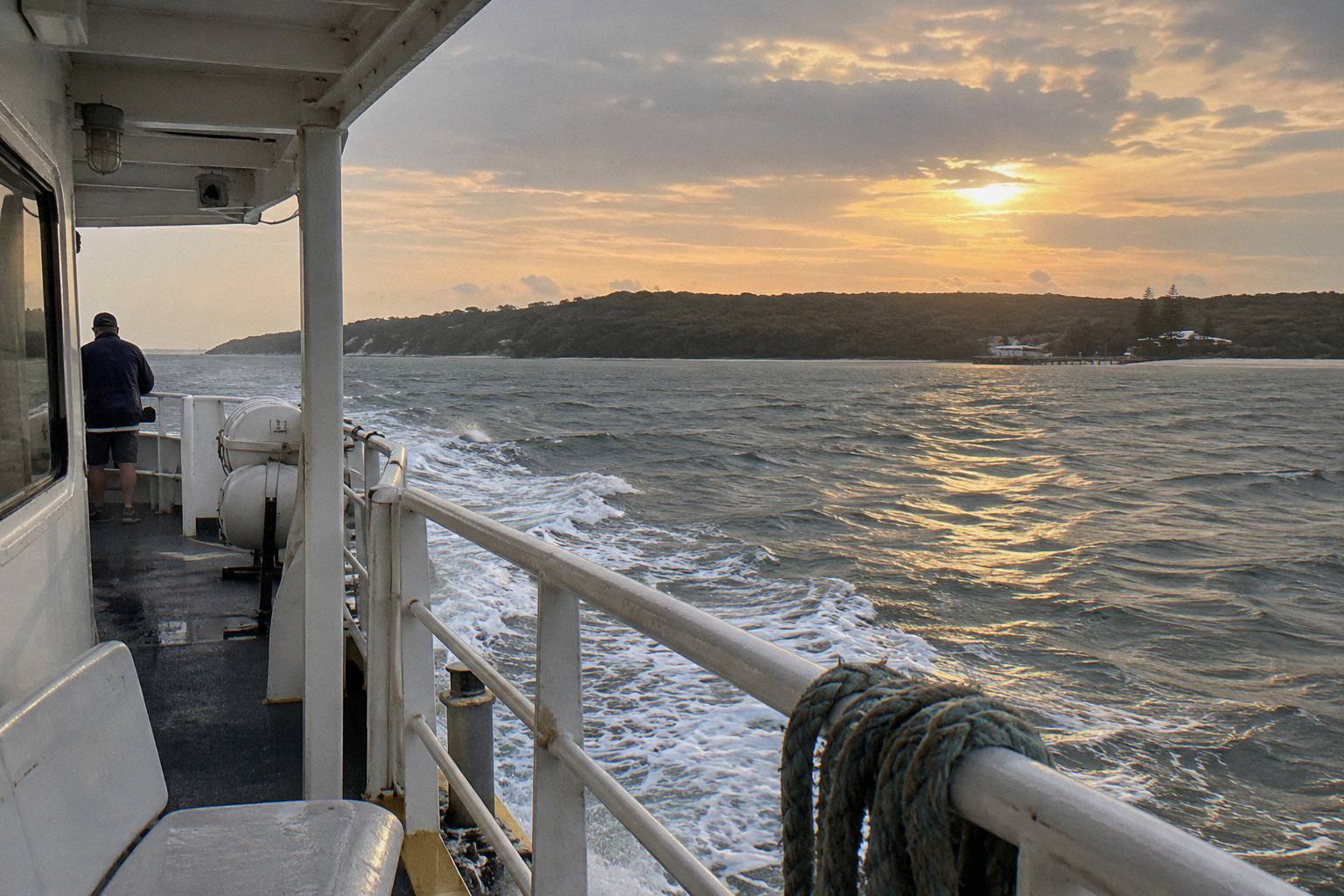
Two island bus routes, 880 and 881, link the three townships seven days a week, with 881 guaranteed to connect with ferries from One Mile; drive times are 20 to 25 minutes from Dunwich to Point Lookout or Amity Point, and about 15 minutes between Point Lookout and Amity. The buses take paper tickets only, A$0.50 for a single, A$1.00 for a daily and A$5.00 for a weekly, and go cards are not accepted.
The paper-ticket rule catches out visitors who arrive with nothing but a tap-and-go card. Buy tickets with cash as the driver expects, and keep coins handy for the short hops. The operator is Bay Island Transit Systems, and the timetable picks up extra 880 services on weekends, public holidays and school holidays, which is when most day-trippers travel.
The alternative to the bus is a tour that keeps its own vehicle on the island, moving with you between stops. The oyster farm tasting is a good example of a short on-island experience you reach on foot: land at the SeaLink passenger terminal in Dunwich and the meeting point at Adams Beach access is a 5 to 10 minute walk away, with the tour itself starting at from A$220 per person and lasting 2 hours. Because its start times follow the low tide and are confirmed before travel, plan your ferry around the operator's advice, not a guess.
For beach-goers rather than shellfish fans, the 4WD Beach Day takes the vehicle question off the table entirely: hotel pickup around 7:30 AM from its listed pickup points, or a meet at the water taxi terminal in Cleveland, and a 7 hours 30 minutes day with lunch and national park fees included.
If you did bring your own car across on the vehicle ferry, note that the sealed roads between townships need no special permit, but driving on Flinders Beach or Main Beach requires a vehicle access permit and a suitable 4WD; the 4WD beach permit guide covers the rules, the speed limits and the tide windows.
What Should You Know Before The Day Of The Crossing?
Arrive 30 minutes early for a booked vehicle ferry and 15 to 20 minutes early for the passenger ferry; park well before both on weekends; keep pets in the vehicle or muzzled on the passenger ferry; and remember pets are not allowed on island public buses or in the national park. Passenger tickets stay valid 365 days, so a missed sailing is an inconvenience, not a lost fare, but vehicle bookings are date-and-time bound.
Weather rarely stops the crossing itself, and several trips run in most conditions; the fuller picture is in what happens when weather cancels a tour. What weather does affect is comfort on the outer deck and the drive to Cleveland, so leave margin on both ends of the day. If you are travelling with children, the passenger ferry's 25-minute crossing is short enough to keep almost anyone happy, and the island itself is a family-friendly destination, as the guide to Straddie with kids sets out.
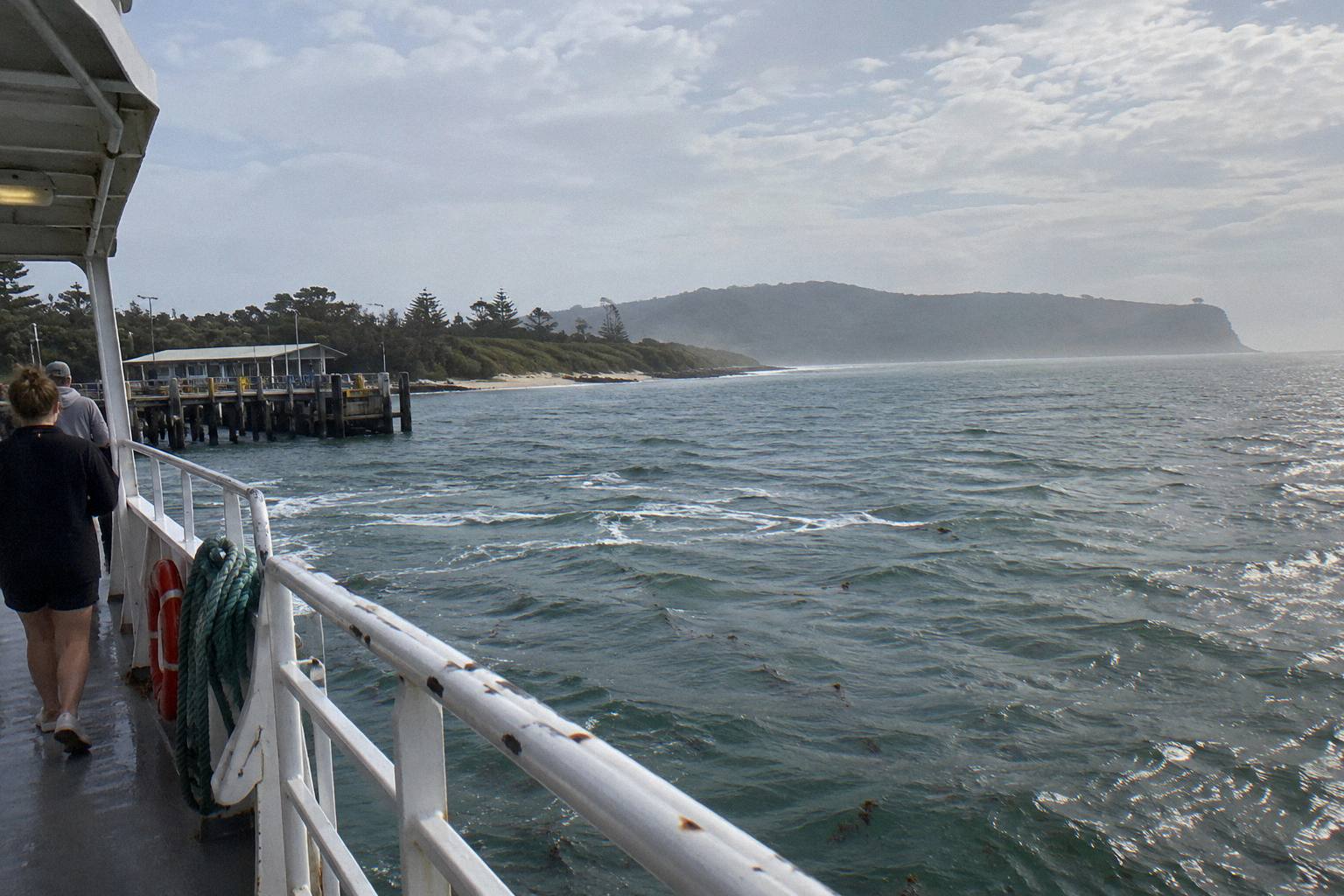
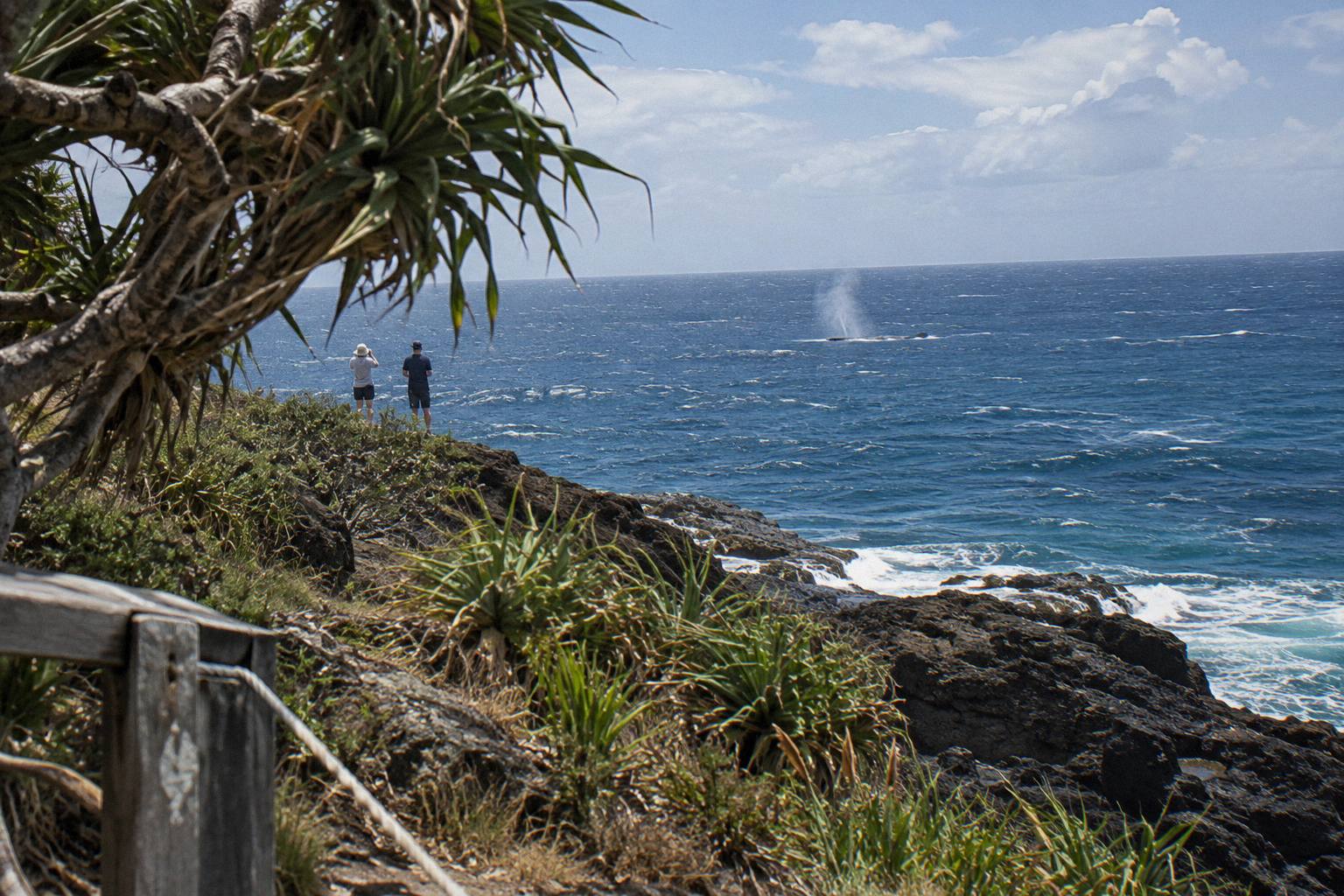
For the crossing itself, hold the Queensland Parks guidance in mind if whales are your motivation: humpbacks pass close to the coastline from June to November on their annual migration, and the headlands at Point Lookout are the acknowledged land vantage points. A ferry deck is not a whale-watching platform, but on a winter crossing the odds of a passing blow are real. Sightings, on any vessel or headland, are possible and never guaranteed.
Tour Or DIY Crossing: How Do You Decide?
Book a tour with the ferry included when you are day-tripping from Brisbane without a car and want one price, one meeting point and no timetable anxiety; arrange your own crossing when you are staying on the island overnight, driving yourself, or joining a short on-island experience like the oyster tasting or the cultural driving tour, where a bundled ferry would be wasted money.
The arithmetic is straightforward. The Small Group Eco Tour at from A$199 per person covers the return crossing, national park fees and a 10-hour guided day including the North Gorge Walk, Myora Springs, Amity and two of the island's best beaches. The Hit The Road Wildlife Day Trip at from A$149 per person is the trip with the most reviews on the booking pages, 4.9 from 547, and is built as a wildlife-first ferry day for a group of up to 11. Both cost less than the sum of their parts would cost you to assemble with a hire car and a vehicle ferry booking.
Going DIY earns its keep on flexibility. With your own crossing you choose the sailing, linger at Cylinder Beach or Brown Lake as long as you like, and leave when the last bus or your parked car allows. The trade is that you own every connection, and the answer to whether you can do Stradbroke Island in a day depends almost entirely on which ferry you catch out.
Every trip listed here carries free cancellation up to 24 hours before start, so the tour route carries less commitment than it might seem. Whichever way you cross, this North Stradbroke Island Tours guide sits alongside a full range of ferry-inclusive and on-island options worth a look before you commit.
Common Questions About The North Stradbroke Island Ferry
Do You Need To Book The North Stradbroke Island Ferry In Advance?
The vehicle ferry must be booked, with arrival at least 30 minutes before departure. The passenger ferry needs no booking for a specific departure: a ticket is valid on any service for 365 days from purchase and is bought online or at the terminal, not onboard. The Stradbroke Flyer water taxi takes no online bookings at all; you buy at its Cleveland office or onboard.
How Long Is The Ferry From Cleveland To North Stradbroke Island?
The SeaLink vehicle ferry takes about 45 minutes, with the timetable saying 45 to 50. The SeaLink passenger ferry takes about 25 minutes, and the Stradbroke Flyer water taxi also takes about 25 minutes from Toondah Harbour to One Mile jetty in Dunwich.
How Much Does The Ferry To Straddie Cost?
An adult passenger ticket is from A$13.50 one way or A$23.00 return; a child 5 to 14 pays from A$8.75 one way and A$13.50 return, and children 0 to 4 are free. A standard car up to 5.4 m travels from A$83 one way, with a temporary 3 per cent fuel surcharge on vehicle bookings. Fares change, so the operator's fare page has the current table.
Do Day Tours To North Stradbroke Island Include The Ferry?
Six of the ten trips here include the return ferry: the Hit The Road Wildlife Day Trip, Wildlife And Beaches, the Small Group Eco Tour, the Indigenous Culture Day Tour, the First Nations Day Tour and the Private Cultural Tour. The Oyster Farm Tasting and the Cultural Driving Tour start on the island and do not include the crossing.
Can You Take A Car On The Ferry To North Stradbroke Island?
Yes, on the SeaLink vehicle ferry from Toondah Harbour, Cleveland, which must be booked in advance. Public parking near the terminals fills fast on weekends and holidays if you prefer to leave the car behind. On the island, sealed roads between townships need no permit, but driving Flinders Beach or Main Beach requires a vehicle access permit and a suitable 4WD.
Can You Get Around North Stradbroke Island Without A Car After The Ferry?
Yes. Island bus routes 880 and 881 link Dunwich, Amity Point and Point Lookout seven days a week, with route 881 guaranteed to connect with ferries. The buses take paper tickets only, A$0.50 for a single and A$1.00 for a daily ticket, and go cards are not accepted.