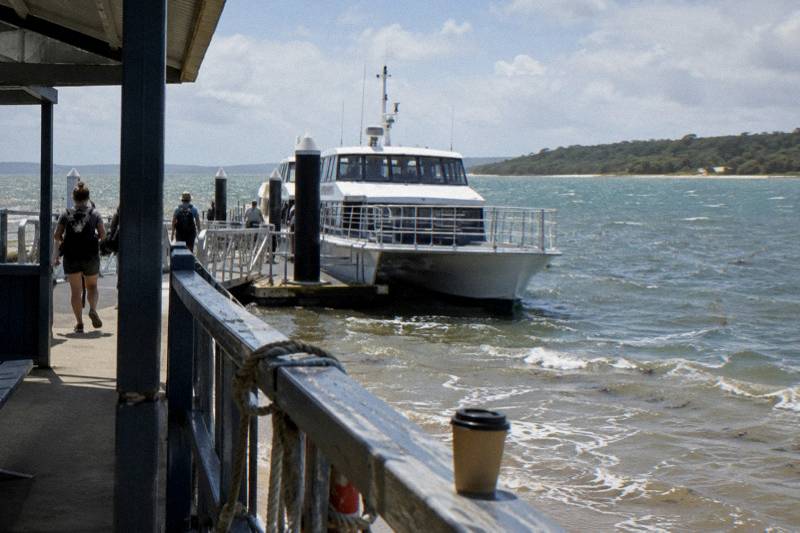
Can You See Whales From The North Gorge Walk?
Humpback whales pass close to the Point Lookout coast from June to November, and the North Gorge Walk is one of the best land vantage points. Here is what the walk can and cannot deliver, and which tours include it.
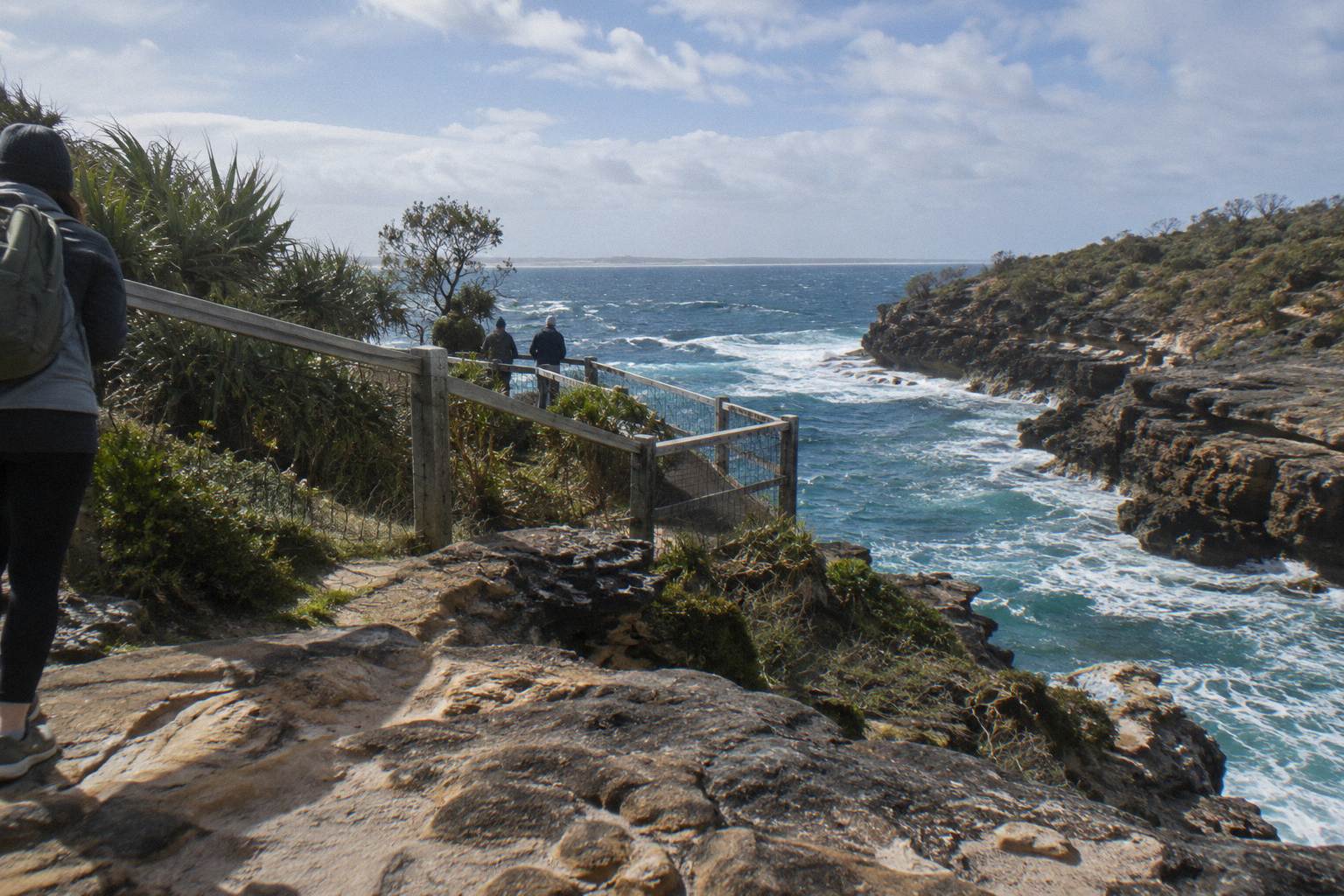
Yes, you can, and the odds are better here than almost anywhere on the mainland coast: humpback whales pass close to the coastline of North Stradbroke Island (Minjerribah) from June to November on their annual migration, and Queensland Parks names the North Gorge Walk's headlands as a place where humpbacks, manta rays and turtles are regularly seen. No sighting is ever promised, the walk is partly closed at the moment, and the whales come to you rather than the other way round, because there is no whale-watching cruise for this island among the trips featured here. What follows sets out what the walk delivers, when to go, and how the day tours that include the Gorge Walk fit in if you would rather not drive yourself.
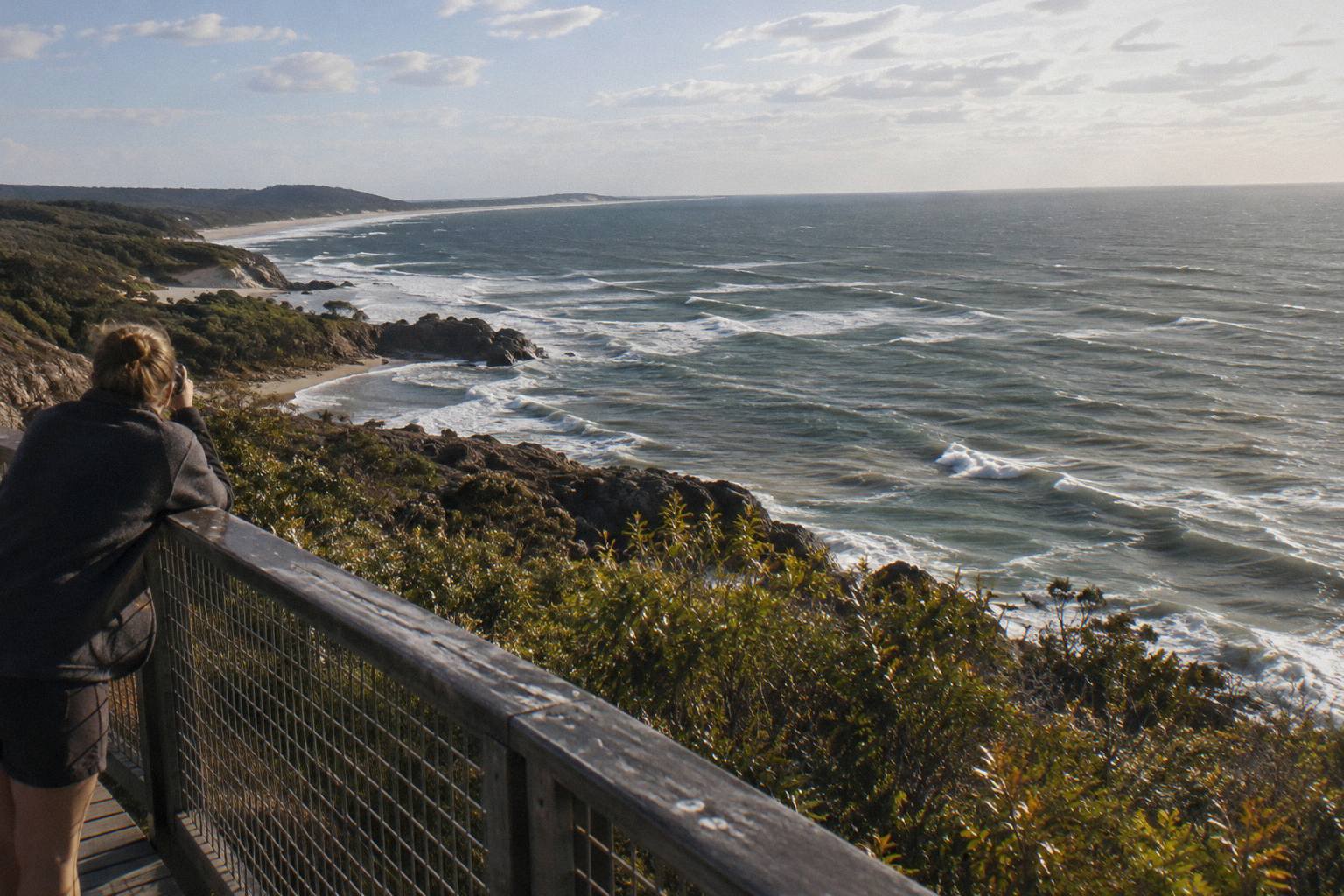
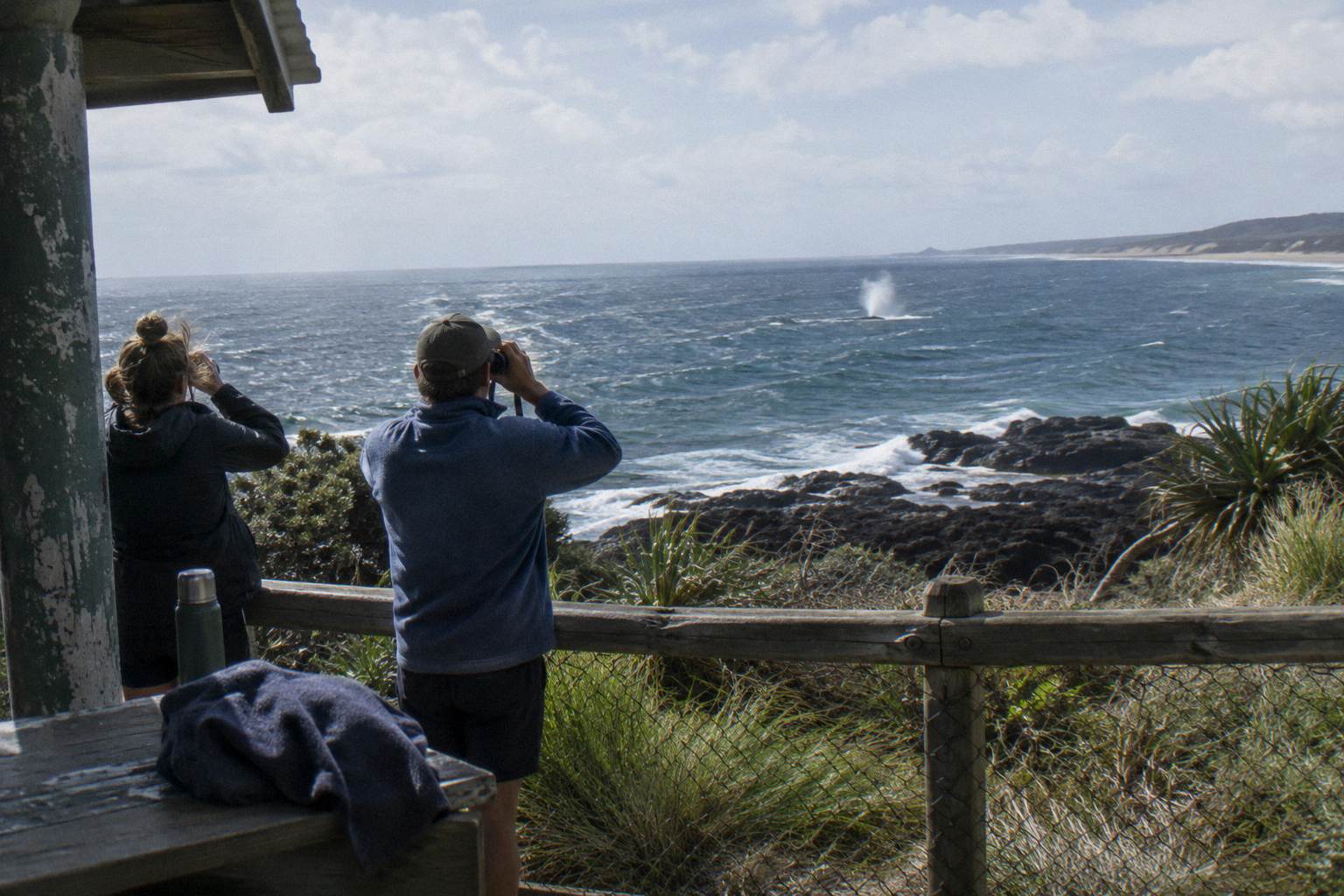
That claim about whales passing close is not marketing copy. Queensland Parks, the state agency that co-manages about half the island as Naree Budjong Djara National Park, states plainly that humpback whales pass close to the coastline from June to November, and that the Gorge Walk is a gentle walk with ocean views where turtles, dolphins and manta rays are also named marine life. The reason is geography: Point Lookout juts east into the South Pacific, and the migrating humpbacks travelling between their breeding grounds to the north and feeding grounds to the south swing near the headland rather than far offshore. You are standing on a 1.2 km cliff-edge walk directly above a whale highway.
The framing matters, though. A whale sighting from the Gorge Walk is likely in season, not certain. Some days deliver a dozen breaches and a pod of dolphins playing in the channel; some days deliver empty water and a strong wind. What you can count on is the vantage point itself, which costs nothing to stand on and sits above some of the clearest water on the east coast. If your whole day hinges on a guaranteed whale, no land vantage point on any coast can give you that, and you should plan the walk as one excellent reason to visit rather than the only one.
For visitors deciding between walking the Gorge themselves and joining a day trip that includes it, the featured option on North Stradbroke Island Tours is the Wildlife And Beaches day trip, an 11-hour small-group day from Brisbane that includes the ferry, a guide and a Point Lookout stop alongside koalas, kangaroos and beach time. It runs from A$199 per person and is rated 4.9 from 119 reviews. Free cancellation applies up to 24 hours before start, which is worth knowing when your plans depend on weather.
When Is Whale Season At Point Lookout?
Whale season at Point Lookout runs from June to November. According to Queensland Parks, this is when humpback whales pass close to the island's coastline on their annual migration, so anyone visiting during these months has a good chance of seeing them near the shore. Those are the only months to plan around, and they are the same months listed on every official page about this coast. Outside that window, in the warmer half of the year, the headlands instead serve up turtles, dolphins and manta rays, which Queensland Parks names as regular marine life along this coast, plus the possibility of dugong and grey nurse sharks in the nearby waters of Moreton Bay Marine Park, which surrounds the island. The whales do not read calendars on your behalf, so treat June to November as the wildlife agency's stated range, not a booking guarantee.
| What you might see | When the chances are best | Where to look from |
|---|---|---|
| Humpback whales | June to November | The headlands at Point Lookout and the North Gorge Walk |
| Turtles and dolphins | Year round | The Gorge Walk lookouts above the channel |
| Manta rays | Warmer months, possible any time | The headlands, on calm clear days |
| Koalas and kangaroos | Year round, on land | The Gorge Walk itself and the island's townships |
Within the season, the peak of activity is generally the two-way traffic of mid-winter: northbound whales early in the season, then mothers with calves heading south later in it. Nobody on the island will promise you a breaching whale on a given Tuesday, and you should distrust anyone who does. What the season does change is the mathematics of standing on a headland for an hour: in July or September, with patience and binoculars, the odds of spotting at least a distant blow are genuinely good.
The one thing season does not change is the walk's closure. The North Gorge Walk is partly closed at present, and Queensland Parks asks visitors to check the park alerts before setting out. That check takes two minutes and applies whether it is your first visit or your tenth, in whale season or out of it. If the closed section removes the lookouts you had planned to linger at, a guided tour that walks the headlands can adjust on the day in a way a self-guided visitor sometimes cannot.
The small-group Hit The Road Wildlife Day Trip is a good fit for whale-season visitors who want a full wildlife day without organising anything. It runs from A$149 per person, rated 4.9 from 547 reviews, over 9 hours 30 minutes from a 7:45 AM meeting point outside the Adina Apartment Hotel Anzac Square in Brisbane, with the return ferry and bottled water included. It is the trip with the most reviews on the booking pages, and free cancellation applies up to 24 hours before start.
What Makes The Gorge Walk A Good Vantage Point?
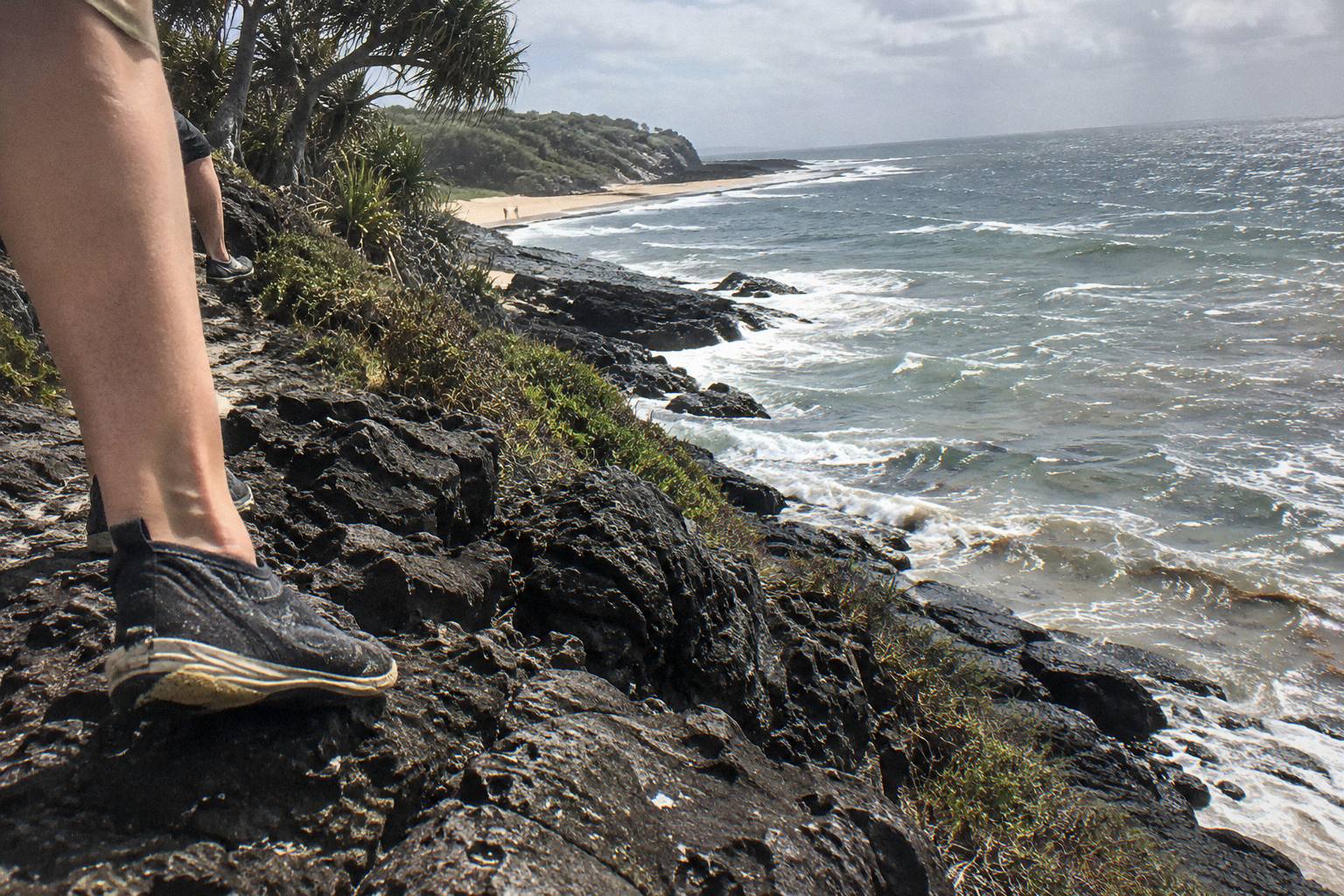
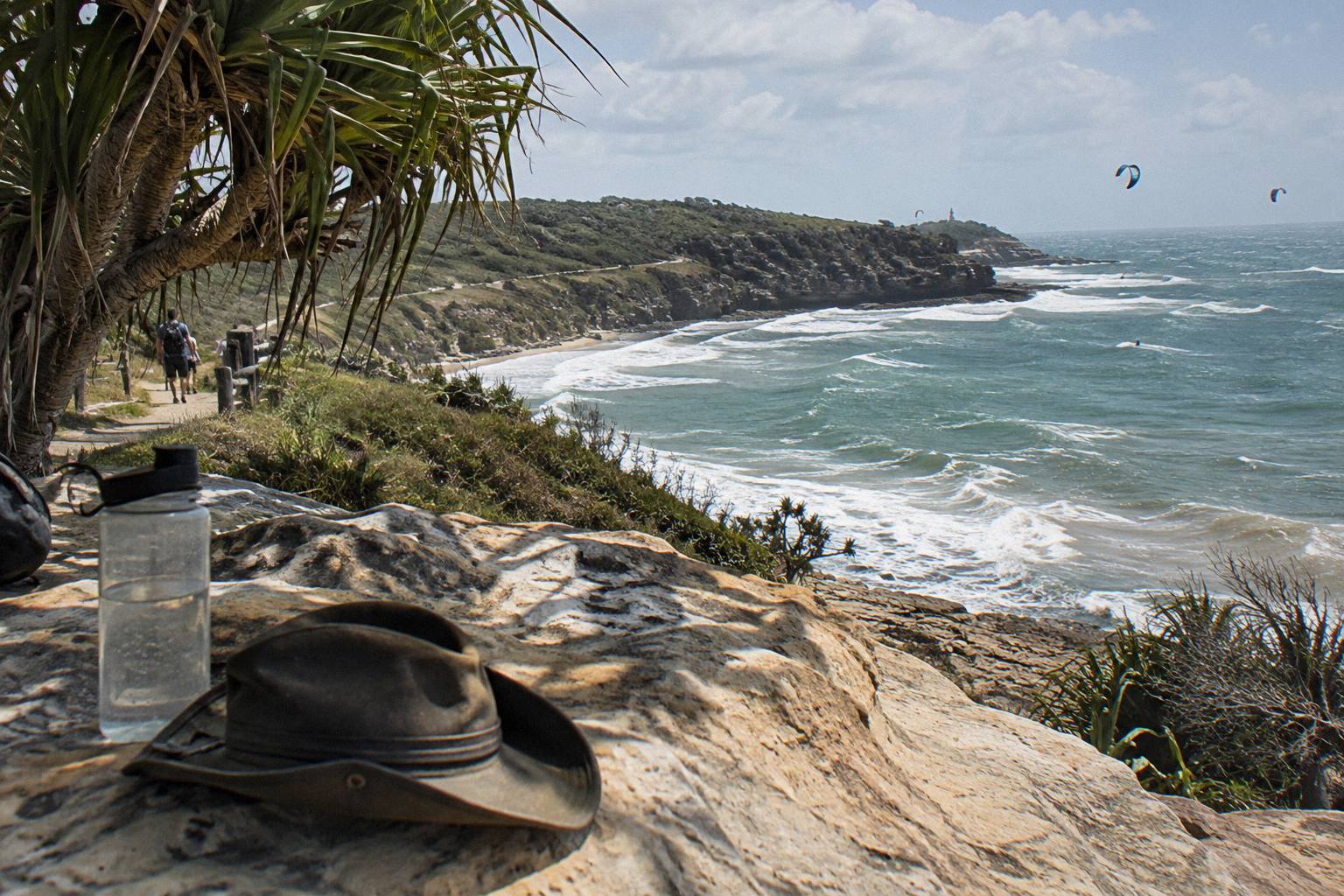
The North Gorge Walk is a 1.2 km self-guided walk along the rocky headlands at Point Lookout, and its value for whale watching is simple: it puts you on foot, above deep ocean water, facing east, with unbroken views along the coastline the whales follow. Queensland Parks calls it a gentle walk with ocean views, and Visit Redlands Coast calls it a boardwalk. Either way, you are not viewing from a crowded boat deck or a distant beach; you are walking a cliff line that sits directly over the route humpbacks take when they pass close to shore between June and November.
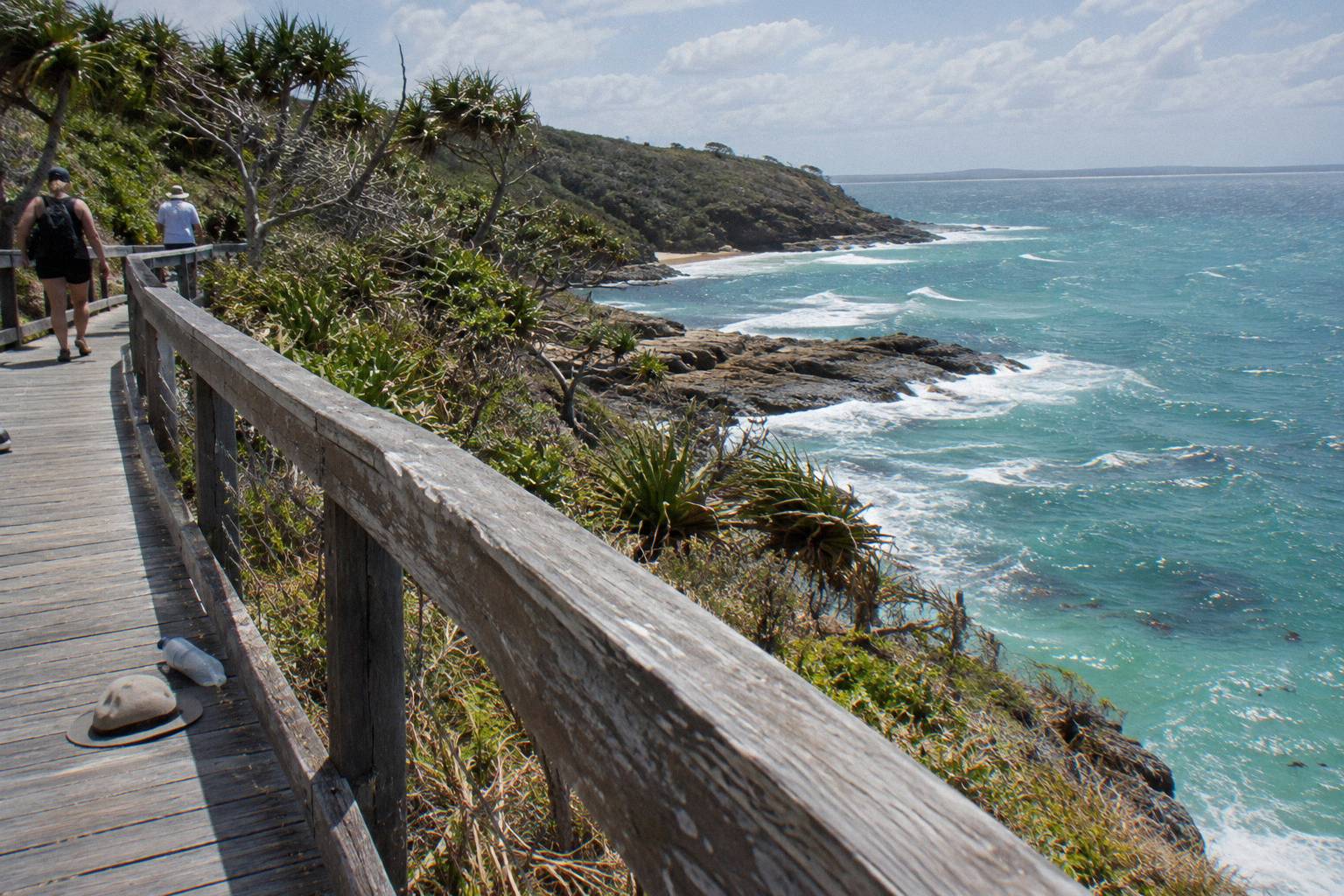
The practical advantages stack up. A boat tour, where one exists, gives you one angle at speed; a headland walk gives you two kilometres of angles at your own pace, and the freedom to stop for twenty minutes wherever the water looks alive. On a calm winter morning the water below the Gorge is clear enough that dolphins and turtles are visible from above, and manta rays occasionally glide through the channel in plain sight. On a rough day the same lookouts still work, because whale blows and breaches are visible at a distance even when the surface is choppy.
Two caveats keep expectations right. First, the walk is partly closed at present, so check the Queensland Parks alerts before you go and be ready to work with the open sections. Second, the official facts stop at 1.2 km: check the walking time and grade on the booking page before you go, and do not plan around a timed circuit you found on a forum. Allow whatever the day and the whales deserve, bring layers, and treat the walk as the attraction rather than a commute.
A good companion read is the longer guide to how long the North Gorge Walk takes, which covers the closure and the practical timing in more depth than is needed here. The short version: the walk is short, the linger time is what you make of it, and whale season rewards the lingerers far more than the stopwatch runners.
Can You Book A Whale-Watching Boat Tour Instead?
No, you cannot. This is the single most useful thing to know before you plan: there is no whale-watching cruise, boat tour, or kayak trip for North Stradbroke Island at all, so plans built around seeing whales from the water will not work here. Whale watching here means standing on land, on the headlands at Point Lookout or the North Gorge Walk, during the June to November migration. If a page elsewhere on the internet offers you a Straddie whale cruise, it is not one of the trips available, and you should read its fine print very carefully before paying anyone for a promise.
This shapes the real decision. In most whale destinations the question is whether to pay for a boat; here the question is whether to get yourself to the headlands under your own steam or on a day tour that does the driving, the ferry and the parking for you. The land-based option is not a consolation prize. Queensland Parks itself says humpbacks, manta rays and turtles are regularly seen from headlands, which is the wildlife agency's way of saying the vantage point works. Several day tours mention whales in season precisely because their passengers see them from the Gorge and the headlands, not from a deck.
The tours that flag whales on their booking pages are the 4WD Beach Day, which lists whales from June to November, the Small Group Eco Tour, which lists whales among the marine animals to look for from the Gorge headlands, and the Indigenous Culture Day Tour, which notes seasonal whale spotting along the way. None of them promises a sighting, because none of them can. The whales are wild animals on a long annual migration, and the tour pages that describe them plainly say "look for", not "see".
Which Day Tours Include The North Gorge Walk?
Three trips featured here include a North Gorge stop on their booking pages: the Small Group Eco Tour by Queensland Day Tours, the Indigenous Culture Day Tour by Stradbroke Island Tours, and the Meanjin To Minjerribah First Nations Day Tour by Yura Tours. Each walks the headlands with a guide, which means the whale-spotting is shared work: one person sees a blow, six people get the whale. The Wildlife And Beaches day trip stops at Point Lookout, where the Gorge begins, and the trip itself is the featured option here.
| Trip | Duration | Price | Rating | Gorge connection |
|---|---|---|---|---|
| Wildlife And Beaches, 11 Hours | 11 hours | from A$199 per person | 4.9 from 119 reviews | Point Lookout stop |
| Small Group Eco Tour, All Inclusive | 10 hours | from A$199 per person | 4.7 from 294 reviews | Guided North Gorge Walk hike |
| Indigenous Culture Day, 11 Hours | 11 hours | from A$359 per person | no rating figure published | North Gorge headland walk stop |
| Hit The Road Wildlife Day Trip | 9 hours 30 minutes | from A$149 per person | 4.9 from 547 reviews | Wildlife day from Brisbane, no verified stop list |
The format differences matter more than the operators. The Small Group Eco Tour meets at Brisbane Skytower by CLLIX on Margaret Street, runs 10 hours with the return ferry and national park fees included, and builds its day around a guided hike along the headlands, plus Myora Springs, Amity, Cylinder Beach, Frenchmans Beach and a lake stop with free time on the shore. It is not suitable for people with mobility impairments, and lunch is not included. In whale season, its guided Gorge time doubles as whale-watching time with commentary.
The Indigenous Culture Day Tour takes a different cut of the same headland. It runs 11 hours from designated Brisbane city meeting points with the ferry included, and pairs the Gorge walk with a 90-minute cultural experience led by a local Quandamooka guide, plus Myora Springs, Brown Lake and an included lunch of a Prawn Shack prawn and avocado roll with a cold drink. It costs from A$359 per person, runs on set days, so check the booking page, and free cancellation applies up to 24 hours before start. Whale season gives this day an extra layer: the headlands are a place to watch from, and the guide's commentary tells you what those headlands have meant to Quandamooka people for far longer than tourists have stood on them.
Is The Gorge Walk Or A Day Tour Better In Whale Season?
The better choice depends on your transport, not on the whales: the Gorge Walk itself is free and self-guided, but it sits at Point Lookout, a ferry ride and a bus or drive from the mainland, while a day tour bundles the ferry, the driving and a guide's eyes into one booking from Brisbane or the Gold Coast. The whales treat both options identically, because both put you on the same headlands in the same season. What differs is the effort before you get there, and what happens around the whale watching.
Consider the self-guided case practically. You need to reach Toondah Harbour in Cleveland, cross on the passenger ferry, which takes about 25 minutes, then cover the 20 to 25 minute drive or bus ride from Dunwich to Point Lookout, and reverse it all at day's end. Island buses on routes 880 and 881 connect the townships and the ferry terminals seven days a week, and they take paper tickets only, A$0.50 single or A$1.00 daily, with go cards not accepted. It is entirely doable, and the guide to seeing North Stradbroke Island without a car walks through it. But it is a day of logistics built around a walk that might, on an off day, show you empty water.
The tour case bundles that risk with convenience. A small-group day from Brisbane costs from A$149 to A$199 per person depending on the format, includes the return ferry, and fills the hours around the headlands with koalas, kangaroos, beaches and swimming stops. If the whales are quiet at Point Lookout, the day has already delivered other things. If the whales are active, eleven people and a guide spotting together will outperform one person scanning alone, which is a real effect and the reason guided headland time is worth paying for in season.
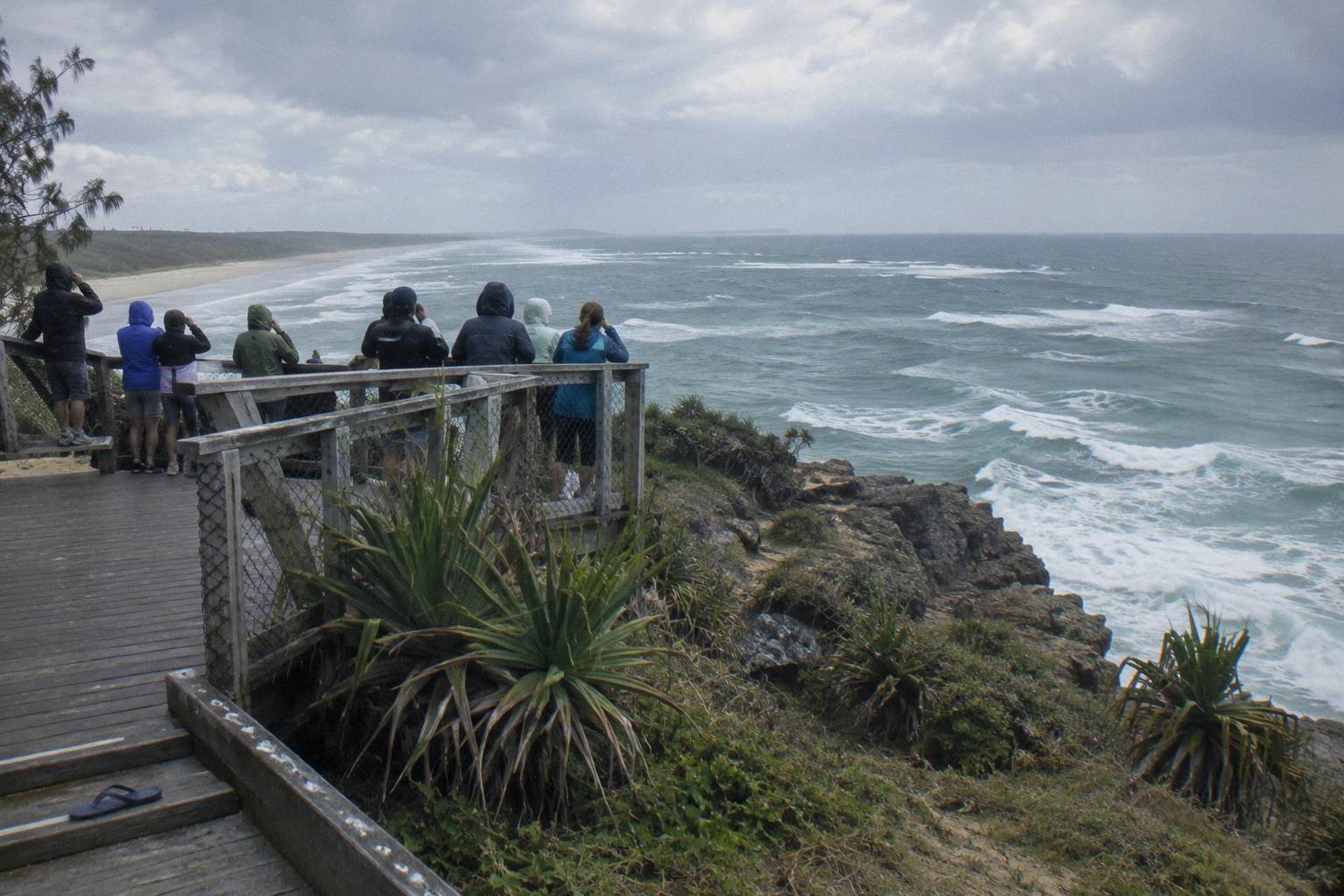
That group effect is exactly what the Small Group Eco Tour sells in whale season. Its 10-hour day includes a guided North Gorge Walk hike with a live commentary, the return ferry and national park fees, and the guide's eyes on the water for the whole time the group is on the headlands. It runs from A$199 per person, rated 4.7 from 294 reviews, and free cancellation applies up to 24 hours before start.
What Should You Know Before Going Whale Spotting?
Before you go, four things matter: the North Gorge Walk is partly closed, so check the Queensland Parks alerts; whale season is June to November only; there is no whale cruise for this island among the trips covered here; and you should never plan around a guaranteed sighting, because humpbacks, manta rays and turtles are wild animals whose appearances are likely in season but never certain. Everything else on this list is comfort and courtesy.
| Check | Why it matters | What to do |
|---|---|---|
| Park alerts for the Gorge Walk | The walk is partly closed at present | Read the alerts page before you travel |
| Season | Whales pass close June to November | Time your visit inside that window |
| Weather and sea state | Calm days make blows easier to spot | Pick a clear morning if you have flexibility |
| Cancellation terms | Free cancellation applies up to 24 hours before start on every trip covered | Keep your booking changeable |
Beyond the whales, the island rewards basic preparation. The North Gorge Walk sits just outside Naree Budjong Djara National Park, which is jointly managed by the Quandamooka people and Queensland Parks and Wildlife Service and covers about half the island; dogs are not permitted in the park, stay on the tracks and take rubbish out. If you are walking in the warmer months, remember that bluebottles and fire jellies occur in Moreton Bay waters, and swim between the flags at patrolled beaches, where patrols run weekends and public holidays from September to early May. For a fuller rundown of the whole island's drawcards, start with the site's guide to the North Stradbroke Island whale watching season.
One more planning note that saves confusion: the island's whale story is a land story. The Queensland Parks page for Naree Budjong Djara National Park is the primary source for the June to November season and the headland sightings, and the park's culture page explains the joint management that shapes how the headlands are cared for. Quandamooka people's connection to the island was recognised in a native title consent determination, and the Quandamooka Yoolooburrabee Aboriginal Corporation speaks for that Country today. Reading even a little of this before you stand on the Gorge makes the headlands a bigger place.
Common Questions About Whales From The North Gorge Walk
Can You See Whales From The North Gorge Walk?
Yes. Humpback whales pass close to the coastline of North Stradbroke Island from June to November, and the North Gorge Walk at Point Lookout is one of the headland vantage points where Queensland Parks says humpbacks, manta rays and turtles are regularly seen. No sighting is guaranteed, and the walk is partly closed at present, so check the park alerts before you go.
When Is The Best Time Of Year To See Whales At Point Lookout?
June to November. That is the window Queensland Parks gives for humpbacks passing close to the coastline on their annual migration. Outside that window the headlands still serve up turtles, dolphins and manta rays, but the whales are elsewhere.
Can You Book A Whale-Watching Boat Tour At North Stradbroke Island?
No. There is no whale-watching cruise, boat or kayak trip for the island. Whale watching here means sightings from land, from the headlands at Point Lookout and the North Gorge Walk, or from day tours whose booking pages mention in-season whales.
Do Any Day Tours Include The North Gorge Walk?
Three do: the Small Group Eco Tour by Queensland Day Tours, the Indigenous Culture Day Tour by Stradbroke Island Tours, and the Meanjin To Minjerribah First Nations Day Tour by Yura Tours. The Wildlife And Beaches day trip stops at Point Lookout, where the walk begins.
Is The North Gorge Walk Open Right Now?
The walk is partly closed, and the open and closed sections can change. Queensland Parks publishes alerts for Naree Budjong Djara National Park, and checking them before you travel is the only reliable way to know what is accessible on your date.
What Else Can You See From The North Gorge Walk Besides Whales?
Turtles, dolphins and manta rays are named marine life along this coast, and koalas and kangaroos live on the island itself, including a genetically distinct koala population that Queensland Parks highlights. Sightings of any of them are possible at any time of year and never promised.