Do Dolphins Come Close At Amity Point On A Straddie Tour?
What the park service and the tour booking pages actually say about dolphins at Amity Point on North Stradbroke Island, which trips visit the township, and how to read the swimming warnings.
Dolphins are named by Queensland Parks among the marine life of North Stradbroke Island (Minjerribah), and several trip booking pages list dolphins as something to look for, but no trip names a dolphin stop at Amity Point and no official source promises dolphins come close there. Treat every sighting as possible, never likely. Amity Point also carries a specific warning: do not swim in the deep channel, where strong currents run and sharks are possible.
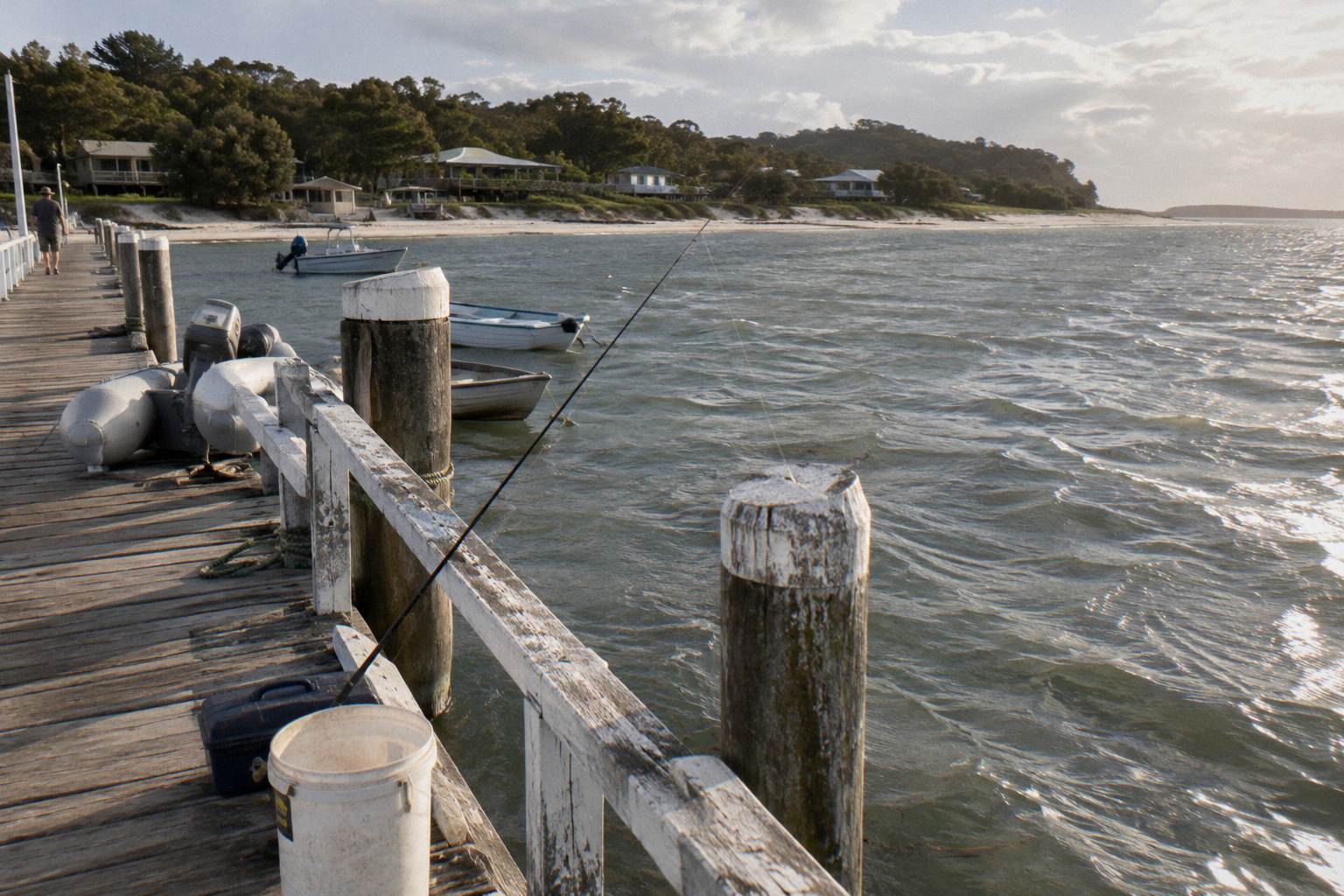
That is the headline, and it is worth dwelling on because the question gets asked a lot. Amity Point, one of the island's three townships alongside Dunwich (Goompi) and Point Lookout, faces west across Moreton Bay. Deep water runs close to shore there, which is exactly why the Queensland Parks service warns swimmers away from the channel: strong currents and possible sharks. The same page notes that Amity has an enclosed swimming area, the safe option in the township.
The dolphin reputation is real in the sense that dolphins live in the surrounding waters. Moreton Bay Marine Park surrounds the island, and the park service names dolphins, turtles and manta rays among the marine life, with humpback whales passing close to the coastline from June to November on their annual migration. None of that converts into a guarantee at any particular jetty on any particular afternoon.
If your reason for visiting the island is wildlife, a guided day trip is a sound way to cover the ground. North Stradbroke Island Tours compares the formats below, and the three trips most often booked for a wildlife day look like this:
- Hit The Road Wildlife Day Trip
- Small Group Eco Tour, All Inclusive
- Wildlife And Beaches, 11 Hours
- 4WD Beach Day, BBQ Included
- Private Tour, 10 To 12 Hours
- Indigenous Culture Day, 11 Hours
- Private Cultural Tour, Entry Included
- Oyster Farm Tasting, 2 Hours
- First Nations Day Tour, 8 Hours
- Cultural Driving Tour, 3 Hours
The rest of the article works through what each source actually says, which tours genuinely stop at Amity Point, and how to plan a day around the possibility of dolphins without betting the trip on it.
Where Do The Trips Say To Look For Dolphins?
Every trip that mentions dolphins words it the same way: dolphins are something to look for, not a scheduled stop. The Small Group Eco Tour's booking page lists dolphins, turtles, manta rays and whales among the animals to look for, alongside koalas and kangaroos. The First Nations Day Tour and the Indigenous Culture Day Tour carry similar wildlife spotting language. None of them promises a sighting or names Amity Point as a dolphin location.
That wording matters more than it might seem. A trip built around wildlife, such as the Hit The Road Wildlife Day Trip from Brisbane, is designed to put you in places where wildlife is possible: the headlands, the beaches, the springs. The booking pages are careful, and rightly so. Sightings of dolphins, turtles, manta rays, koalas and kangaroos are possible and never certain, a point worth holding onto when you read any review or any brochure.
The pattern holds across the wildlife-focused formats. The Wildlife And Beaches day trip includes wildlife viewing opportunities among its inclusions and names koalas and kangaroos spotted with the guide among its stops. The Small Group Eco Tour lists a guided North Gorge Walk hike to Point Lookout, a stop in the fishing village of Amity, and dolphins among the marine life to look for from the headlands. Queensland Parks itself says humpback whales, manta rays and turtles are regularly seen from headlands, dolphins among the island's named marine life.
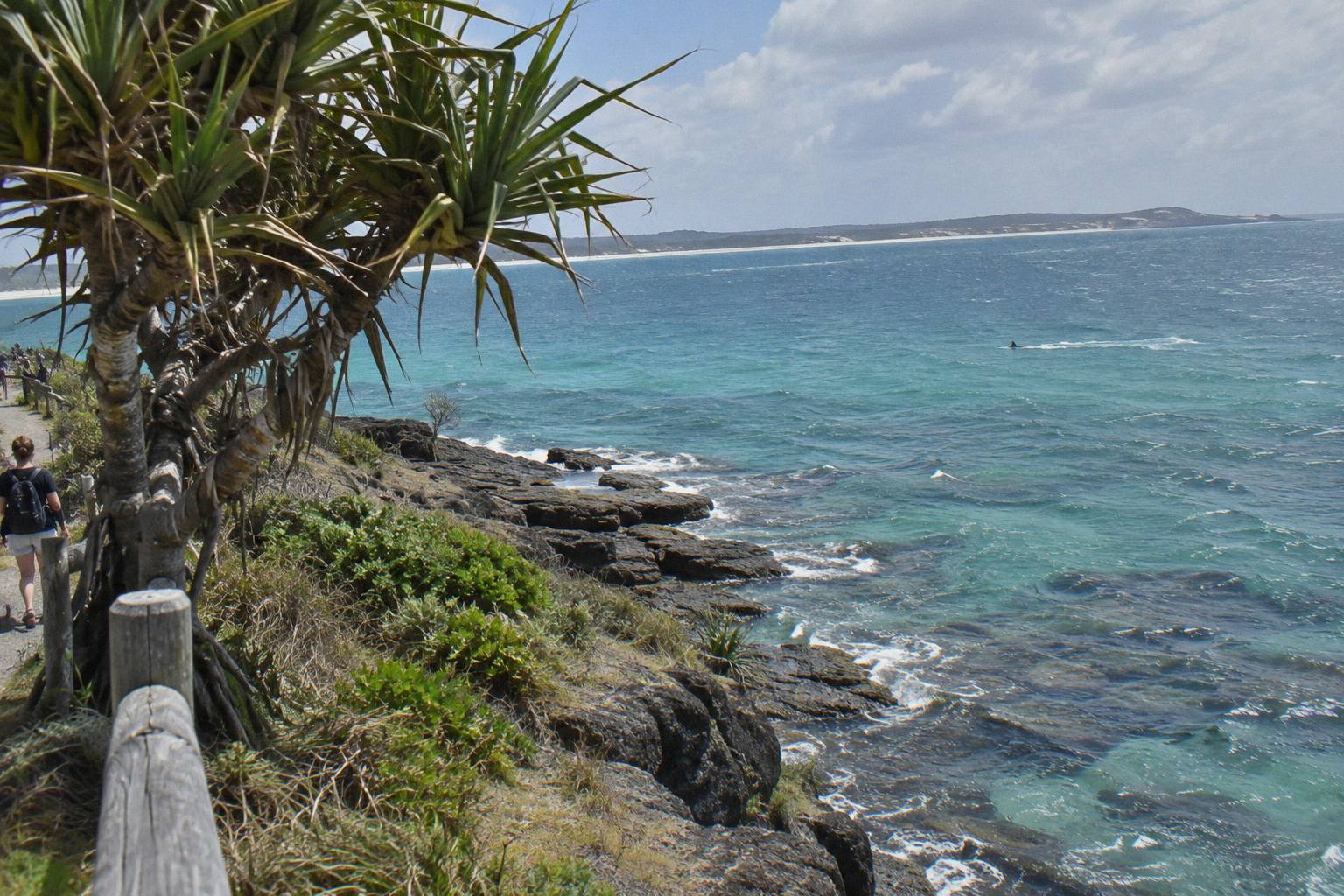
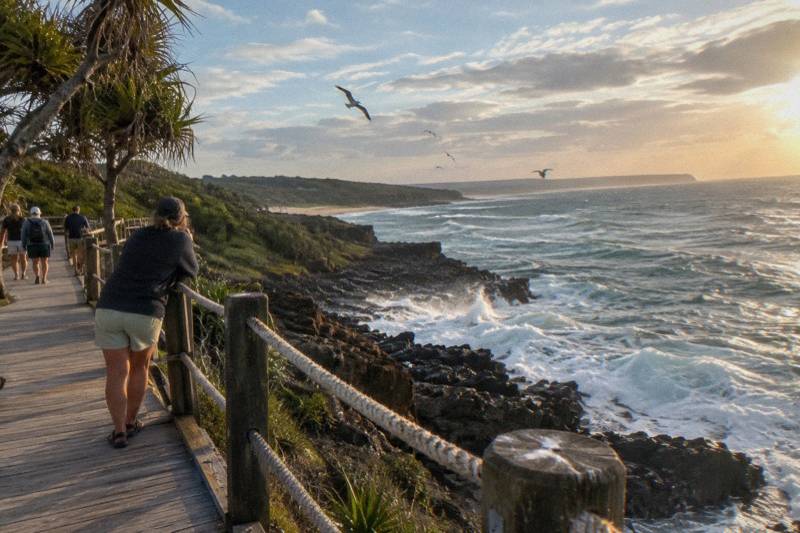
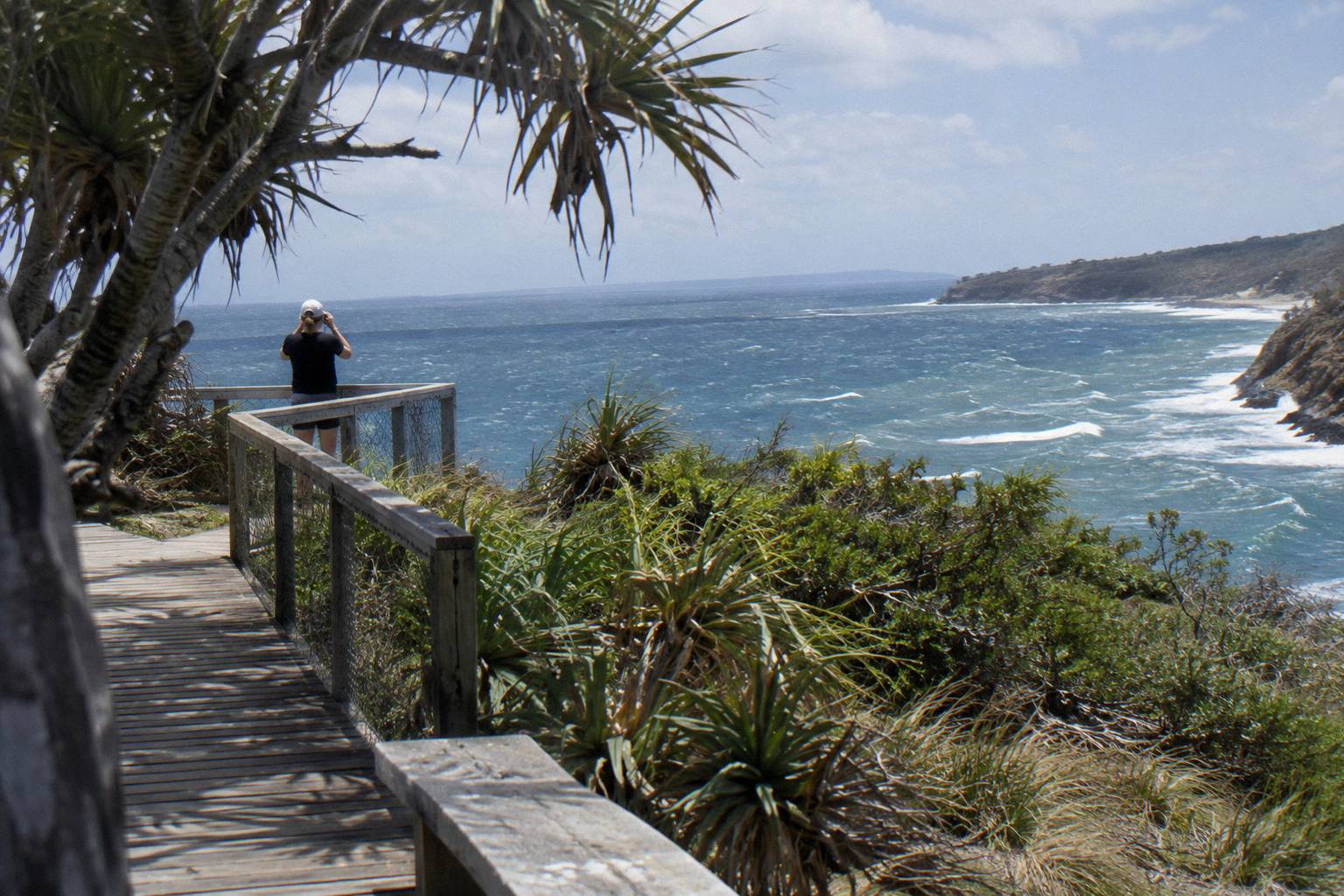
Headlands are the better bet for spotting, and the reason is geography. Dolphins in Moreton Bay move through open water, and an elevated viewpoint such as the North Gorge Walk at Point Lookout, a 1.2 km self-guided walk along the rocky headlands, gives you a wide field of view over that water. The walk is partly closed at present, so check the park alerts before you go. A jetty at Amity Point looks down a narrow channel instead.
Here is a quick reference for what each source actually says, so you can weigh the wording yourself:
| Source | What it says about dolphins | What it does not say |
|---|---|---|
| Queensland Parks | Dolphins are named among the island's marine life; marine animals are regularly seen from headlands | No promise of dolphins at Amity Point or anywhere else |
| Small Group Eco Tour | Dolphins, turtles, manta rays and whales listed as animals to look for | No dolphin stop, no sighting promise |
| First Nations Day Tour | Wildlife program including kangaroos and coastal walks | No dolphin stop named |
| Indigenous Culture Day Tour | Wildlife spotting along the way | No dolphin stop named |
| Wildlife And Beaches | Wildlife viewing opportunities included | No dolphin stop named |
If a dolphin encounter is the single reason you would book, read that table twice. The plain position is that a day tour maximises your chances by putting you on headlands and bays for hours with a guide who knows the waters, and that no operator sells a dolphin sighting.
Will you see anything? That question has its own answer in our piece on whether wildlife sightings are guaranteed on a Straddie tour, and the short version is no, not guaranteed, but the island is one of the better places in south-east Queensland to try.
What Does Queensland Parks Actually Say About Amity Point?
Queensland Parks says three things relevant here: Amity Point has an enclosed swimming area, the deep channel off Amity Point is not safe to swim in because of strong currents and possible sharks, and dolphins are among the marine life of the island's surrounding waters. It makes no claim that dolphins come close to shore at Amity, and it names no dolphin viewing point anywhere on the island.
That is the full official picture, and it is worth taking seriously because the channel warning is a genuine safety matter, not fine print. The water off Amity Point drops away quickly, which is what makes it attractive to marine life and dangerous to swimmers in equal measure. The enclosed swimming area in the township is the place to swim, and the deep channel is the place to watch from dry land, if you watch at all.
The park service's broader marine life guidance covers the whole island rather than one township. Moreton Bay Marine Park surrounds North Stradbroke Island; humpback whales, manta rays and turtles are regularly seen from headlands; dugong and grey nurse sharks live in nearby waters. You can read the park's own pages on Naree Budjong Djara National Park and its marine life for the full wording.
Amity Point is also a koala and kangaroo conversation, not just a dolphin one. Our guide to Amity Point dolphins and koalas covers the township in detail. The island carries a genetically distinct koala population and golden wallabies, a swamp wallaby form found on North and South Stradbroke only, both named by Queensland Parks. The Wildlife And Beaches day trip and the Hit The Road Wildlife Day Trip both note that koalas can be spotted with the guide.
Getting to Amity independently is straightforward if you are not on a tour. Island bus route 881 runs from the One Mile and Junner Street terminals through to Amity Point, and the timetable is guaranteed to connect with ferries. Buses take paper tickets only: A$0.50 single, A$1.00 daily, A$5.00 weekly, and go cards are not accepted, a detail that catches visitors out. The Translink route and timetable notice for the 880 and 881 has the current schedule.
Which Tours Actually Stop At Amity Point?
Among the trips compared here, only the Small Group Eco Tour, All Inclusive names the fishing village of Amity as a stop on its booking page. The Wildlife And Beaches day trip names koalas and kangaroos with the guide, Point Lookout, and beach and swimming stops, but not Amity. No trip names a dolphin stop at Amity Point or anywhere else.
That is a narrower answer than many expect. Amity Point appears once among the day tours, on the Small Group Eco Tour from Queensland Day Tours, which runs 10 hours, from A$199 per person, rated 4.7 from 294 reviews. Its stop list includes a lake stop with free time on the shore, Myora Springs, the guided North Gorge Walk hike to Point Lookout, the fishing village of Amity, Cylinder Beach and Frenchmans Beach, and free time in the afternoon. National park fees are included, and the trip is not suitable for people with mobility impairments.
A tour that includes Amity improves your odds of spending time in the township, but it does not improve the dolphins' odds of appearing. What the Small Group Eco Tour does add is hours of headland time on the North Gorge Walk, which is where the park service's own "regularly seen from headlands" wording points, plus a guide who knows which waters hold what.
If your interest runs deeper than dolphins, the cultural formats are worth a look. The Indigenous Culture Day Tour, 11 hours from A$359 per person, includes a 90-minute cultural experience with a local Quandamooka guide, Myora Springs (Capembah), the North Gorge headland walk, Brown Lake (Bummiera), and lunch of a Prawn Shack prawn and avocado roll with a cold drink, with wildlife spotting along the way. The same operator, Stradbroke Island Tours, runs both this and the Wildlife And Beaches day trip as two formats of one service: a wildlife-and-beaches day and a culture day.
Is Amity Point Safe For Swimming?
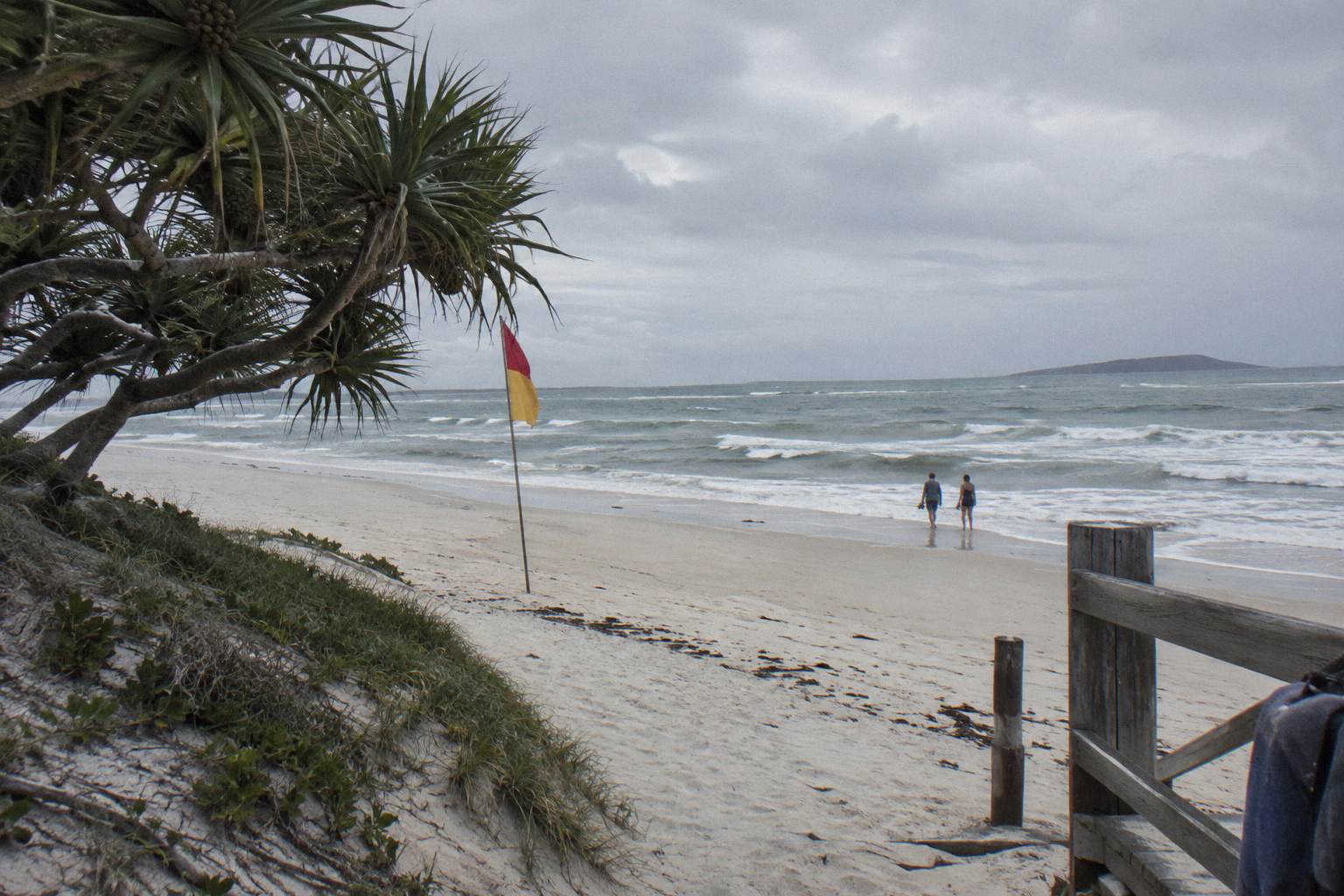
Amity Point has an enclosed swimming area, and that is the safe place to swim in the township. Queensland Parks warns against swimming in the deep channel off Amity Point because of strong currents and possible sharks. Rips and side currents are possible around the island, bluebottles and fire jellies occur in Moreton Bay waters, and the advice is to swim between the flags and ask a lifeguard.
The safety picture on the island as a whole is specific. Cylinder Beach and Main Beach are regularly patrolled; the patrolled area at Point Lookout is the most popular swimming beach; patrols run weekends and public holidays from September to early May, with school-holiday lifeguards at some beaches. Dunwich and Amity Point have enclosed swimming areas. The deep channel off Amity is the one place the park service singles out by name, and the reason is the combination of strong currents and possible sharks that the deep water brings close to shore.
For a tour passenger, this mostly resolves itself. The Wildlife And Beaches day trip includes beach time and swimming stops among its inclusions, and its guides choose the beaches. If you swim independently at Amity, use the enclosed area, and if you are watching for dolphins, watch from the shore rather than from the water.
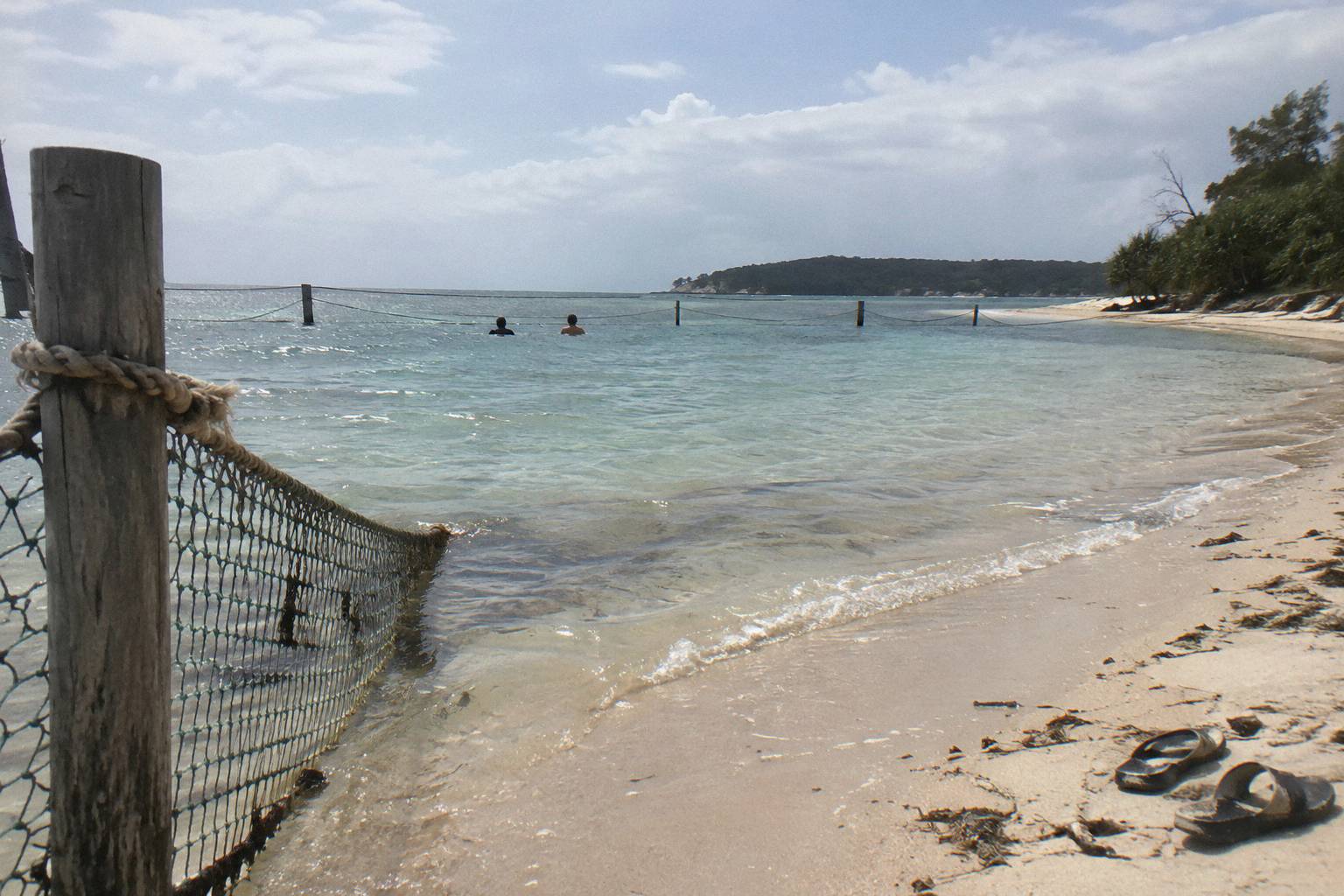
Marine stingers deserve one plain sentence: bluebottles and fire jellies (Morbakka) occur in Moreton Bay waters, so never assume the water is clear of them, and ask a lifeguard if you are unsure. The enclosed areas and patrolled beaches exist precisely because the bay is a real marine environment, not a pool.
How Do The Dolphin-Friendly Tour Formats Compare?
Three Brisbane day trips compare closely on dolphin-friendly features: the Hit The Road Wildlife Day Trip runs 9 hours 30 minutes from A$149 per person, while the Wildlife And Beaches day trip (11 hours) and Small Group Eco Tour (10 hours) each start at A$199 per person; all three include the return ferry, cap groups at 11, and offer free cancellation up to 24 hours before start.
The differences that matter are format differences, not operator ones. The Hit The Road trip, rated 4.9 from 547 reviews and the trip with the most reviews on the booking pages, meets outside the Adina Apartment Hotel Anzac Square in Brisbane at 7:45 AM, and the booking page warns there are two Adina hotels in the city, so check which one. Lunch is not included; the guide recommends takeaway options for a beachfront picnic, or you bring your own. Water is included.
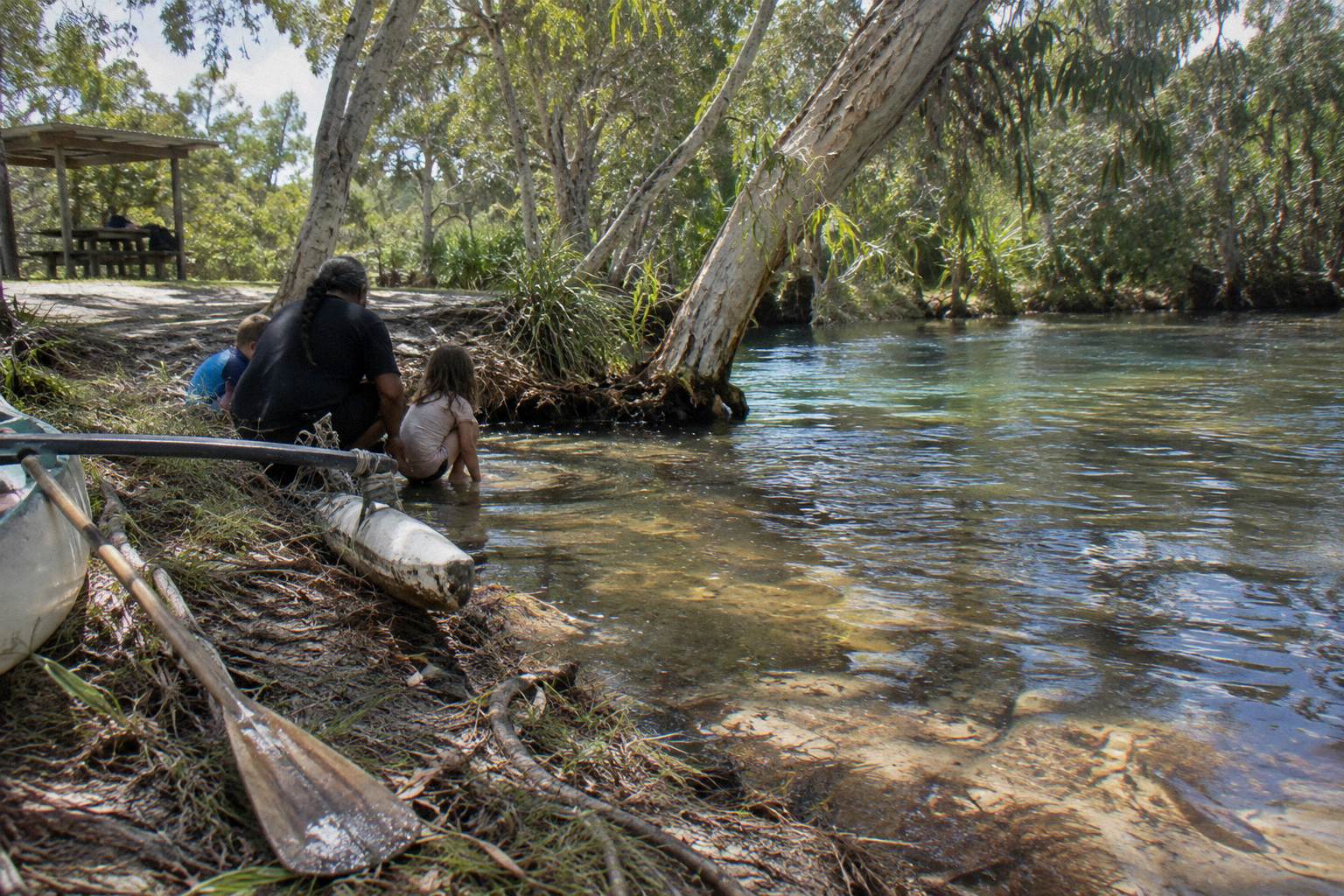
The Wildlife And Beaches day trip, rated 4.9 from 119 reviews, runs 11 hours with meeting points that include Pullman Brisbane King George Square, the SeaLink Departure Lounge Cafe in Cleveland and Novotel Surfers Paradise, the last of which makes it the obvious pick from the Gold Coast. It includes beach games and wildlife viewing opportunities, and names koalas and kangaroos with the guide, Point Lookout, and beach and swimming stops. Lunch is not included.
The table below lines up the formats you can book, on the things that actually differ:
| Trip | From price per person | Duration | Meeting point | Group up to | Ferry |
|---|---|---|---|---|---|
| Hit The Road Wildlife Day Trip | from A$149 | 9 hours 30 minutes | Adina Apartment Hotel Anzac Square, Brisbane, 7:45 AM | 11 | return included |
| Wildlife And Beaches, 11 Hours | from A$199 | 11 hours | Brisbane city, Cleveland or Surfers Paradise points | 11 | return included |
| Small Group Eco Tour, All Inclusive | from A$199 | 10 hours | Brisbane Skytower by CLLIX, 222 Margaret St | check the booking page | return included |
| Indigenous Culture Day, 11 Hours | from A$359 | 11 hours | designated Brisbane city meeting points | 11 | return included |
All prices are in Australian dollars, and a trip with no published figure, such as the private formats, simply shows the price for your date on the booking page. Free cancellation up to 24 hours before start applies to every trip listed here, which matters if your dolphin hopes depend on a weather window.
What About Whales, And When Is The Best Time To Go?
Humpback whales pass close to the island's coastline from June to November on their annual migration, and the 4WD Beach Day, the Small Group Eco Tour and the Indigenous Culture Day Tour all mention whales on their booking pages. There is no whale-watching cruise, boat or kayak trip on offer for the island: whale watching here means sightings from land, from headlands such as the North Gorge Walk, and a sighting is never promised.
That surprises people, so it is worth being plain about it. The island is one of the few places in Queensland where humpbacks pass close to shore, and the park service's June to November window is generous, running well past the peak of the southern migration. But every whale experience here is a land-based one, incidental to a day tour whose booking page mentions them. A longer piece on the Straddie whale watching season covers the vantage points.
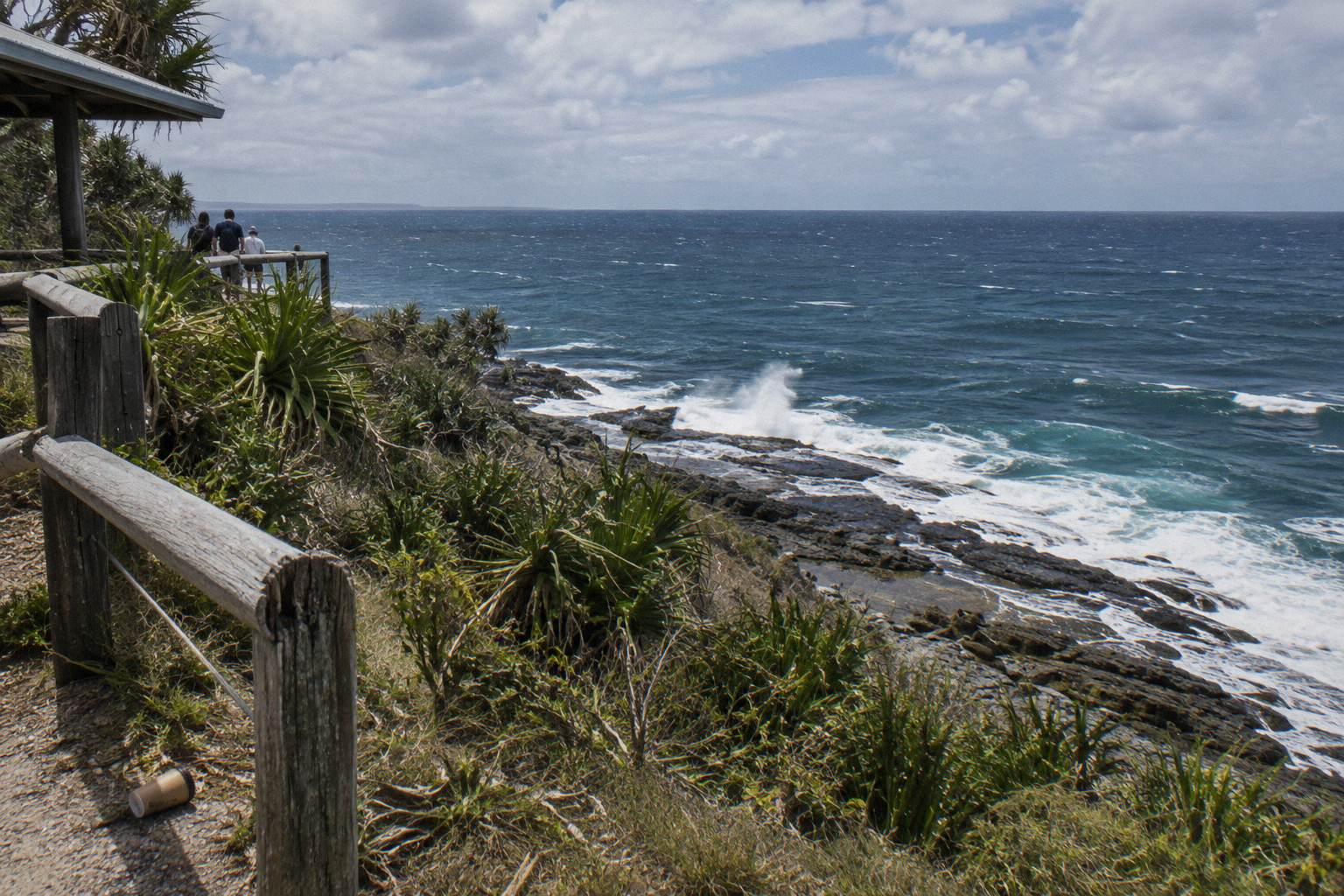
Dolphins, unlike whales, are not tied to a migration window, which is the one sense in which they are the more realistic hope. Turtles, dolphins and manta rays are named by Queensland Parks as island marine life year round, with mantas among the animals regularly seen from headlands. If a winter trip overlaps the whale window and adds dolphin and turtle possibilities on top, that is simply more wildlife in the water, not a schedule of appearances.
Climate rarely decides the trip. Bureau of Meteorology averages for Point Lookout show a mean maximum of 29.6 °C in January and 21.2 °C in July, with mean annual rainfall of 1,517.7 mm, wettest in March at 179.6 mm and driest in September at 53.7 mm. There is no best month to name; the decision is which condition matters to you, and our guide to the best time to visit North Stradbroke Island works through the trade-offs.
Common Questions About Dolphins At Amity Point
Do Dolphins Come Close At Amity Point On A Straddie Tour?
Dolphins are named by Queensland Parks among the island's marine life and several trip pages list them as something to look for, but no trip names a dolphin stop at Amity Point and no source promises they come close there. Treat a sighting as possible, never likely, and never a promise.
Which Tours Stop At Amity Point Itself?
Only the Small Group Eco Tour, All Inclusive names the fishing village of Amity among its stops. It runs 10 hours from A$199 per person, rated 4.7 from 294 reviews, and also includes the North Gorge Walk, Myora Springs, Cylinder Beach and Frenchmans Beach.
Can You Swim At Amity Point?
Yes, in the enclosed swimming area. Queensland Parks warns against swimming in the deep channel off Amity Point because of strong currents and possible sharks. Rips and side currents are possible around the island, and bluebottles and fire jellies occur in Moreton Bay waters.
Where Is The Best Place On The Island To Look For Dolphins?
Headlands. Queensland Parks says marine life including turtles and manta rays is regularly seen from headlands, and the North Gorge Walk at Point Lookout, 1.2 km, is the main one. It is partly closed, so check park alerts before you go.
Is There A Dolphin Cruise Or Whale-Watching Boat From The Island?
No trip offers a dolphin cruise or a whale-watching boat for the island. Whale watching means sightings from land, on day tours whose booking pages mention whales passing close to the coastline from June to November.
Do The Tours Guarantee Wildlife Sightings?
No. Koalas, kangaroos, dolphins, turtles, manta rays and whales are all written on the booking pages as things to look for or spot along the way. Sightings are possible and never certain, on any trip, on any day.