Camping On North Stradbroke Island: When A Day Tour Is Easier
Camping puts you inside Naree Budjong Djara National Park country for sunrises and slow mornings, but it also puts you in charge of the vehicle ferry, a beach driving permit and every meal. Here is what the planning actually involves, and where a day tour quietly wins.
Short answer
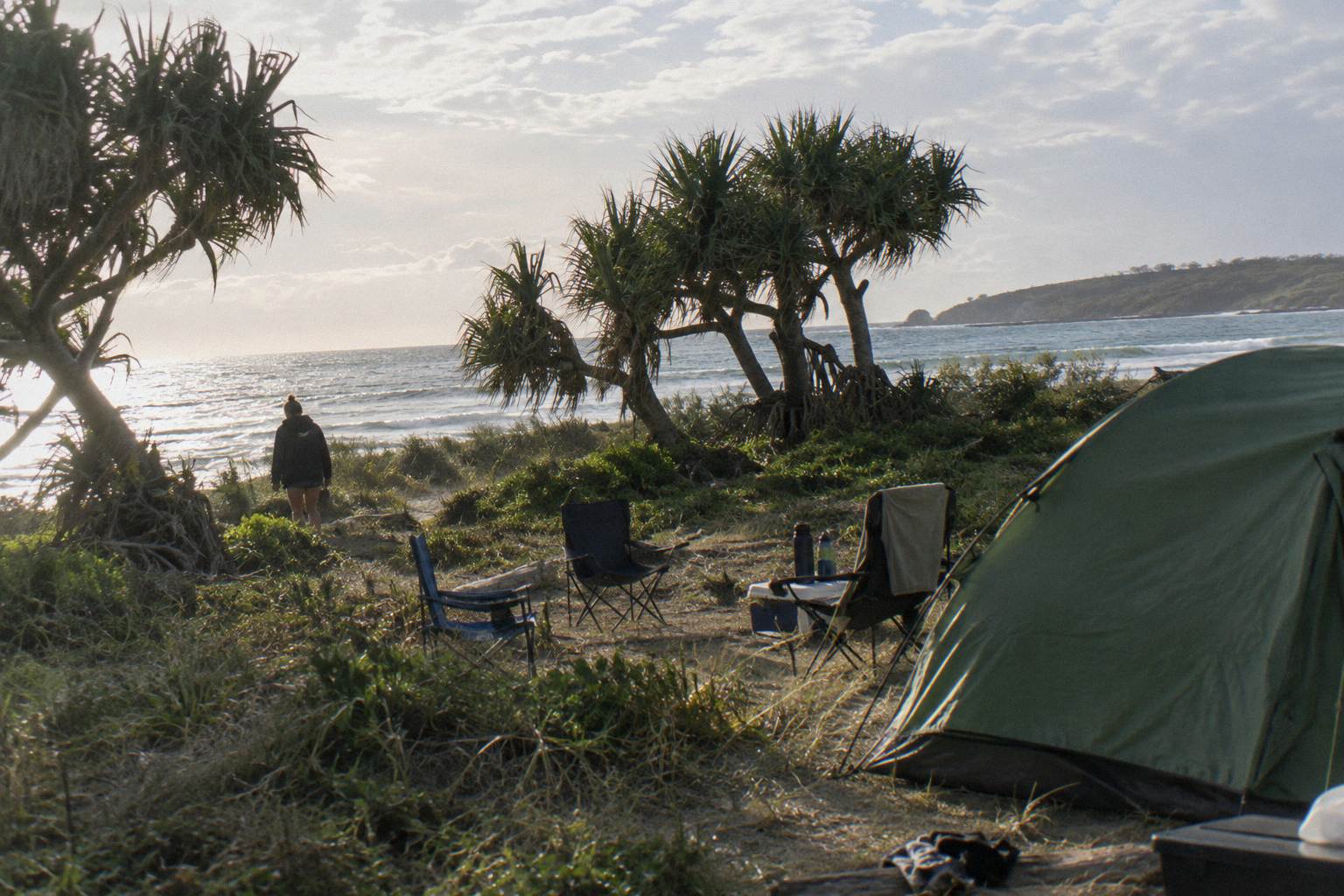
North Stradbroke Island (Minjerribah) camping is run through Minjerribah Camping, a QYAC business, with offices at Cylinder Beach, Amity Point and Adder Rock open 8am to 4pm, 7 days. Campers bringing a car must book the vehicle ferry, and driving Flinders or Main Beach needs a 4WD permit. Every guided trip on the island is a day trip.
Camping on North Stradbroke Island (Minjerribah) is one of south-east Queensland's great cheap-and-simple holidays in theory: a tent, a ferry, a stretch of sand. In practice it asks you to make a chain of small decisions, from which ferry to book to whether your car is even allowed on the beach, before you have pitched a single pole. This article walks through the camping basics that are actually verified, the ferry and permit facts that catch first-timers out, and the point at which a guided day trip from Brisbane becomes the easier choice. Every guided trip from Brisbane is a day trip, so the comparison is not a sales pitch, it is simply how the island's tour products work. For the broader picture of what a single day can hold, the what a Straddie day tour includes from Brisbane post is the companion read.
What Camping On North Stradbroke Island Actually Involves
Camping on the island is administered by Minjerribah Camping, a Quandamooka (QYAC) business, with campground offices at Cylinder Beach, Amity Point and Adder Rock open 8am to 4pm, seven days, and those offices are also where beach driving permits are sold. About half the island is Naree Budjong Djara National Park, jointly managed by the Quandamooka people and Queensland Parks since 2011, which shapes the rules more than most campers expect. Check the best months to visit before you pick dates.
The first thing to understand is that you are camping inside a jointly managed national park landscape, not a strip of coastal reserve. The park's name means "My Mother Earth", and Queensland Parks asks visitors to stay on tracks and take rubbish out. Dogs are banned in the national park and on the island's public buses, even though two off-leash dog areas exist elsewhere on the island, one of them Home Beach between Rocky Point and Rocky Headland in front of the Point Lookout Hotel. If a dog is part of the trip, that split between dog-friendly foreshore and dog-free park is the single most common planning mistake.
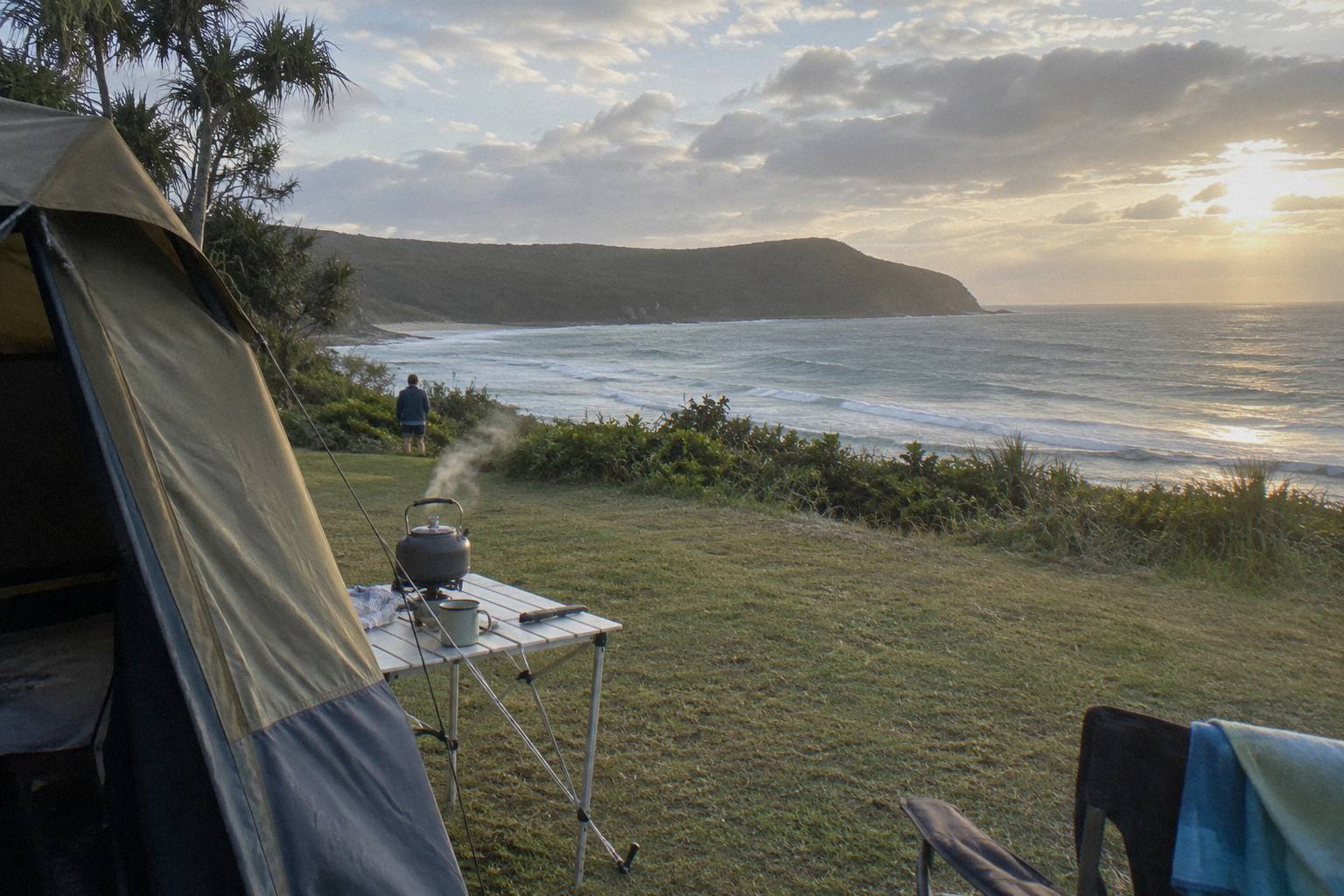
Campfires are allowed only under conditions and only in designated areas: no bonfires, and small cooking fires in designated foreshore camping areas only when no fire ban applies. Fires are the kind of thing people assume are fine on a beach and are not. The campground offices at Cylinder Beach, Amity Point and Adder Rock are the practical hub for all of this, open 8am to 4pm every day of the week, and the official park page for Naree Budjong Djara National Park carries the current alerts, including temporary track closures that appear with little notice.
| Camping basic | What is verified |
|---|---|
| Campground operator | Minjerribah Camping, a QYAC business |
| Office locations | Cylinder Beach, Amity Point, Adder Rock |
| Office hours | 8am to 4pm, 7 days |
| Campfires | Conditions apply, designated areas only, no bonfires |
| Dogs | Banned in the national park and on public buses; two off-leash areas exist elsewhere |
| Beach driving permit | Sold online or at the campground offices |
| Rubbish | Take it out; stay on tracks |
No camping fee or site count is listed here because none is verified: the operator's own pages hold the current pricing and availability, and they change with seasons. Treat the table above as the fixed frame and check the live details when you book.
Getting There With A Car: The Ferry Facts Campers Need
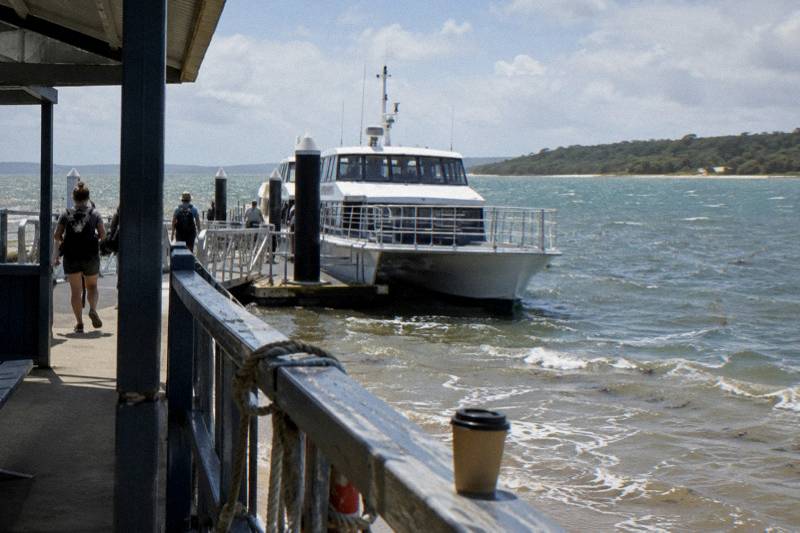
The vehicle ferry from Toondah Harbour in Cleveland to Dunwich takes about 45 minutes, must be booked, and asks you to arrive at least 30 minutes before departure and follow the blue line to check-in. The passenger ferry takes about 25 minutes, needs no booking for a specific departure, and a ticket stays valid on any service for 365 days from purchase.
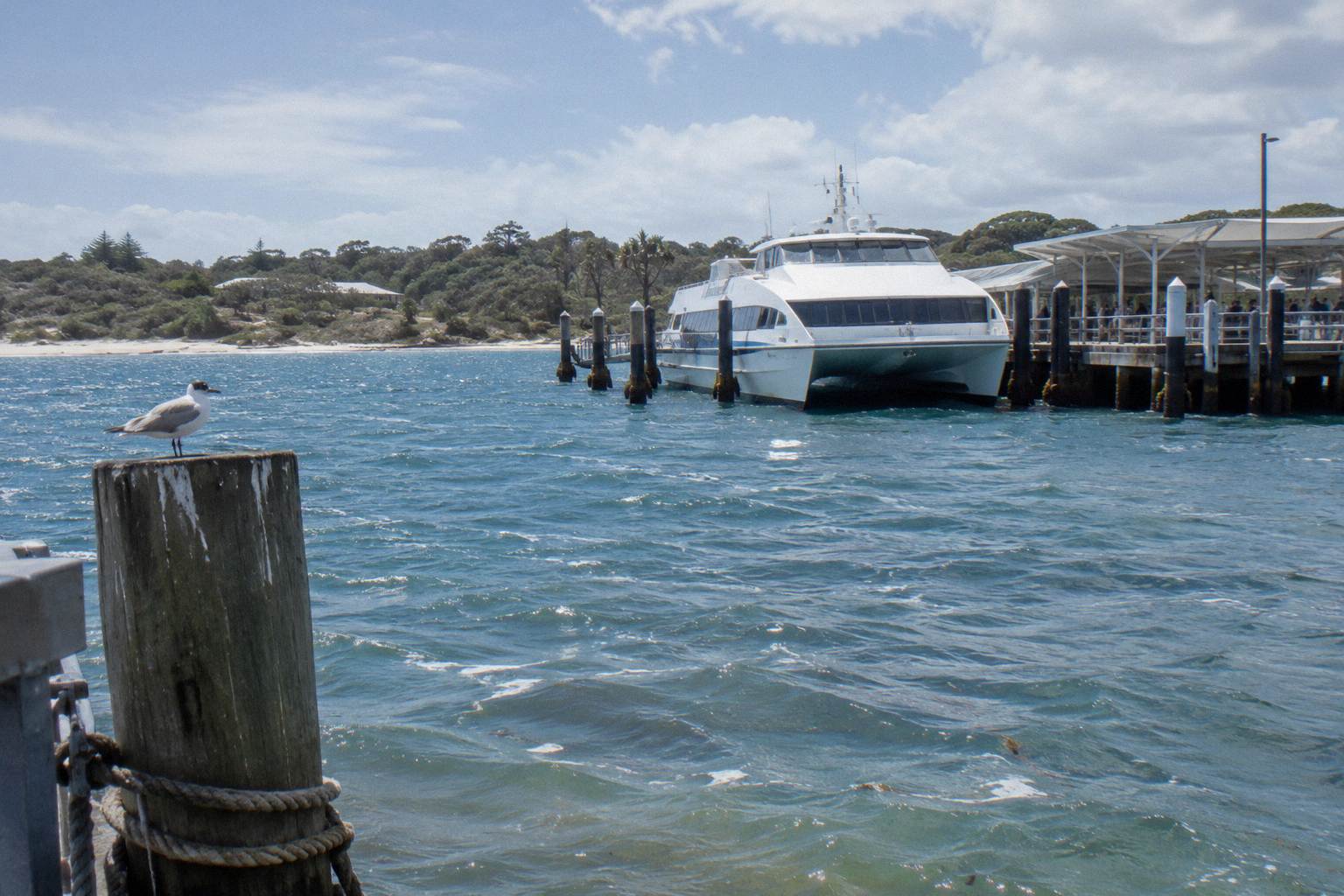
The booking split is the detail that matters. Vehicle ferry spaces are limited and bookings are essential, especially for weekend and holiday crossings, and SeaLink says public parking near the terminals fills fast on those same days. Passenger tickets are the opposite: buy online or at the terminal, never onboard, and the ticket is an open 365-day pass rather than a seat on a set sailing. Fares change, and the operator's fare page has the current table, but the listed structure in Australian dollars is: passenger adult from A$13.50 one way and A$23.00 return, child 5 to 14 from A$8.75 one way and A$13.50 return, children 0 to 4 free, bicycles free with a passenger ticket. A standard car up to 5.4 m travels from A$83 one way, a large car from A$90.50, a motorbike A$42.50, a kayak or canoe A$20, and a temporary 3 per cent fuel surcharge applies to vehicle bookings, with flexible fares varying by date and time.
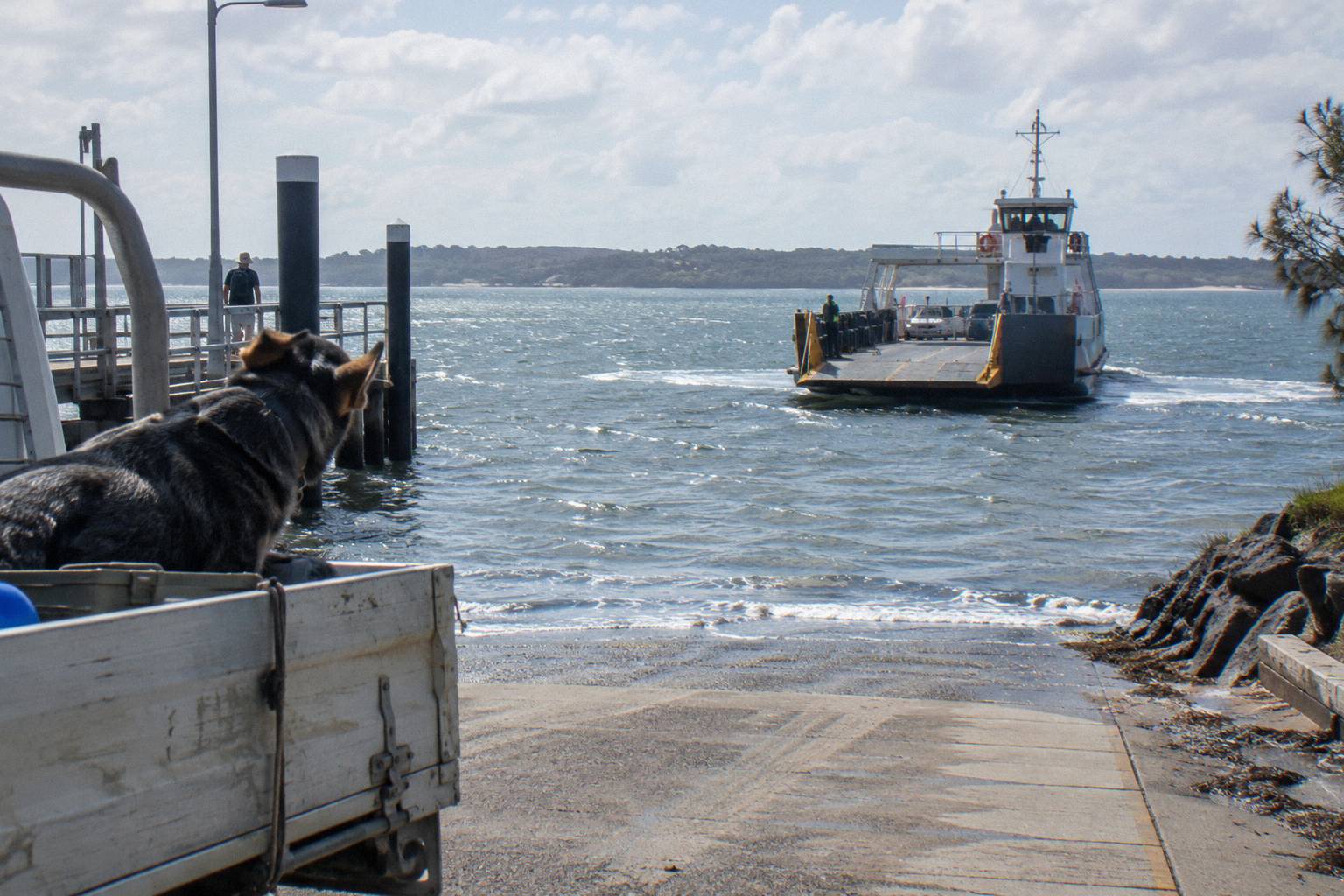
The base timetable runs a first vehicle ferry from Cleveland at 6:00am Monday to Saturday, then roughly hourly to mid-afternoon with a last departure in the late afternoon, Sunday adding an evening departure, and Dunwich returns following an hour later. The passenger ferry runs from about 4:45am to 7:15pm, extending to 8:15pm Friday to Sunday. SeaLink adds and removes services, so treat that as a shape rather than a promise, and never plan a return around a single quoted clock time. The full crossing detail, including the two different Dunwich terminals, is in the North Stradbroke Island ferry guide.
One camper-specific wrinkle: pets must stay in the vehicle on the vehicle ferry or be muzzled on the passenger ferry. If the dog is coming, the ferry rule and the national park ban need to be reconciled before you book, not at the terminal.
Driving On The Beach: The 4WD Permit Rules
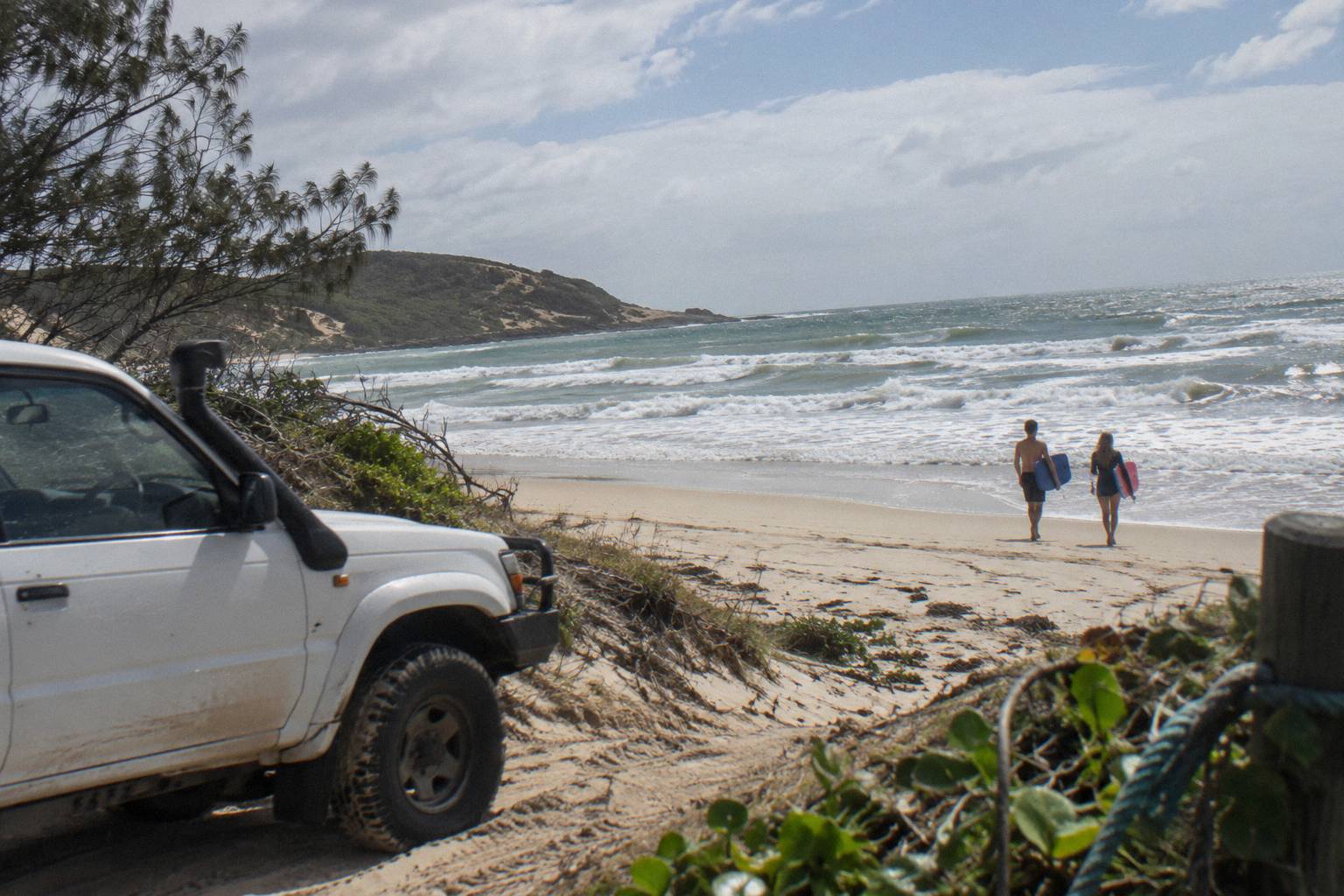
Beach driving on the island needs a suitable 4WD and a vehicle access permit, which is bought online or at the campground offices, and it applies to two defined stretches: Flinders Beach between the Amity Point and Adder Rock entrances (40 km/h) and Main Beach between the George Nothling Drive entrance and the southern end of the surf beach (60 km/h). No permit is needed on the sealed roads between the three townships.
The tide rule is the one that catches people: do not drive either beach within two hours either side of high tide. AWD vehicles, motorbikes and quad bikes are not permitted in the Recreation Area at all, so a soft-roader is not a loophole. The permit itself comes in one-month and one-year versions through a booking system, and the printed permit must be carried before you drive Flinders or Main Beach; the price is not listed here because it is not verified, and the operator's permit page holds the current figures.
The alternative is not to drive the beach at all. The sealed roads between Dunwich, Amity Point and Point Lookout need no permit, drive times are 20 to 25 minutes from Dunwich to Point Lookout or Amity Point and about 15 minutes between Point Lookout and Amity, and buses connect all three townships. The driving around North Stradbroke Island post covers that self-drive logic in full, and the question of whether you need a 4WD at all deserves its own read before you commit to a vehicle ferry booking.
Camping Or A Day Tour: Which Is Actually Easier?
A day tour is easier when you want the ferry, the driving, the wildlife spotting and the headland walks handled in one booking with free cancellation up to 24 hours before start. Camping wins when the point of the trip is to stay: sunrise on the Gorge headlands, slow evenings, and the freedom that comes from having paid for a patch of ground rather than an itinerary.
These solve different problems, but they compete for the same weekend. Every guided trip here is a day trip that returns to Brisbane or finishes on the island, with no overnight tour product among them, so a tour never replaces a camping night: it replaces the hassle of the first day. The comparison that matters is what you carry mentally and logistically.
| Stated fact | Camping trip | Guided day trip |
|---|---|---|
| Ferry | Vehicle ferry must be booked; permit needed for beach driving | Return passenger ferry included on the Brisbane day trips |
| Driving | You drive, tide windows apply on the beaches | Guide drives; no permit needed |
| Meals | All self-catered | Most day trips exclude lunch; the 4WD Beach Day includes it |
| Duration | Your choice, subject to campground booking | 2 to 11 hours depending on the trip |
| Cancellation | Campground and ferry terms apply separately | Free cancellation up to 24 hours before start, every trip |
| Wildlife | Self-guided; sightings possible, never certain | Guide-led spotting; sightings still never guaranteed |
| What you need | Car or bus planning, gear, food, permits | Meeting point and a water bottle |
That table is the decision in one screen, and the infographic below breaks down how the day trip lengths stack up against the time a camping arrival and departure actually consumes.
If the table points you toward letting someone else handle day one, these are the three day trips from Brisbane that most often fit a camping-versus-tour decision.
The Day Trips That Replace Your First Camping Day
The Hit The Road Wildlife Day Trip runs from A$149 per person, is rated 4.9 from 547 reviews, and spends 9 hours 30 minutes on a small-group day from Brisbane with the return ferry included; the Wildlife And Beaches day trip runs 11 hours from A$199 per person, rated 4.9 from 119 reviews; the Small Group Eco Tour covers 10 hours from A$199 per person, rated 4.7 from 294 reviews.
The Hit The Road trip is the one with the most reviews on the booking pages, meeting outside the Adina Apartment Hotel Anzac Square in Brisbane at 7:45 AM, with the booking page warning there are two Adina hotels in the city. It carries up to 11 people, includes bottled water, an air-conditioned vehicle and the return ferry ticket, and excludes lunch, with the guide recommending takeaway options for a beachfront picnic or inviting you to bring your own. Water is included and the trip is built around wildlife, though no stop list is verified and no sighting is ever promised. Full detail sits on the Hit The Road wildlife day trip page, with Hit The Road Wildlife Day Trip on the live listing.
The Wildlife And Beaches day trip, run by Stradbroke Island Tours, is the longer beach-focused variant of the same operator's service, 11 hours from A$199 per person with koalas and kangaroos with the guide, Point Lookout, beach and swimming stops and beach games included along with the ferry ticket. Its meeting points include Pullman Brisbane King George Square, the SeaLink Departure Lounge Cafe in Cleveland and Novotel Surfers Paradise, which makes it the most flexible of the three for Gold Coast travellers, a angle expanded in the Gold Coast to North Stradbroke Island guide.
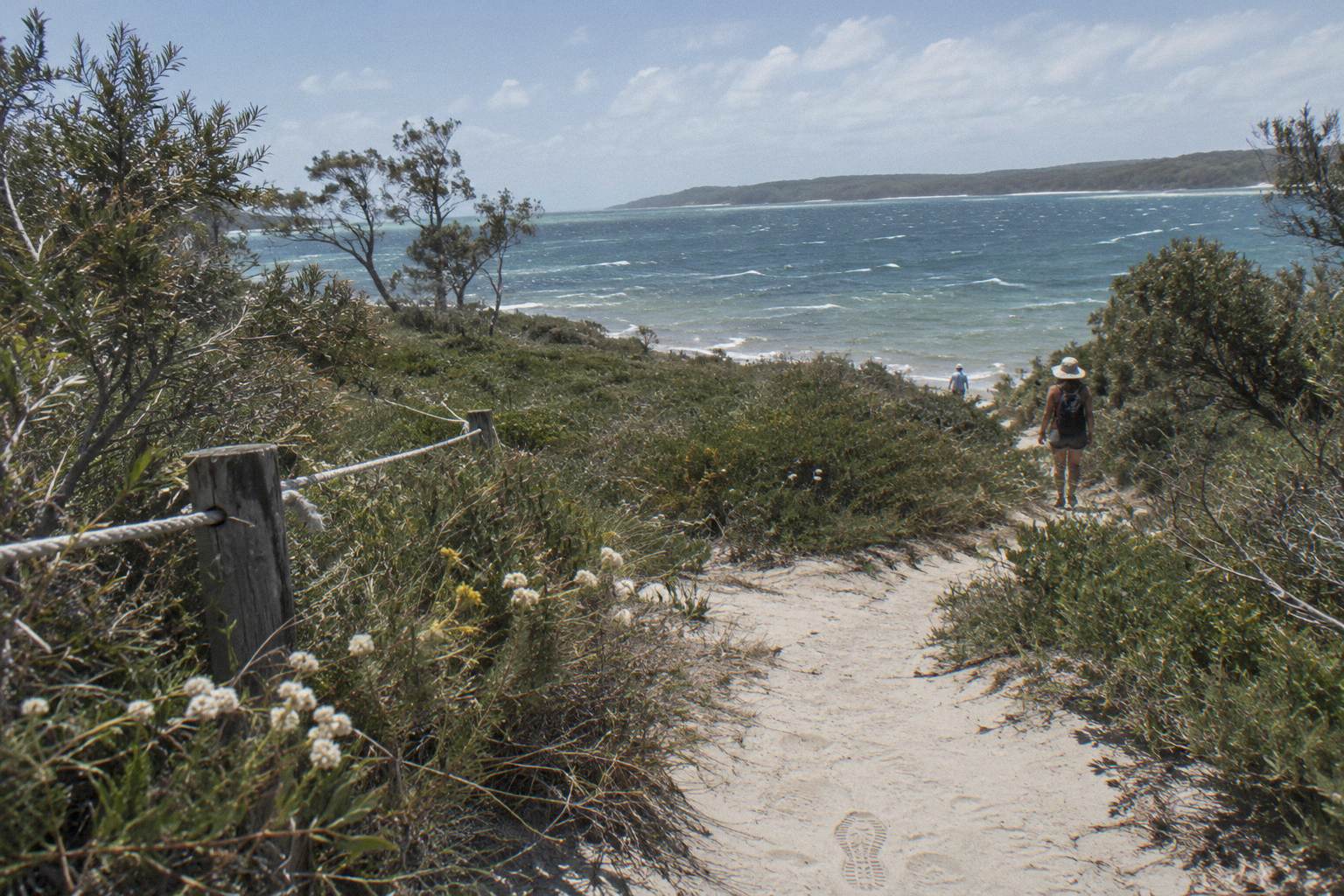
The Small Group Eco Tour, from Queensland Day Tours, is the all-inclusive format: 10 hours from A$199 per person with national park fees included, a lake stop with free time on the shore, Myora Springs, a guided North Gorge Walk hike to Point Lookout, Amity, Cylinder Beach and Frenchmans Beach. It meets at Brisbane Skytower by CLLIX on Margaret Street, lists hotel pickup and drop-off as not included, and is not suitable for people with mobility impairments. The things to do by tour guide maps every trip to the stops it actually names.
A paragraph of caution that belongs here rather than buried later: the North Gorge Walk is 1.2 km and partly closed at times, so check park alerts before any trip, guided or not, banks on it. Queensland Parks calls it a gentle walk with ocean views and names turtles, dolphins and manta rays as marine life, with humpback whales passing close to the coastline from June to November, but no operator can promise a sighting and none here does. The rest of the planning pages sit on North Stradbroke Island Tours.
What An Overnight Stay Gives You That A Day Trip Cannot
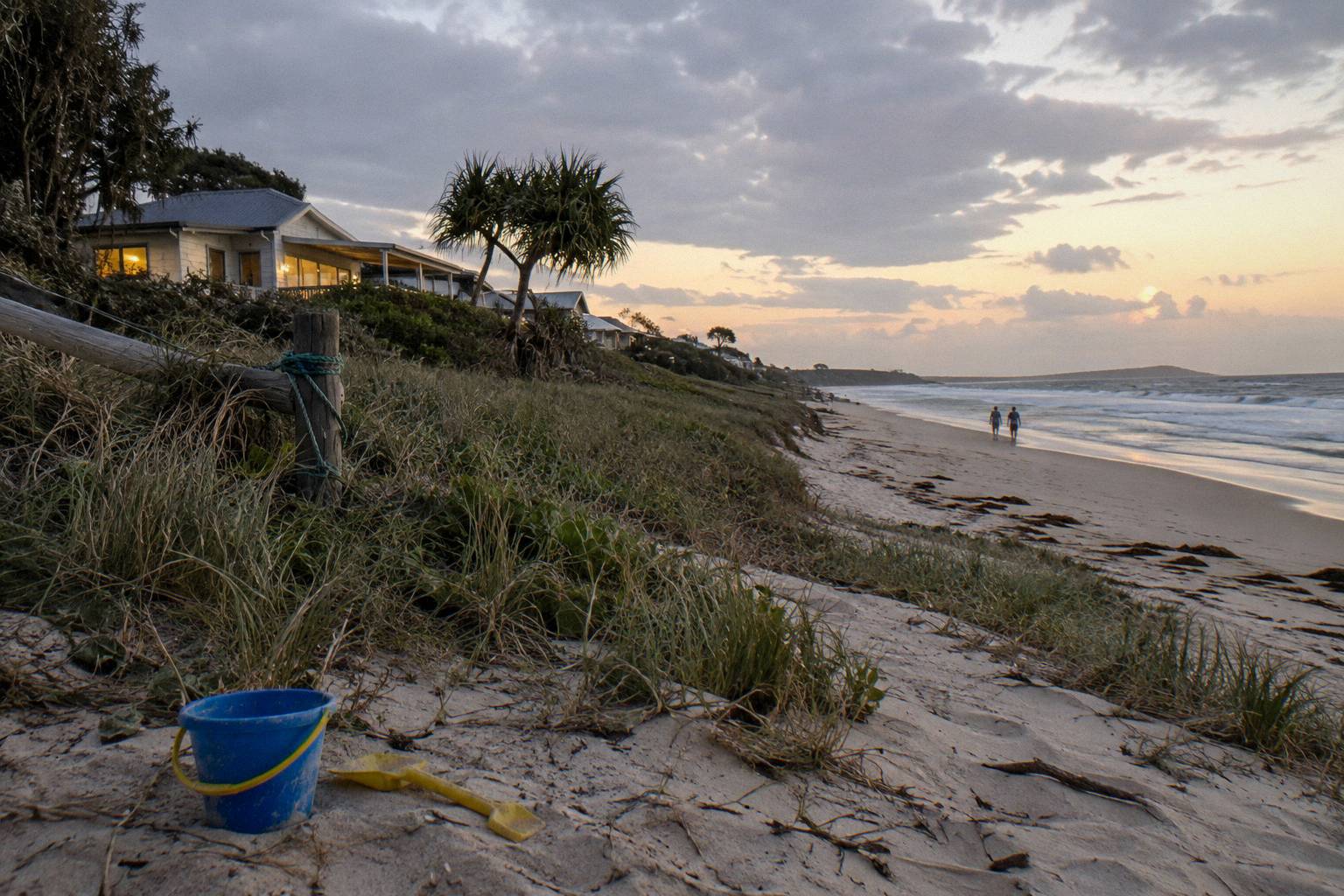
An overnight stay gives you the island's two best light windows, dusk and dawn, when the headlands quieten and the wildlife shifts, plus the freedom to swim, walk and eat on your own clock without a ferry timetable waiting at the end of the afternoon. It also gives you weather exposure: a wet front that spoils a camper's whole booking merely changes a day tripper's itinerary.
The climate record from the Bureau of Meteorology's Point Lookout station shows why this cuts both ways. Mean maximums run 29.6 °C in January and 21.2 °C in July, on an annual mean of 25.6 °C, with mean minimums of 22.6 °C and 13.8 °C respectively, so cold is rarely the camping problem. Rain is the variable: mean annual rainfall is 1,517.7 mm, September is the driest month at 53.7 mm and August next at 68.9 mm, while March averages 179.6 mm. The decision logic is which condition matters to you, not a best month, and no forecast is made here.
The overnight payoff is real in season. Humpbacks pass close to the coastline from June to November, and an evening or early morning on the Point Lookout headlands, when the day crowds have gone, is the experience day trippers structurally cannot buy. For the season detail, the North Stradbroke Island whale watching season guide covers the land-based viewing logic, and it is worth being clear that no whale cruise or boat trip exists among the trips covered here: whale watching on Straddie means sightings from land, from headlands, on tours whose booking pages mention them.
The 4WD Option Without Owning A 4WD
Campers who want the beach-driving experience without hauling their own vehicle over on the ferry have exactly one guided equivalent: the 4WD Beach Day, BBQ Included, a 7 hours 30 minute trip rated 4.9 from 33 reviews, with the price for your date showing on the booking page rather than a fixed figure. Look at a guided 4WD beach trip for that option.
Run by Straddie Kingfisher Tours, it starts with hotel pickup from the booking page's pickup points at about 7:30 AM, or a meet at the SeaLink water taxi terminal in Cleveland, and carries up to 10 people. Lunch, coffee and tea, national park fees, hotel pickup and drop-off and wildlife spotting are all included, with alcoholic drinks available to purchase. Cylinder Beach and koala spotting appear on the booking page, and whales June to November. The permit-and-tide rules in the beach driving section above still frame what this trip does for you: it puts a permitted vehicle and a local driver between you and the compliance question, which is precisely the piece of beach camping that costs the most planning effort. The Straddie 4WD beach tours guide compares the formats in full.
A Practical Planning Sequence For Either Choice
Book in this order: the vehicle ferry first if a car is coming, the campground second, the beach driving permit third, and any day tour last, because every trip covered here offers free cancellation up to 24 hours before start while ferry and campground terms are stricter. That sequencing is the quiet advantage of mixing both: lock the hard-to-move parts early and keep the flexible part flexible.
For day-trip-only travellers the sequence collapses to one decision: pick a meeting point that suits your base. The Hit The Road trip meets outside a single Brisbane hotel at 7:45 AM, the Small Group Eco Tour at Brisbane Skytower, while the Wildlife And Beaches trip lists meeting points spanning Brisbane CBD, Cleveland and Surfers Paradise. The does a day tour include hotel pickup question is answered trip by trip, and the answer is usually a central point rather than your door.
| Trip | Format | Duration | From price | Rating |
|---|---|---|---|---|
| Hit The Road Wildlife Day Trip | Small group, Brisbane, ferry included | 9 h 30 min | A$149 per person | 4.9 from 547 reviews |
| Wildlife And Beaches | Small group, beach stops, ferry included | 11 h | A$199 per person | 4.9 from 119 reviews |
| Small Group Eco Tour | Small group, national park fees included | 10 h | A$199 per person | 4.7 from 294 reviews |
| 4WD Beach Day, BBQ Included | 4WD day, lunch and park fees included | 7 h 30 min | Price on the booking page | 4.9 from 33 reviews |
Swimming is the other planning thread: Cylinder Beach and Main Beach are regularly patrolled, with patrols running weekends and public holidays from September to early May and school-holiday lifeguards at some beaches, so swim between the flags and follow lifeguard advice. Bluebottles and fire jellies occur in Moreton Bay waters. Dunwich and Amity Point have enclosed swimming areas, the deep channel off Amity Point should never be swum, and the Quandamooka people ask visitors not to swim in Kaboora (Blue Lake) while the park says swimming and sunscreen pollute lakes and lagoons generally. None of that changes between camping and touring, which is exactly why it belongs in the final checklist rather than repeated per section.
Common Questions About Camping On North Stradbroke Island
Can You Camp On North Stradbroke Island?
Yes. Camping is administered by Minjerribah Camping, a QYAC business, with campground offices at Cylinder Beach, Amity Point and Adder Rock open 8am to 4pm, 7 days. No camping fee or site count is listed here; the operator's pages hold current pricing and availability.
Do You Need A Permit To Drive On The Beach At North Stradbroke Island?
Yes, for Flinders Beach between the Amity Point and Adder Rock entrances and Main Beach between the George Nothling Drive entrance and the southern end of the surf beach. The permit is bought online or at the campground offices and comes in one-month and one-year versions through a booking system; the printed permit must be carried. No permit is needed on the sealed roads between townships.
Does The Vehicle Ferry Need To Be Booked?
Yes. The vehicle ferry from Toondah Harbour, Cleveland to Dunwich takes about 45 minutes, bookings are essential, and you should arrive at least 30 minutes before departure and follow the blue line to check-in. The passenger ferry is different: no booking for a specific departure, and a ticket is valid on any service for 365 days from purchase, bought online or at the terminal, not onboard.
Is There An Overnight Tour Of North Stradbroke Island?
No overnight tour exists among the trips covered here. Every trip is a day trip from Brisbane or a short on-island trip from Dunwich, from a 2-hour oyster farm tasting to 11-hour full days. Any overnight stay is arranged separately by the traveller.
Can You Take A Dog Camping On The Island?
Only with careful planning. Dogs are banned in Naree Budjong Djara National Park and on the island's public buses. Two off-leash dog areas exist elsewhere, one being Home Beach between Rocky Point and Rocky Headland in front of the Point Lookout Hotel. On the ferries, pets must stay in the vehicle or be muzzled on the passenger ferry.
When Is A Day Tour Easier Than Camping?
When you want the ferry, the driving, the wildlife spotting and the headland walks handled in one booking, all with free cancellation up to 24 hours before start. The Hit The Road Wildlife Day Trip runs from A$149 per person for 9 hours 30 minutes, and two other Brisbane day trips cover 10 and 11 hours, every one returning the same evening.