4WD Beach Permit For Straddie: Who Needs One And When A Tour Replaces It
Beach driving on North Stradbroke Island (Minjerribah) needs a vehicle access permit, a suitable 4WD and an eye on the tide clock. Here is exactly where the permit applies, where to buy it, and the days when letting a tour operator do the driving is the smarter call.
Short answer
You need a vehicle access permit only to drive on Flinders Beach or Main Beach. It is not needed on the sealed roads between Dunwich, Amity Point and Point Lookout. Permits are sold online or at the Cylinder Beach, Amity Point and Adder Rock campground offices, open 8am to 4pm, 7 days.
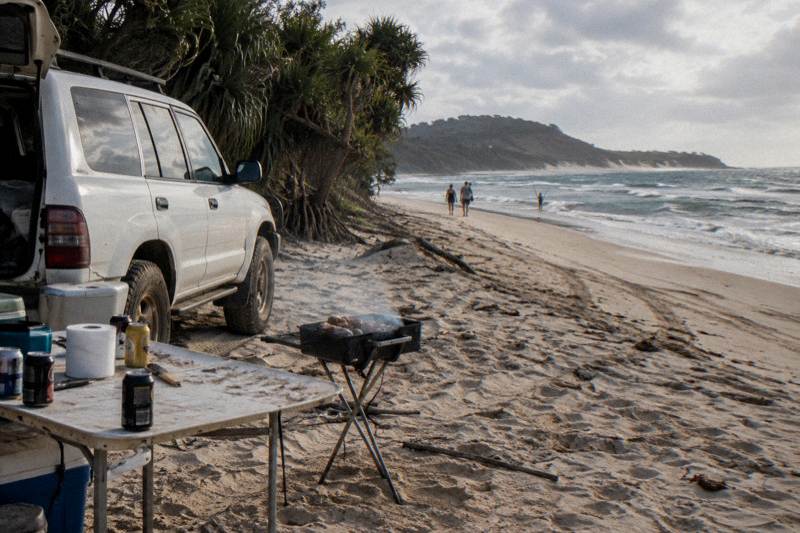
Beach driving is one of the great draws of North Stradbroke Island (Minjerribah): kilometres of firm sand at Main Beach, a quieter run along Flinders Beach, and campsites you can park right beside. None of it is free-for-all. Two beaches make up the island's Recreation Area, both carry a vehicle access permit requirement, and both are closed to driving within two hours either side of high tide. An all-wheel-drive wagon, a motorbike or a quad bike is not permitted in the Recreation Area at all, no matter what permit you hold.
The rules are not obscure, they are published plainly by Minjerribah Camping, the Quandamooka business that administers them, and by the ferry operator. What trips most visitors up is not the rules themselves but the planning around them: booking the vehicle ferry, buying the permit before the wheels touch sand, and judging whether a self-drive day is realistic at all from Brisbane. The sections below work through each of those decisions, and end with the comparison between taking your own 4WD and taking the one guided 4WD day trip that covers the same ground with someone else reading the tide.
Do You Need A Permit To Drive On North Stradbroke Island Beaches?
You need a vehicle access permit only if you plan to drive on Flinders Beach or Main Beach, the two stretches that form the island's Recreation Area. The permit is a separate purchase from the ferry fare, it must be bought before you drive either beach, and a printed copy must be carried in the vehicle. No permit is needed for the sealed roads connecting the three townships.
That last clause matters more than it first appears. Dunwich, Amity Point and Point Lookout are linked by sealed roads, and those roads reach almost everything a first-time visitor comes for: the North Gorge Walk headland, Cylinder Beach, Brown Lake (Bummiera), the bakery, the campground shops. A permit only enters the picture when you deliberately want the vehicle on sand, usually because you are camping on Flinders Beach or Main Beach itself, or because driving the surf beach is the point of the day. Queensland Parks notes that about 50 per cent of the island is Naree Budjong Djara National Park, jointly managed by the Quandamooka people and the Queensland Parks and Wildlife Service since 2011, and national park rules sit alongside the Recreation Area rules. Dogs, for instance, are not permitted in the national park at all, and pets are not allowed on the island's public buses either.
The vehicle itself is the second gate. The requirement is a suitable 4WD, and the rule book is blunt about what does not qualify: AWD vehicles, motorbikes and quad bikes are not permitted in the Recreation Area. A soft-roader with a "4WD" dial on the console is not what the rule means. If your vehicle is not a proper low-range four wheel drive, the permit question answers itself, because you cannot lawfully drive the beaches regardless.
Where The Permit Applies: Flinders Beach And Main Beach
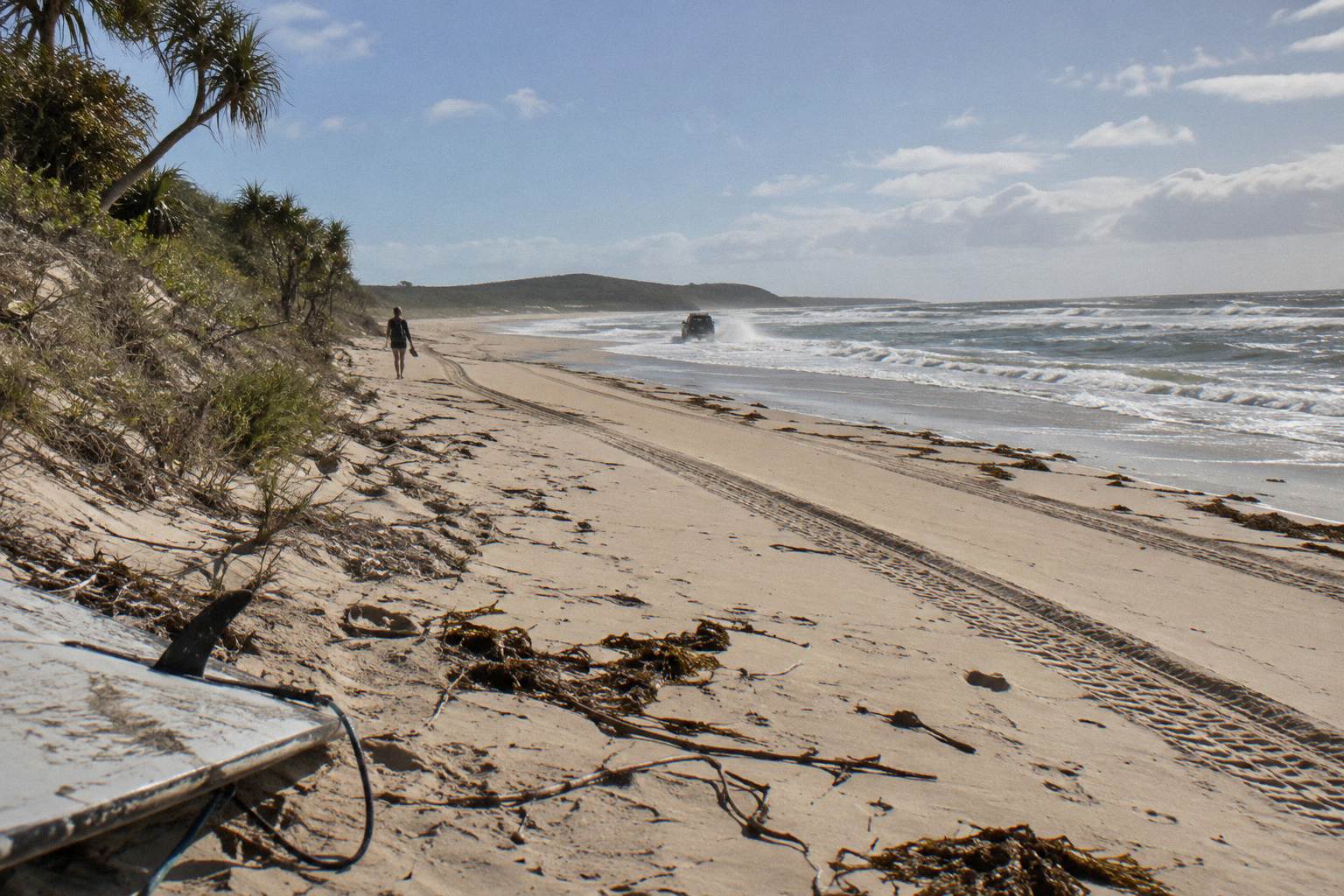
Flinders Beach permits cover the stretch between the Amity Point entrance and the Adder Rock entrance, with a 40 km/h speed limit. Main Beach permits cover the stretch between the George Nothling Drive entrance and the southern end of the surf beach, with a 60 km/h limit. Neither beach may be driven within two hours either side of high tide.
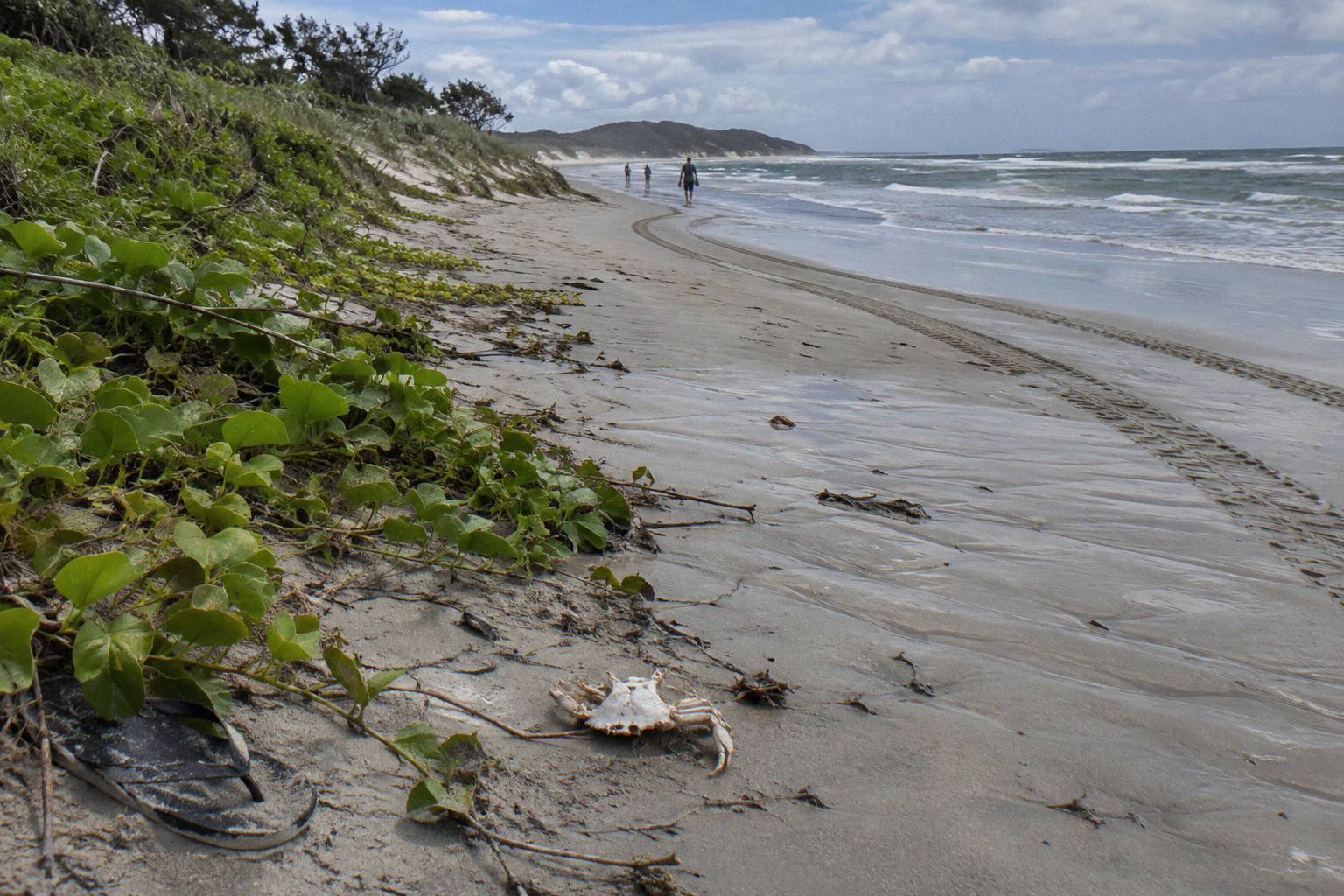
The two beaches have distinct characters and distinct rules. Flinders, on the northern side, is the calmer, narrower run between Amity and Adder Rock, and its 40 km/h limit reflects that: campers, walkers and shorebirds share a compact strip. Main Beach, the island's 30-plus kilometre surf beach on the eastern side, carries a 60 km/h limit and is the one locals use to move quickly between the southern end and the camping areas. Both are subject to the same tide rule, and the tide rule is the one that ruins trips. Sand softens dramatically around high tide, and vehicles that ignore the two-hour window on either side of it are the ones that end up bogged, or worse, trapped against the dunes by a rising tide.
| Permit area | Defined stretch | Speed limit | Tide restriction |
|---|---|---|---|
| Flinders Beach | Between the Amity Point entrance and the Adder Rock entrance | 40 km/h | No driving 2 hours either side of high tide |
| Main Beach | Between the George Nothling Drive entrance and the southern end of the surf beach | 60 km/h | No driving 2 hours either side of high tide |
Planning your driving day around the tide chart is not optional, it is the single biggest schedule item. On a day with a mid-morning high, that can mean the beaches are effectively closed from roughly dawn until early afternoon. Check the tide times for your date before you book the vehicle ferry, not after, and build the drive for the low-water window. The permit itself comes in one-month and one-year versions through the booking system, and the current price is on the operator's permit page; fares and fees of this kind change often, so check that page before you book.
If reading tide tables and permit terms is already feeling like admin rather than holiday, there is another route to the same sand. North Stradbroke Island Tours covers the island's driving-access experiences, and the trio below spans a guided 4WD day, a wildlife-focused small group day and an all-inclusive eco day, so you can weigh format against format rather than paperwork against paperwork.
How To Buy A Permit, And The Paperwork Order That Matters
Permits are bought online through the Minjerribah Camping booking system or in person at the campground offices at Cylinder Beach, Amity Point and Adder Rock, which open 8am to 4pm, 7 days. A printed permit must be carried in the vehicle before you drive Flinders or Main Beach, so buy it before the wheels touch sand.
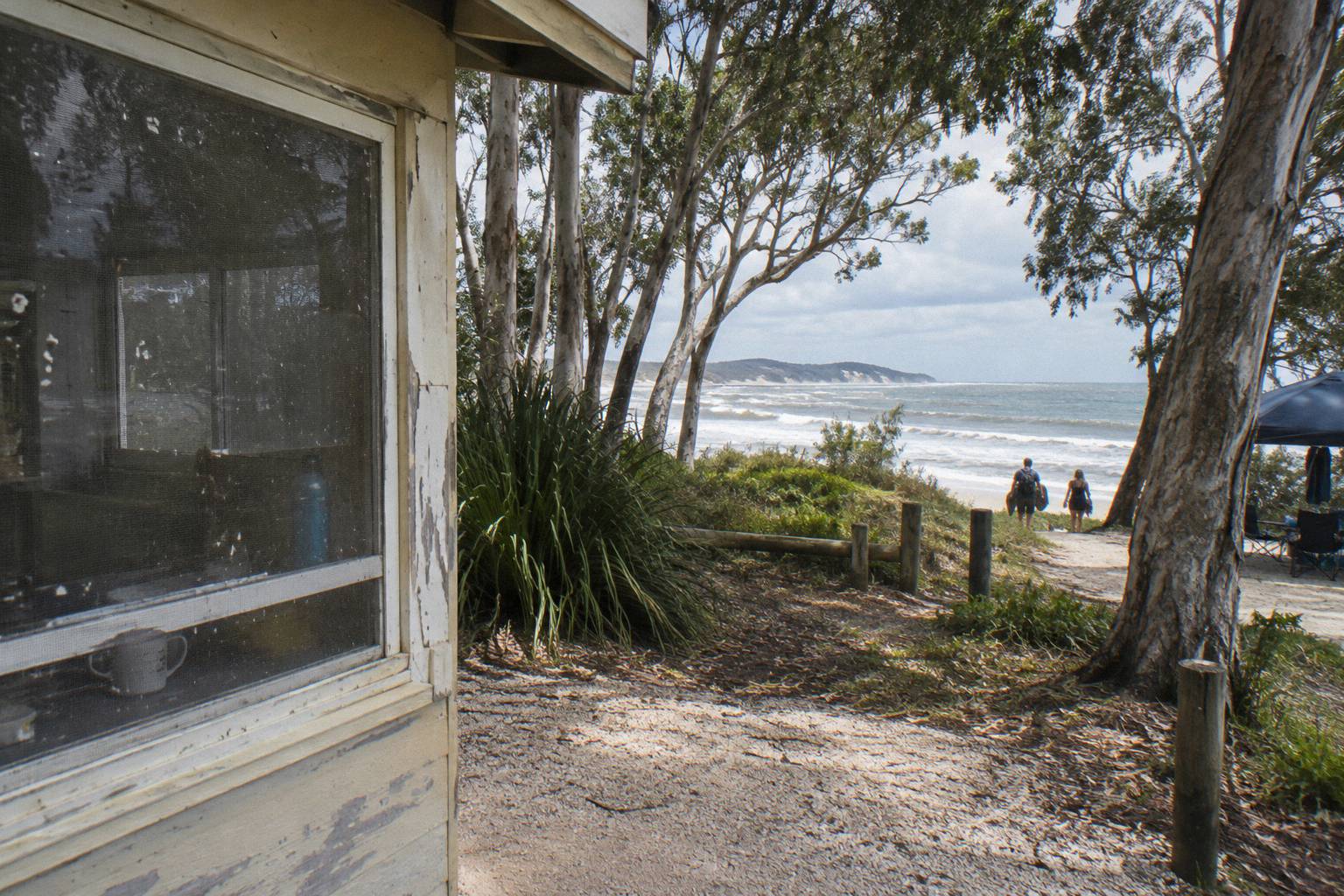
The order of operations is where self-drivers come unstuck. The sequence that works is: book the vehicle ferry first, because it must be reserved and spaces on peak weekends go early; buy the permit second, online, so it is in your inbox before departure; and collect any last items on the island if needed. Arriving at the ferry terminal without a vehicle booking is the classic first-timer error, and arriving at the beach entrance with the permit still in an unopened email on a phone with no signal is the second. The offices at the three campgrounds are the walk-in fallback, and their 8am to 4pm, 7-day hours are generous, but they are not a plan for a 6am driving start.
It is worth being clear about what the permit is and is not. It is a vehicle access permit for the Recreation Area beaches. It is not a camping booking, and camping on the foreshore is booked separately through the same Minjerribah Camping system; the camping and overnight stays overview covers that side of the planning. It is also not a national park entry pass in the general sense, though national park rules, like the dog ban and the requirement to stay on tracks and carry rubbish out, apply across the island's protected areas regardless of any permit you hold. The Queensland Parks page for Naree Budjong Djara sets out those park rules in full.
| Paperwork item | Where it comes from | When you need it |
|---|---|---|
| Vehicle ferry booking | SeaLink booking system | Before travel; vehicle space must be reserved |
| Beach driving permit | Minjerribah Camping online system or campground offices | Before driving Flinders or Main Beach; carry it printed |
| Camping booking (if staying) | Minjerribah Camping system | Before arrival; separate from the driving permit |
The paperwork stack for a self-drive day is therefore: vehicle ferry booking, printed beach permit, tide times, and a recovery plan. For a driver who reads that list and feels a holiday draining away, the guided alternative exists precisely for this moment, and it is a fair trade to weigh.
Getting Your 4WD To The Island: The Vehicle Ferry
The vehicle ferry from Toondah Harbour in Cleveland to Dunwich takes about 45 minutes, must be booked in advance, and you should arrive at least 30 minutes before departure and follow the blue line to check-in. Fares are flexible by date and time, with a standard car up to 5.4 m from A$83 one way and a temporary 3 per cent fuel surcharge on vehicle bookings.
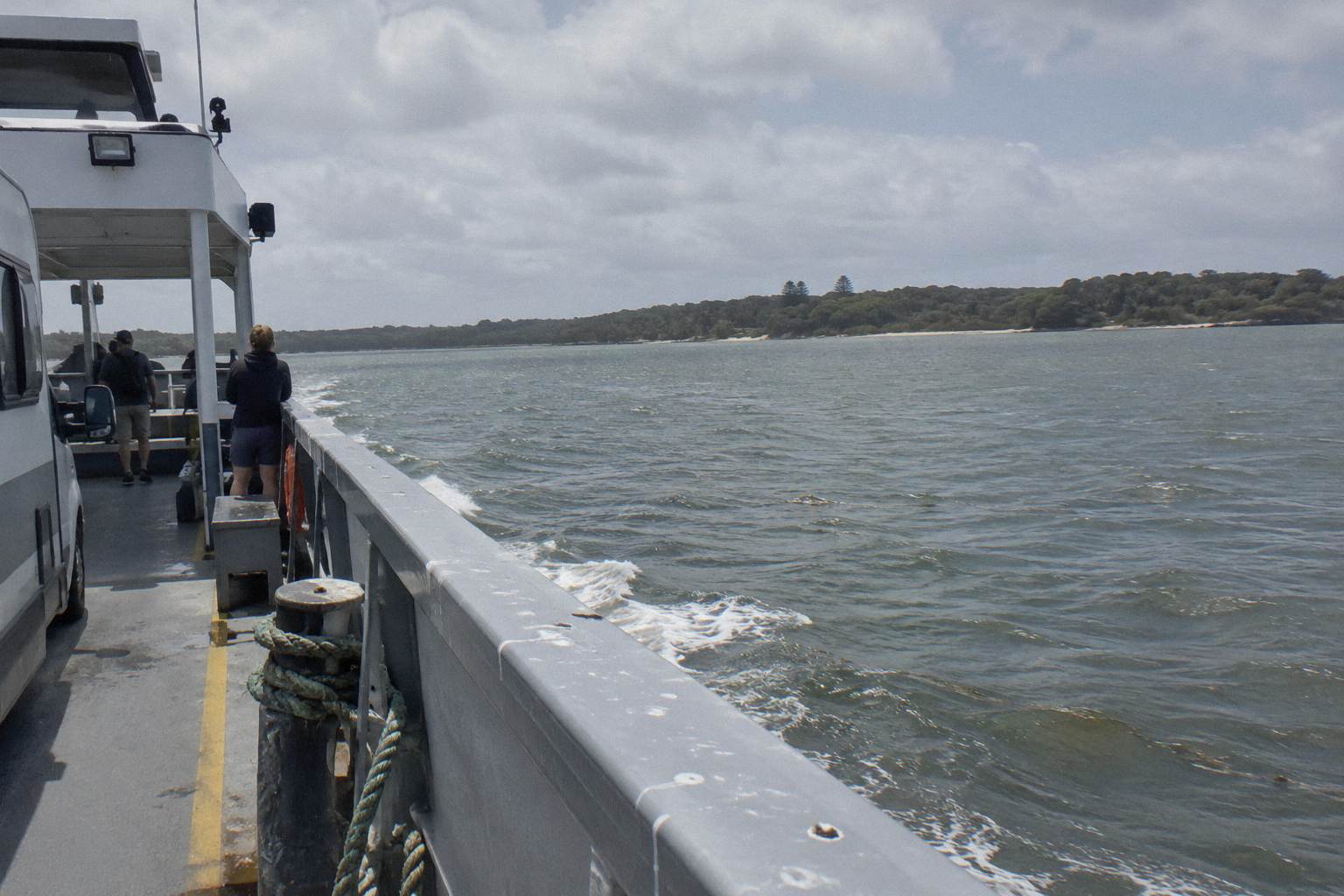
All prices are in Australian dollars, and ferry fares move often enough that the operator's fare page should be treated as the live source. The headline numbers for planning: adult passenger fares are from A$13.50 one way and A$23.00 return, children 5 to 14 from A$8.75 one way and A$13.50 return, children 0 to 4 free, and bicycles free with a passenger ticket. On the vehicle side, a large car starts from A$90.50, a motorbike is A$42.50, and a kayak or canoe A$20. The SeaLink fare page carries the current full table, including the flexible pricing that varies by date and time, which is why every figure here is written as a from-price rather than a promise.
| Fare type | One way | Return / notes |
|---|---|---|
| Adult passenger | from A$13.50 | A$23.00 return |
| Child passenger 5 to 14 | from A$8.75 | A$13.50 return |
| Children 0 to 4 | free | free |
| Bicycle | free | free with a passenger ticket |
| Standard car up to 5.4 m | from A$83 | flexible fares vary by date and time |
| Large car | from A$90.50 | flexible fares vary by date and time |
| Motorbike | A$42.50 | 3 per cent fuel surcharge on vehicle bookings |
| Kayak or canoe | A$20 | includes passenger |
The timetable has shape but no guarantees. The first vehicle ferry leaves Cleveland at 6:00am Monday to Saturday, services run roughly hourly into the mid-afternoon, and Sunday adds an evening departure. The passenger ferry runs a wider day, from about 4:45am to 7:15pm, extending to 8:15pm Friday to Sunday. Services are added and removed through the year, so treat those as the frame rather than the fixings, and check the live timetable for your travel date. Public parking near the terminals fills fast on weekends and holidays, which is another quiet argument for being on the early side. The full ferry guide works through timetables, terminals and ticket types in detail, including the two-terminal layout at Dunwich.
Booking essential, arrive early, permit printed: those three habits cover almost every ferry-related failure mode on this route. The fourth is weather, and on that the operators make the calls; if a sailing is affected, the operator communicates it, and a flexible ferry ticket plus a tour booked with free cancellation up to 24 hours before start is the pairing that costs you least when a plan wobbles.
Own 4WD Versus A Guided 4WD Day Trip
Taking your own 4WD means the ferry booking, the permit, the tide clock, fuel and recovery gear are all yours to manage, and you keep total freedom of schedule. Taking the guided 4WD Beach Day, BBQ Included means an experienced local driver handles the sand, lunch and national park fees are included, and the day runs 7 hours 30 minutes for a group of up to 10.
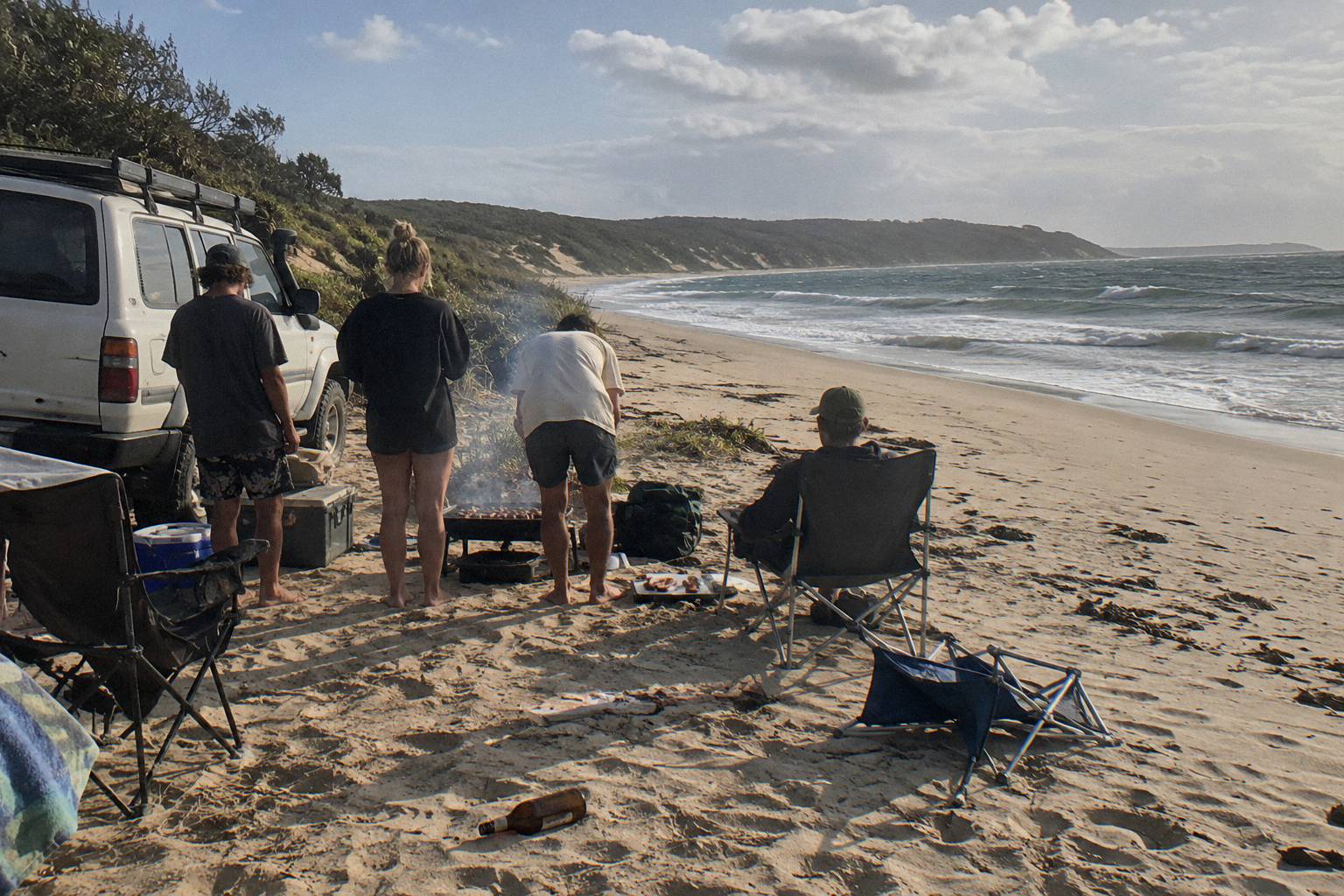
The comparison is not simply "guided is easier", it is a question of what your day is for. A self-drive day is for people who want the campsite at the end of the sand, or who relish the drive itself. A guided day is for people whose actual goal is the island: the beaches, the koala spotting, the lunch, the not thinking about tide tables. The 4WD Beach Day, BBQ Included is the one 4WD-led day trip on this route, run by Straddie Kingfisher Tours, rated 4.9 from 33 reviews, and the price for your date shows on the booking page. It starts with hotel pickup from listed pickup points at about 7:30am, or you can meet at the SeaLink water taxi terminal in Cleveland, and the inclusions run deep: national park fees, lunch, coffee and tea, a driver/guide, wildlife spotting and an air-conditioned vehicle. Alcoholic drinks are available to purchase, and souvenirs are on you. The booking page names Cylinder Beach and koala spotting among the stops, and lists whales from June to November, though no sighting is ever promised.
| Own 4WD self-drive | 4WD Beach Day, BBQ Included | |
|---|---|---|
| Permit | You buy and carry it | Not your problem |
| Driving | You read sand and tides | Local driver handles it |
| Vehicle ferry | Book and pay for your vehicle | Pickup from listed points or Cleveland meeting option |
| Meals | Self-catered | Lunch, coffee and tea included |
| Park fees | Separate line items | Included |
| Duration | Your call | 7 hours 30 minutes |
| Group | Your crew | Up to 10 |
| Rating | n/a | 4.9 from 33 reviews |
| Cancellation | Ferry terms apply | Free up to 24 hours before start |
There is no 4WD-only hire product among the day trips on the island, so "rent a 4WD on the island for the day" is not a real middle option here. The genuine middle options are the tours that reach the same highlights on sealed roads, which is the next section, and the private formats that let a driver take your group where you want without you touching a steering wheel.
When You Don't Need A Permit: Tours And The Sealed-Road Island
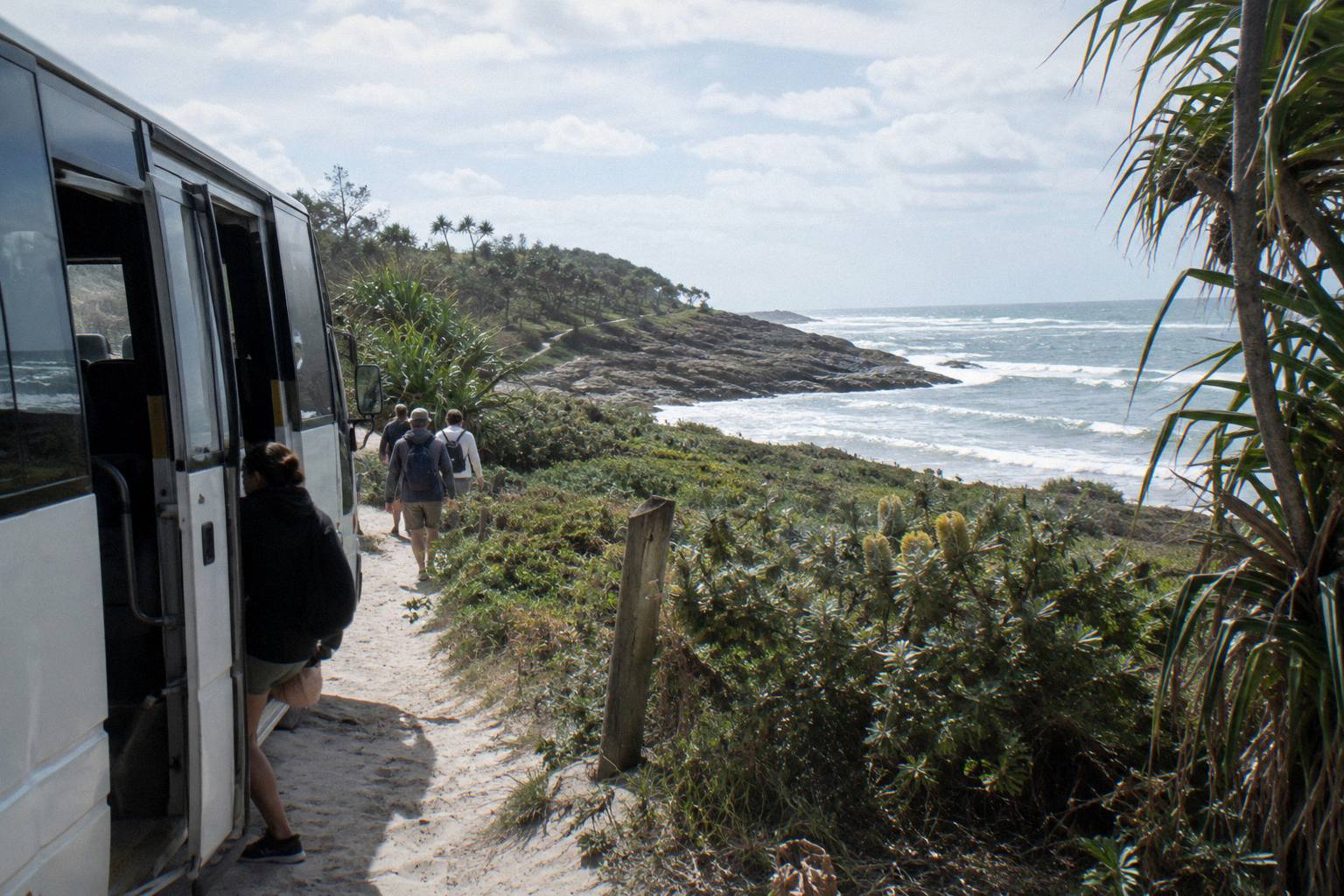
No permit is needed when you are a passenger, because the operator holds the access and drives the sand. And no permit is needed to see the island's headline sights by minibus, since the North Gorge Walk, Cylinder Beach, Amity and the lakes all sit on or just off the sealed roads between the three townships.
The island's most famous walking experience proves the point. The North Gorge Walk at Point Lookout is a 1.2 km self-guided walk along the rocky headlands, part-boardwalk, with turtles, dolphins and manta rays named as regular marine life and humpback whales passing close to the coastline from June to November. You walk it from a bus stop or a car park; sand driving never enters the equation. The Small Group Eco Tour, All Inclusive builds its whole 10-hour day on exactly these accessible highlights: a lake stop with free time on the shore, Myora Springs, a guided walk along the North Gorge headland to Point Lookout, the fishing village of Amity, Cylinder Beach and Frenchmans Beach, with afternoon free time. It is run by Queensland Day Tours, from A$199 per person, rated 4.7 from 294 reviews, with the return ferry and national park fees included, meeting at Brisbane Skytower by CLLIX on 222 Margaret St. It is not suitable for people with mobility impairments, and lunch is not included. The guide to the island's 4WD beach tour options works through that family of trips in more depth.
The wildlife-first alternative makes the same case from a different angle. The Hit The Road Wildlife Day Trip is the trip with the most reviews on the booking pages, rated 4.9 from 547 reviews, from A$149 per person, a 9 hours 30 minutes small-group day from Brisbane by ferry for up to 11 guests, meeting outside the Adina Apartment Hotel Anzac Square at 7:45am. The booking page warns there are two Adina hotels in Brisbane, so double-check which one. The trip is built around wildlife, the return ferry crossing is included, water is provided, and the guide recommends takeaway lunch options for a beachfront picnic or you bring your own. Not one metre of that day depends on a beach permit.
For a visitor weighing the two philosophies, the question to ask is blunt: is the drive the activity, or is the island the activity? When the drive is the activity, the permit path in the sections above is straightforward and worth doing properly. When the island is the activity, ferry-inclusive day tours remove the vehicle entirely, and getting around Straddie without a car is genuinely viable thanks to the island buses: routes 880 and 881 link all three townships seven days, with paper tickets at A$0.50 single, A$1.00 daily and A$5.00 weekly, and no go card accepted. The Translink media release on the bus network has the current operating details.
The Rules That Catch Visitors Out
The three rules most often broken are the tide rule, the vehicle-type rule and the dog rule: no driving either beach within two hours of high tide, no AWD, motorbikes or quad bikes in the Recreation Area, and no dogs in the national park or on the island's public buses. Speed limits of 40 km/h on Flinders and 60 km/h on Main Beach apply throughout.
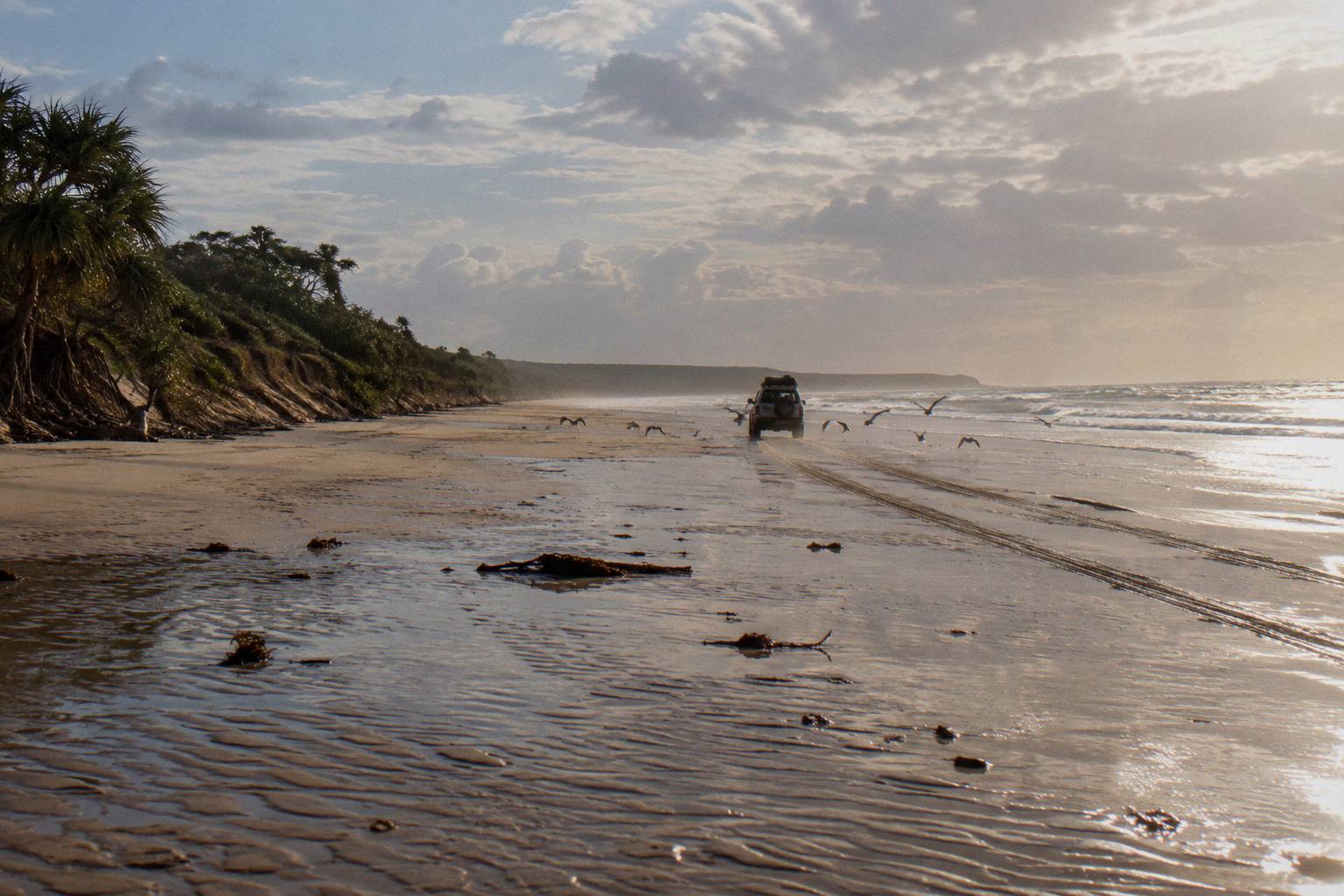
Each of those carries a consequence worth spelling out. The tide rule, broken, means a bogged vehicle and a recovery bill at best. The vehicle-type rule, broken, means you were never permitted on the sand at all, whatever the paperwork says. The dog rule surprises people because the island is in one sense dog-friendly: there are two off-leash dog areas, one being Home Beach between Rocky Point and Rocky Headland in front of the Point Lookout Hotel. But the national park ban is absolute, the bus ban is absolute, and the ferry has its own rules: pets must stay in the vehicle or be muzzled on the passenger ferry. Planning a Straddie day trip around a dog constrains the itinerary more than the permit does.
Two smaller rules round out the picture. Rubbish must be taken out with you, and visitors are asked to stay on tracks, both standard national park requirements. And if you are flying a drone, CASA rules apply and you may need a permit from the Queensland Government to fly over a park, which is a general parks requirement rather than a Straddie-specific one but catches plenty of photographers. None of this is burdensome; all of it is easier to follow when the day has not already gone sideways in soft sand.
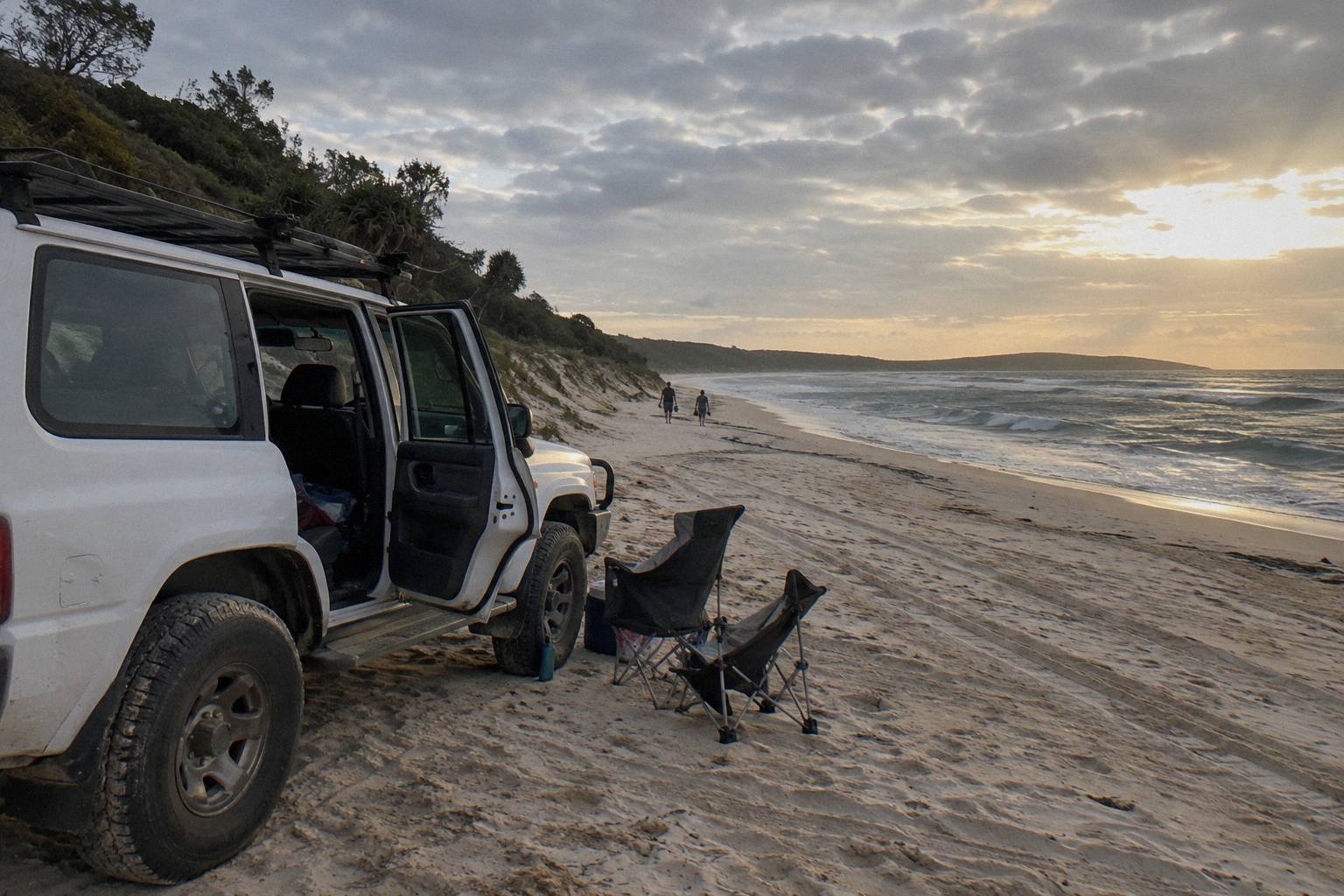
The deeper context, worth knowing even on a logistics page, is that the Recreation Area sits inside Quandamooka Country, and the permit system is administered by a Quandamooka business. The native title consent determination over the island was handed down on 4 July 2011, and about half the island has been jointly managed as Naree Budjong Djara National Park since. The permit you print is, in a real sense, a guest pass, and the rules attached to it reflect that.
The Decision, Compressed
If you are camping on Flinders or Main Beach, or the drive itself is the point, take your own 4WD: book the vehicle ferry early, buy the permit online before you travel, carry it printed, and plan the driving day around the low tide. If the island is the point, book a day trip and let the permit question disappear.
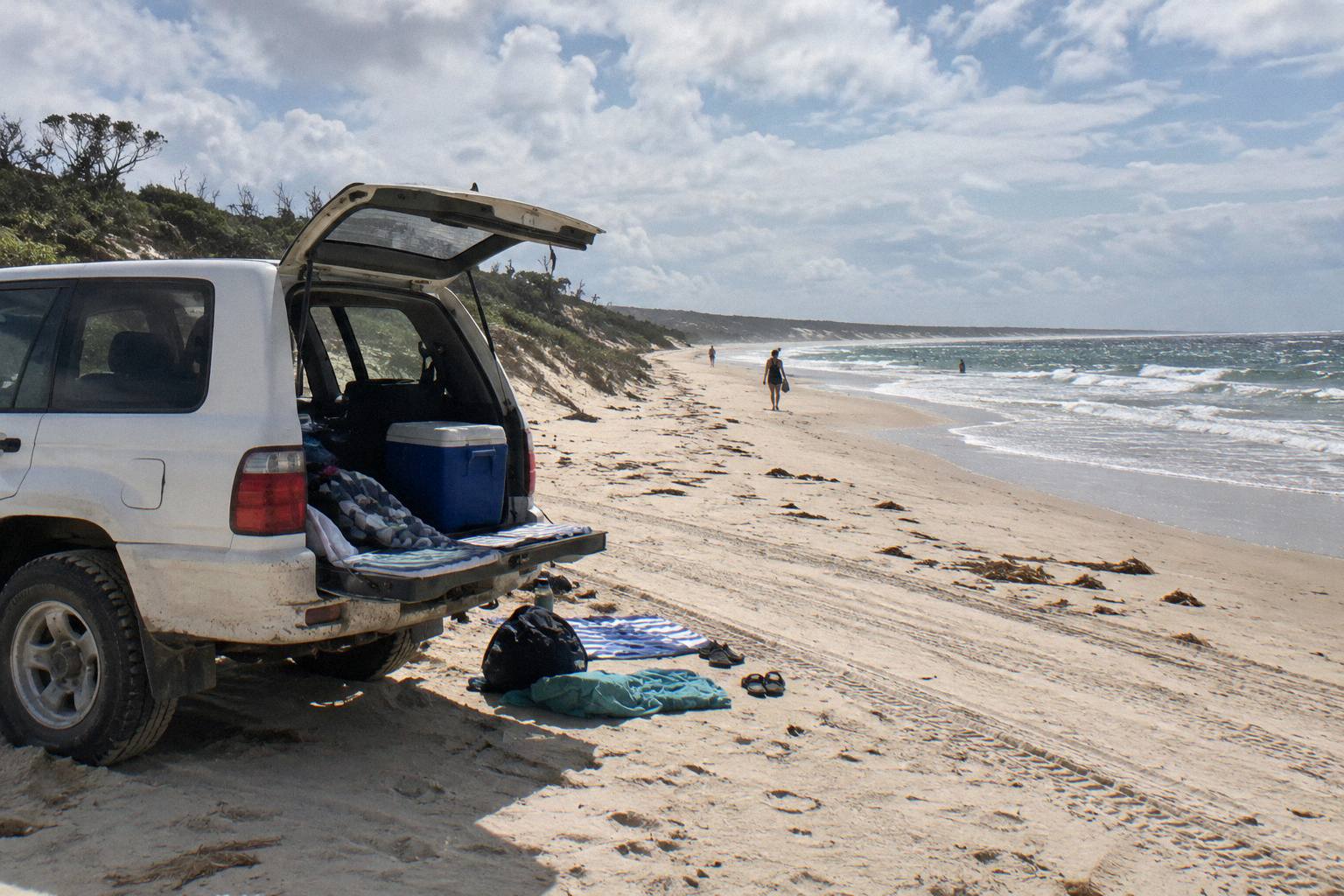
The compressed version of the self-drive checklist: vehicle ferry booked, permit bought online or at a campground office between 8am and 4pm, printed permit in the glovebox, tide times checked for your date, no driving two hours either side of high tide, correct vehicle type, dog plan sorted. The compressed version of the tour decision: pick the format that matches the day you want, a 4WD beach day with lunch and park fees included, a wildlife-first small-group day from A$149 per person, or a 10-hour all-inclusive eco day from A$199 per person, all with free cancellation up to 24 hours before start, and spend the planning energy on what to pack instead.
Common Questions About North Stradbroke Island 4WD Beach Permits
Do You Need A Permit To Drive On North Stradbroke Island Beaches?
Yes, but only on Flinders Beach and Main Beach, the two stretches that form the Recreation Area. No permit is needed on the sealed roads between Dunwich, Amity Point and Point Lookout.
Where Do You Buy A North Stradbroke Island Beach Permit?
Online through the Minjerribah Camping booking system, or in person at the campground offices at Cylinder Beach, Amity Point and Adder Rock, which open 8am to 4pm, 7 days. The permit must be carried, printed, before driving either beach.
Can You Drive An AWD On Flinders Or Main Beach?
No. AWD vehicles, motorbikes and quad bikes are not permitted in the Recreation Area, regardless of any permit. The requirement is a suitable 4WD.
What Is The Tide Rule For Beach Driving On Straddie?
You must not drive either Flinders Beach or Main Beach within two hours either side of high tide. Plan your driving window around the low tide for your date.
Do You Need A Beach Permit If You Take A 4WD Tour?
No. As a passenger, the operator holds the access and handles the driving. The 4WD Beach Day, BBQ Included includes national park fees and lunch, with a driver/guide, for a group of up to 10.
How Much Does A North Stradbroke Island Beach Permit Cost?
The permit comes in one-month and one-year versions through the booking system, and the current price is on the operator's permit page, which carries the live figure for a fee that changes.